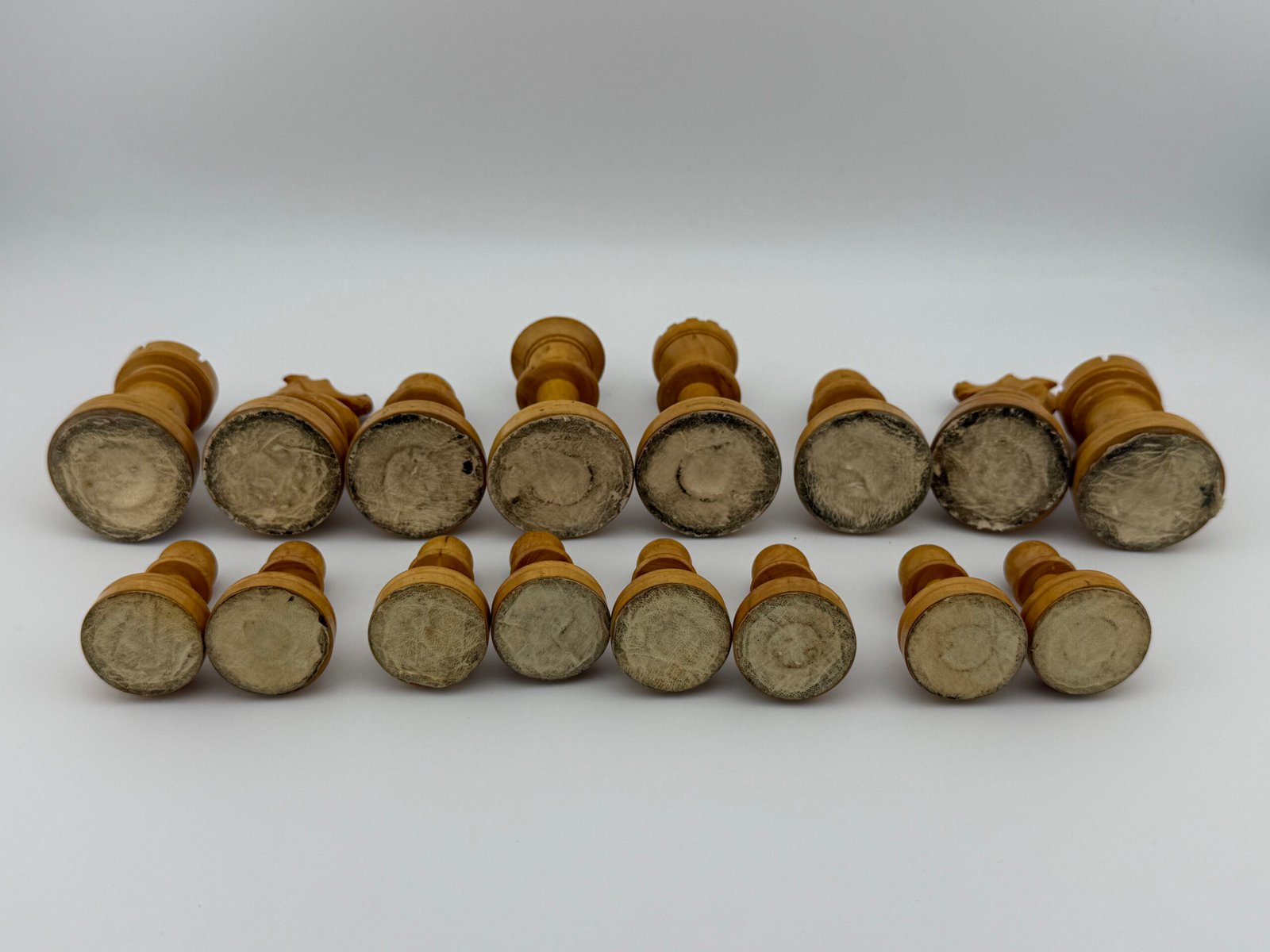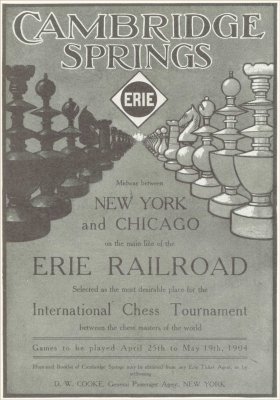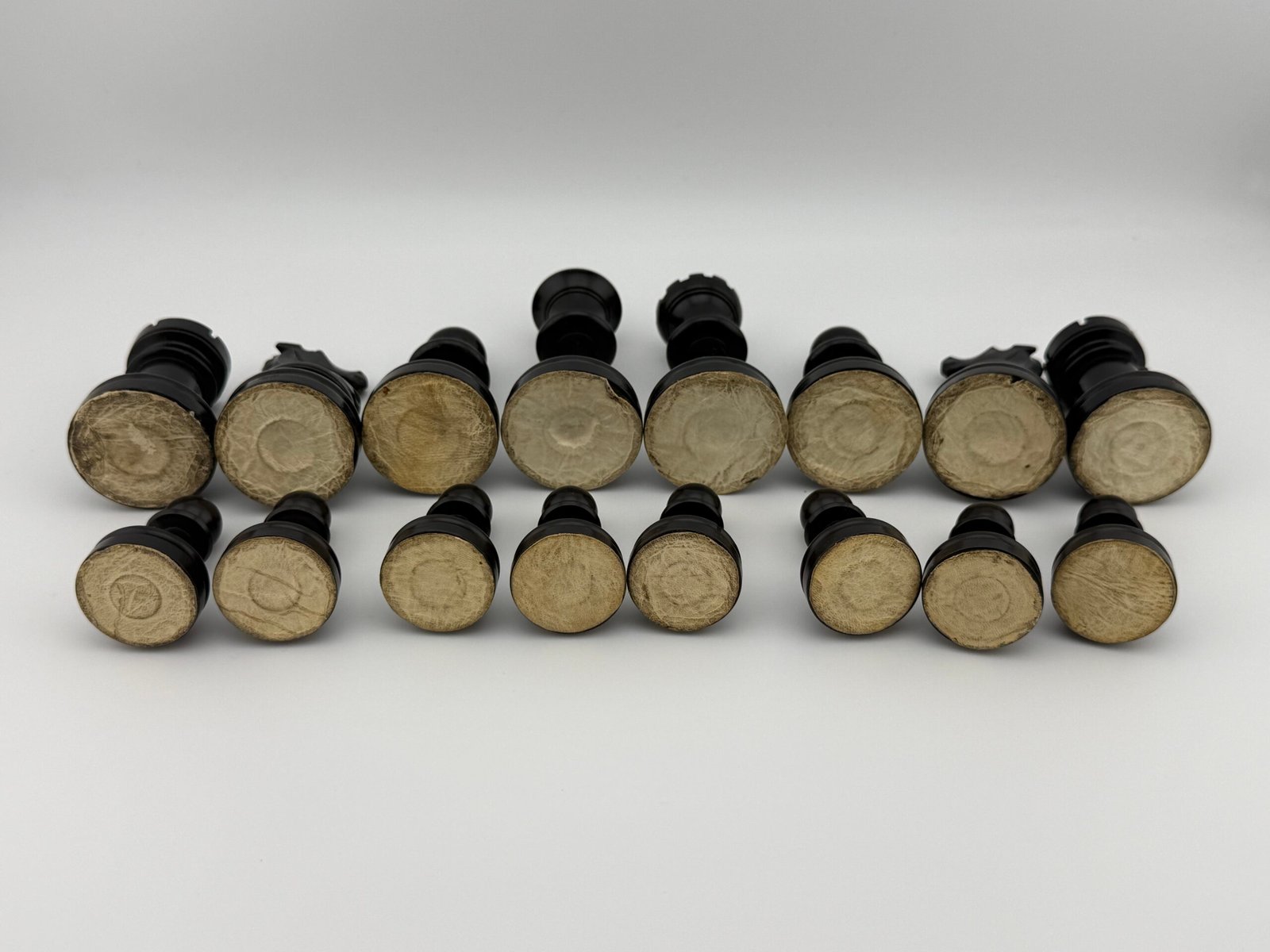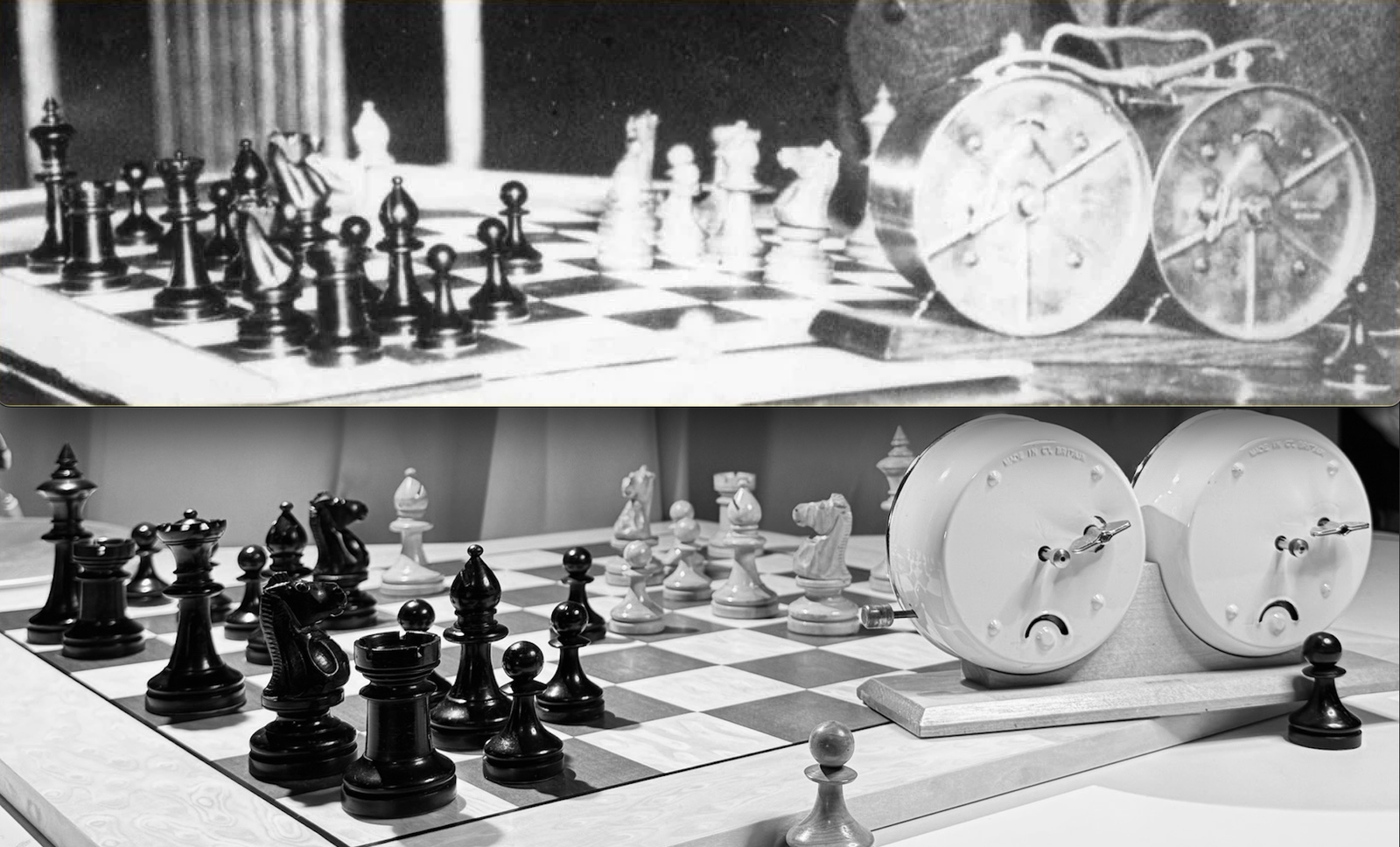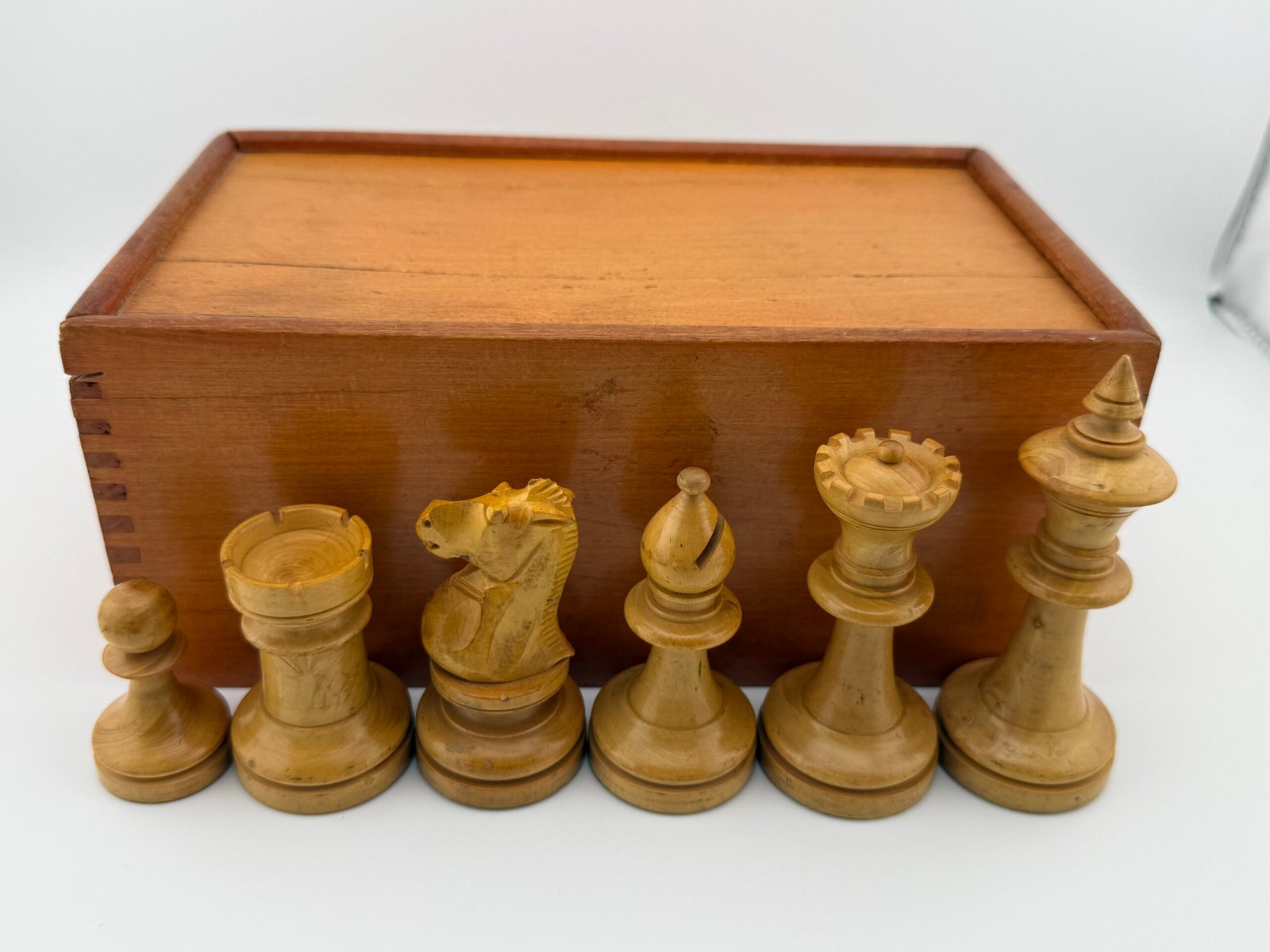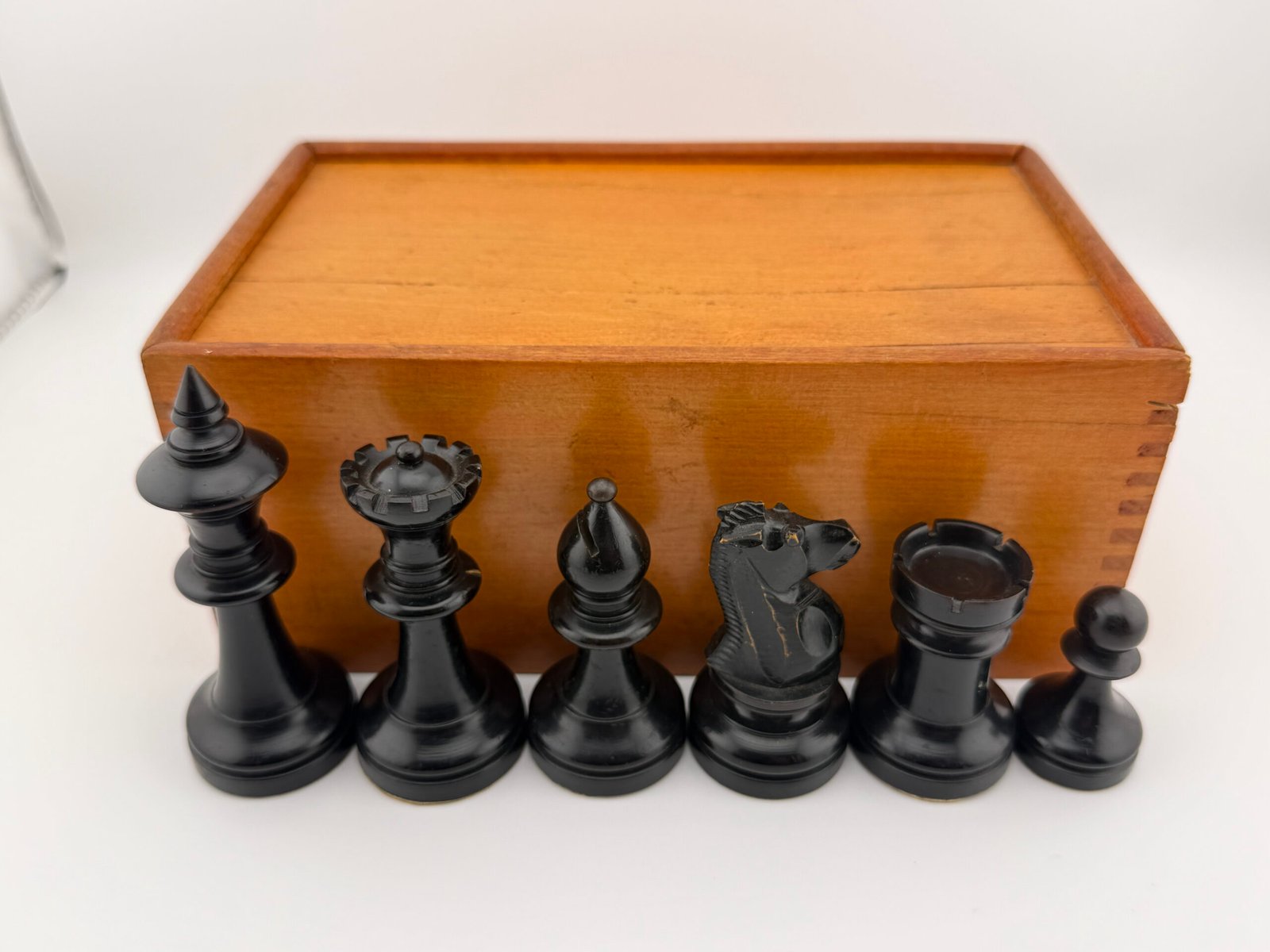

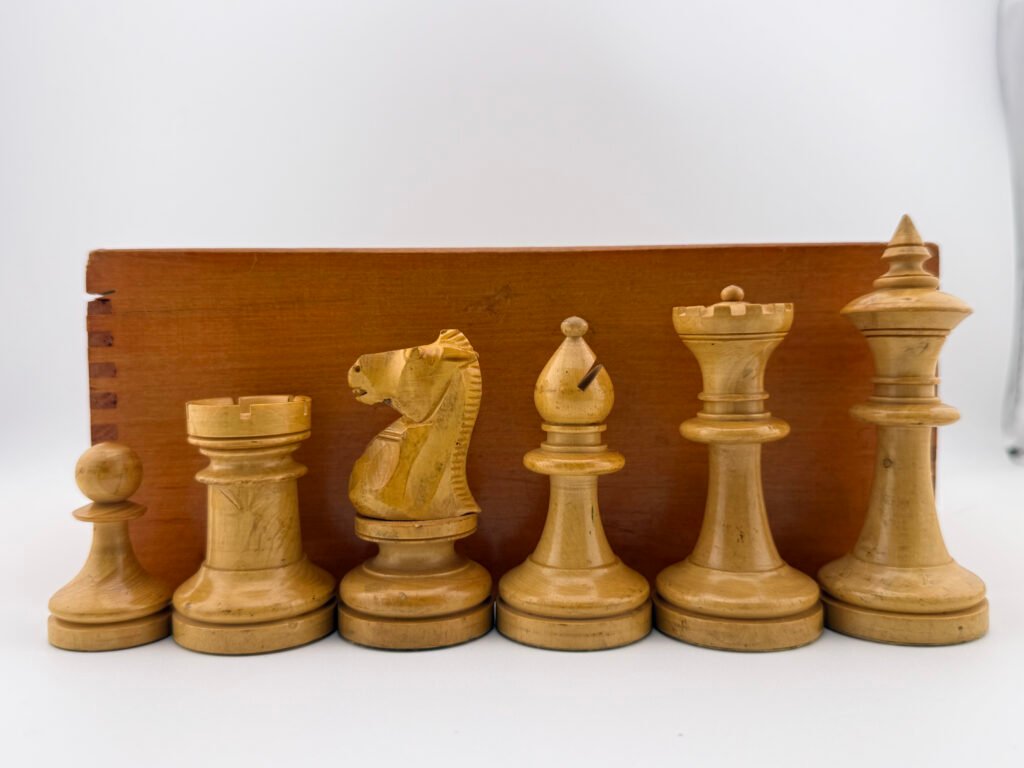
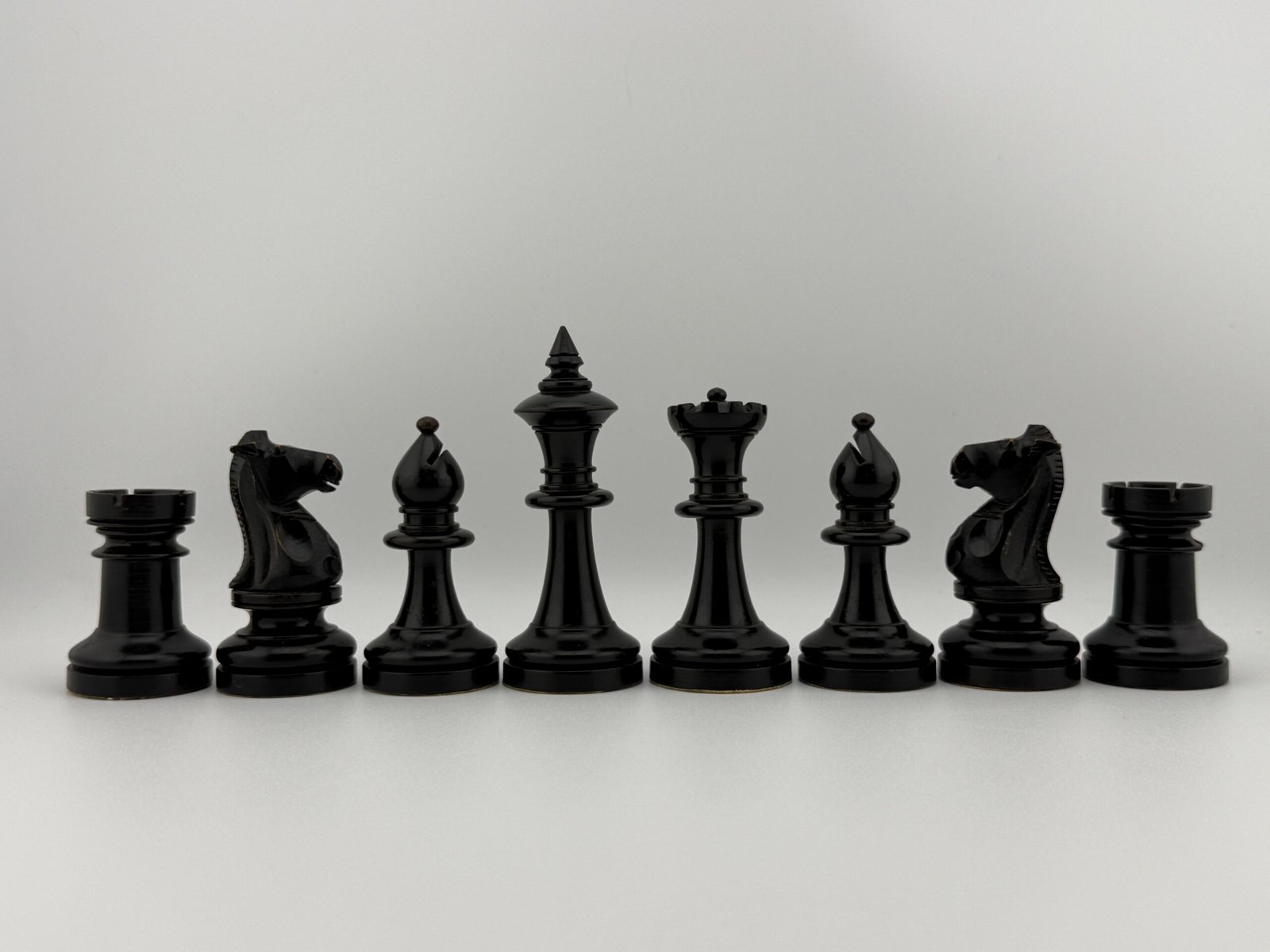
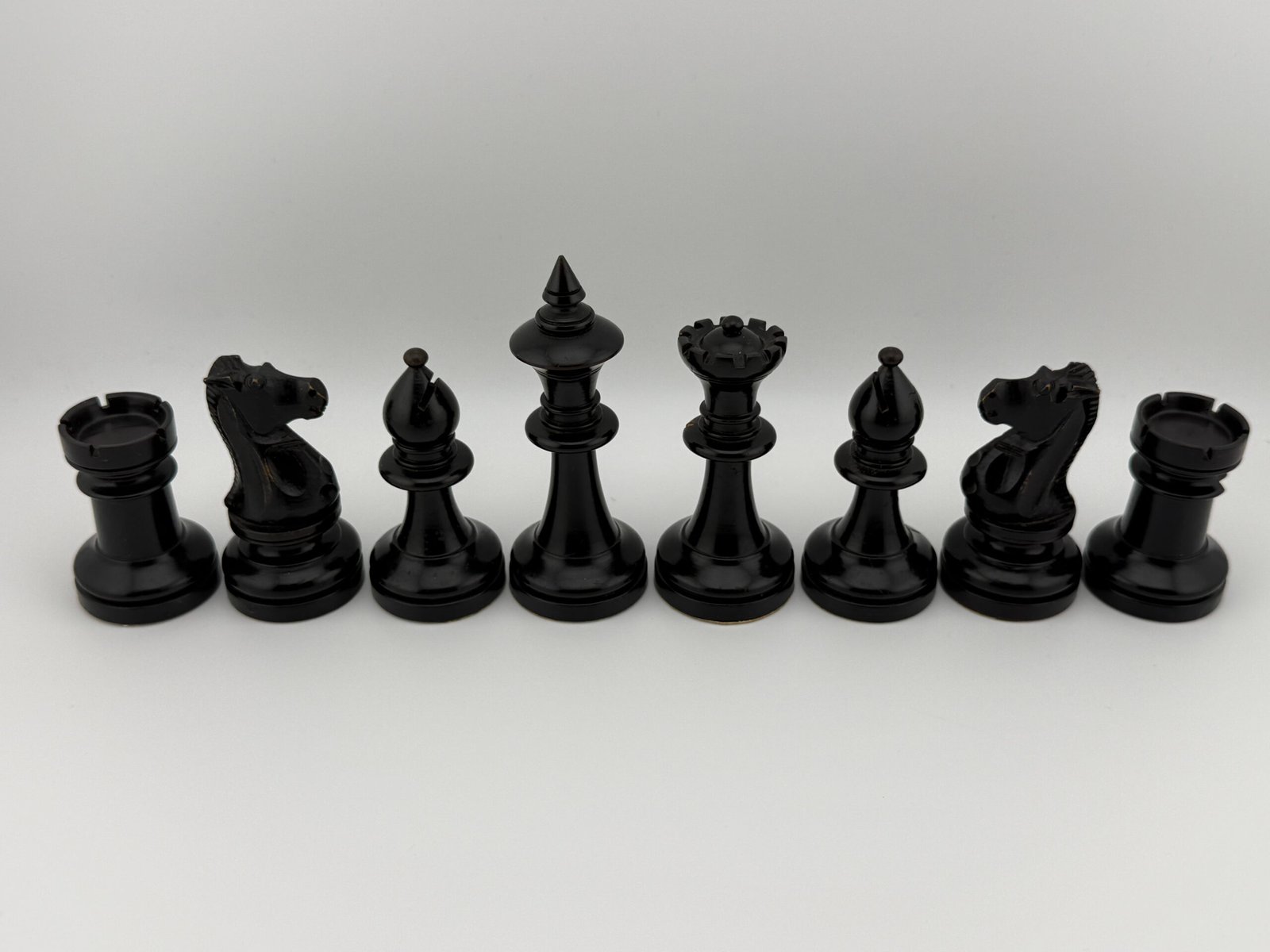
The 1904 Cambridge Springs International Chess Congress Tournament chess set by “American Chess Company (ACC)”.
What they did…
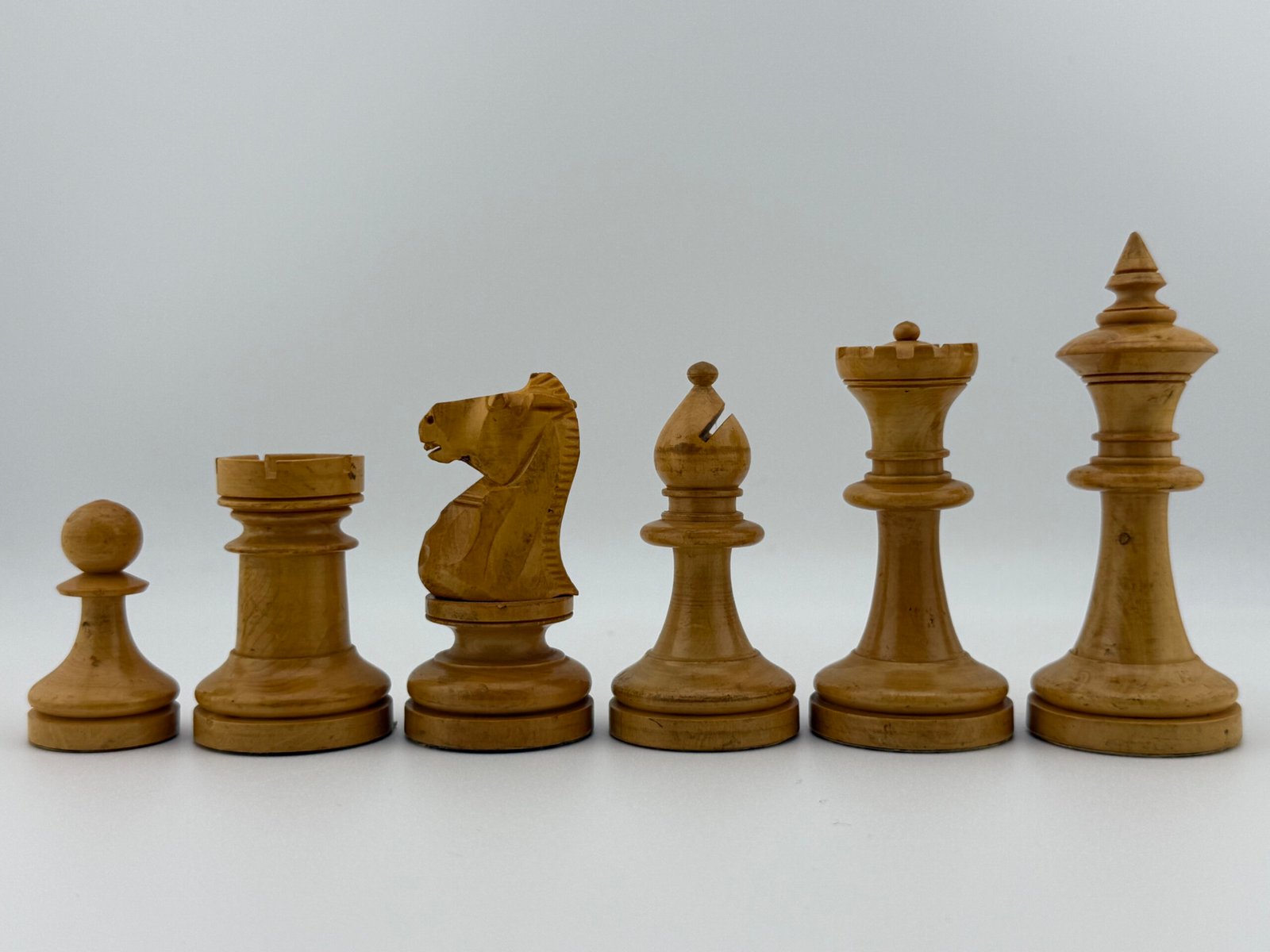
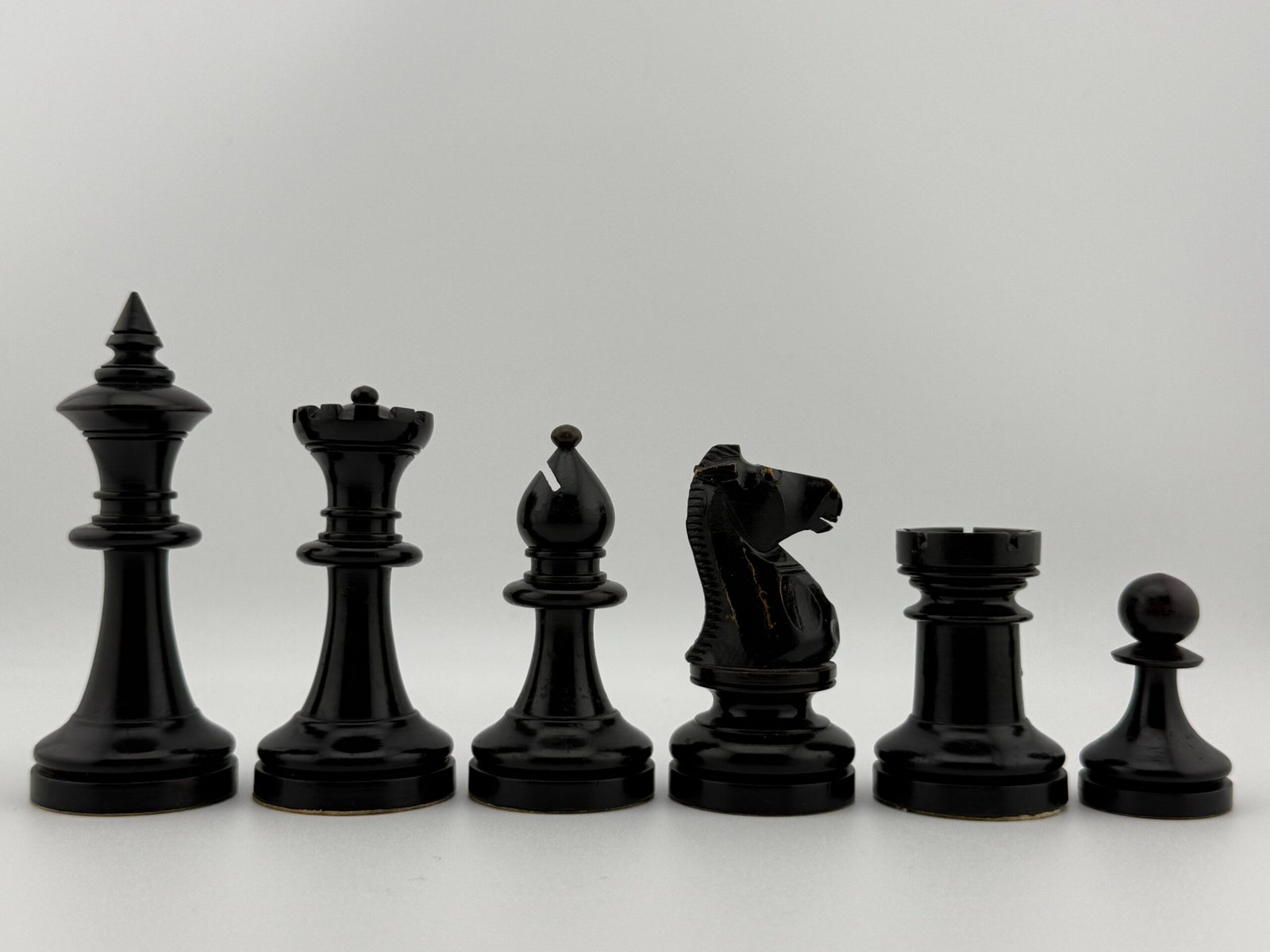
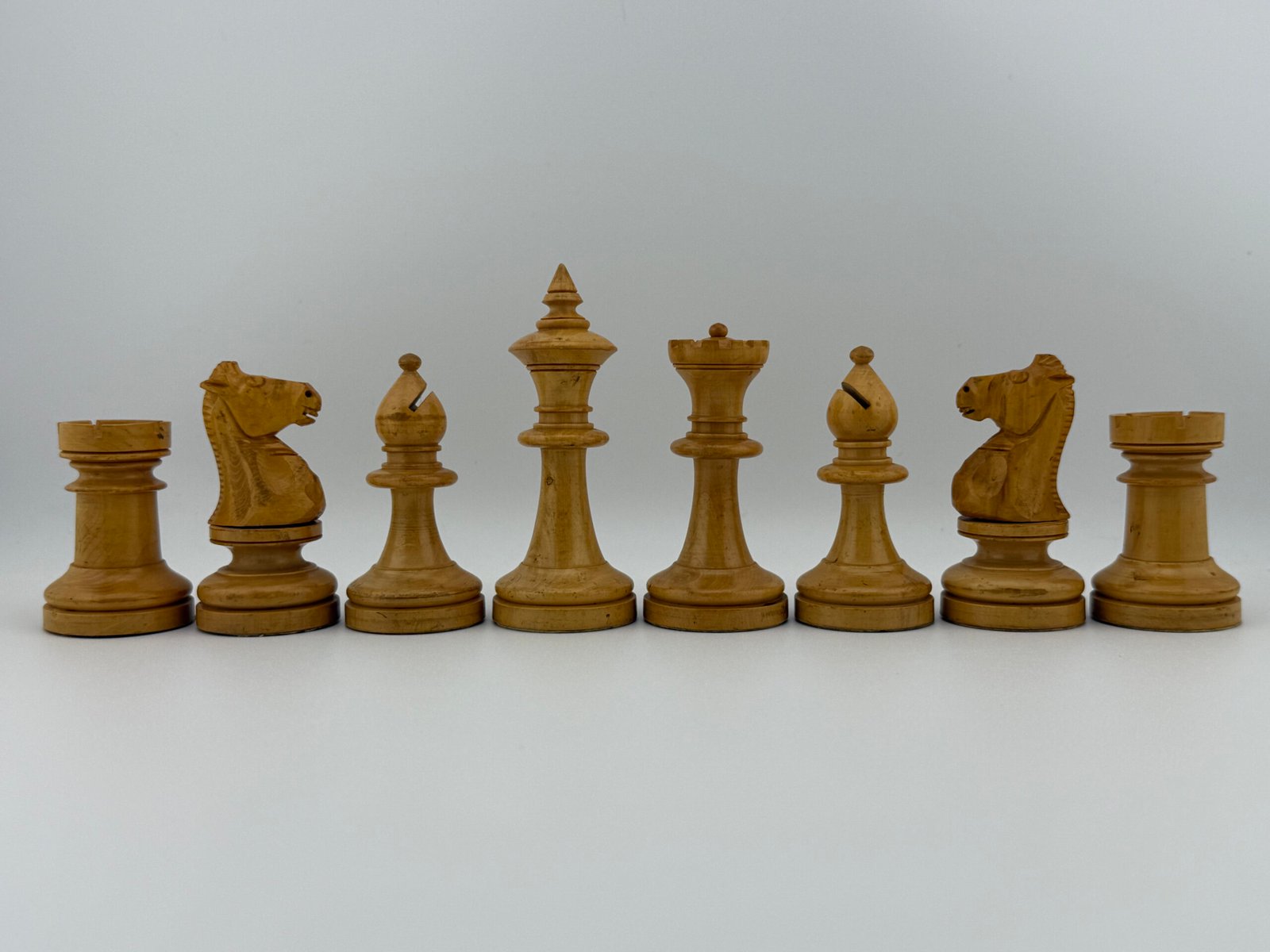
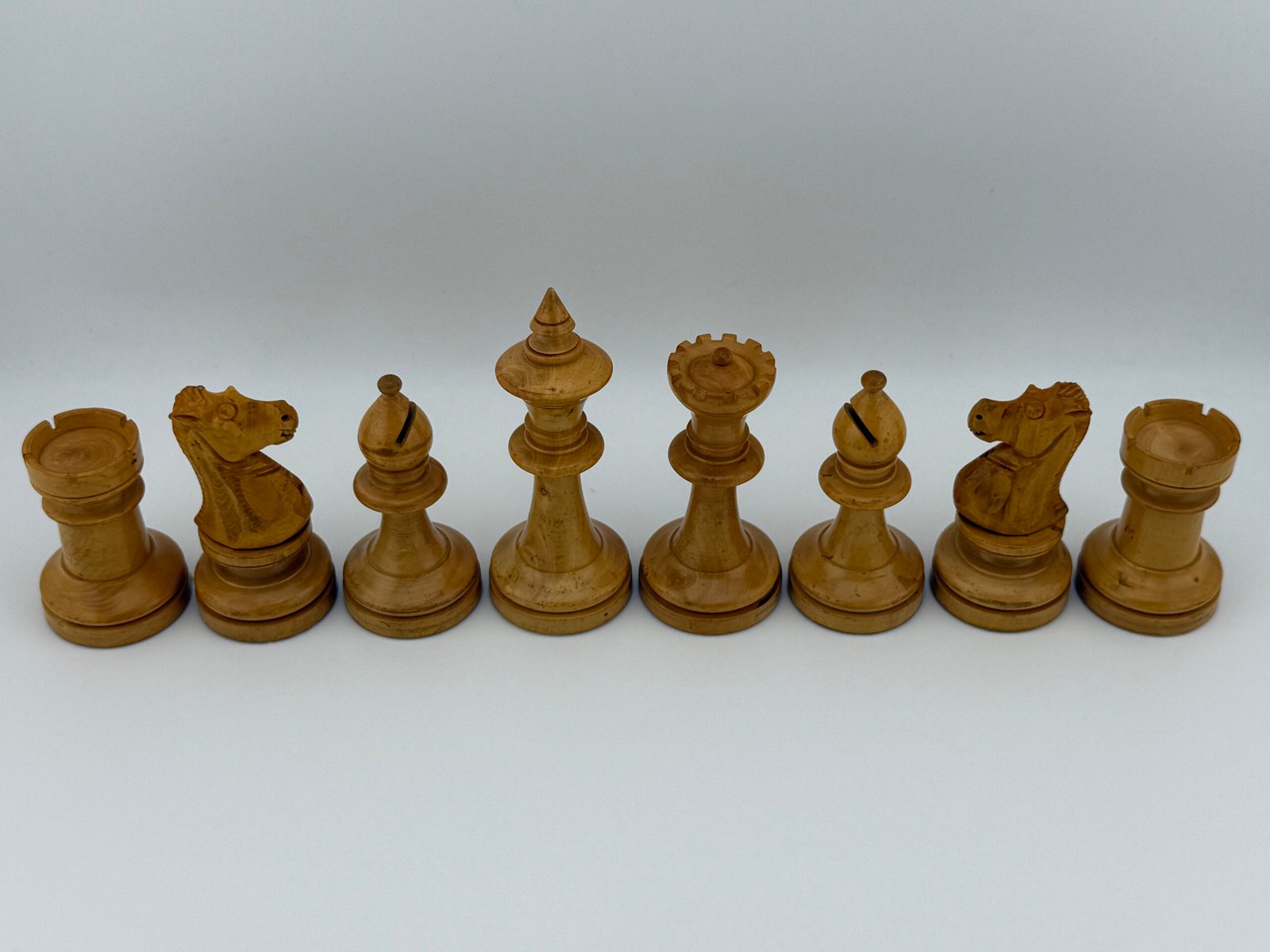
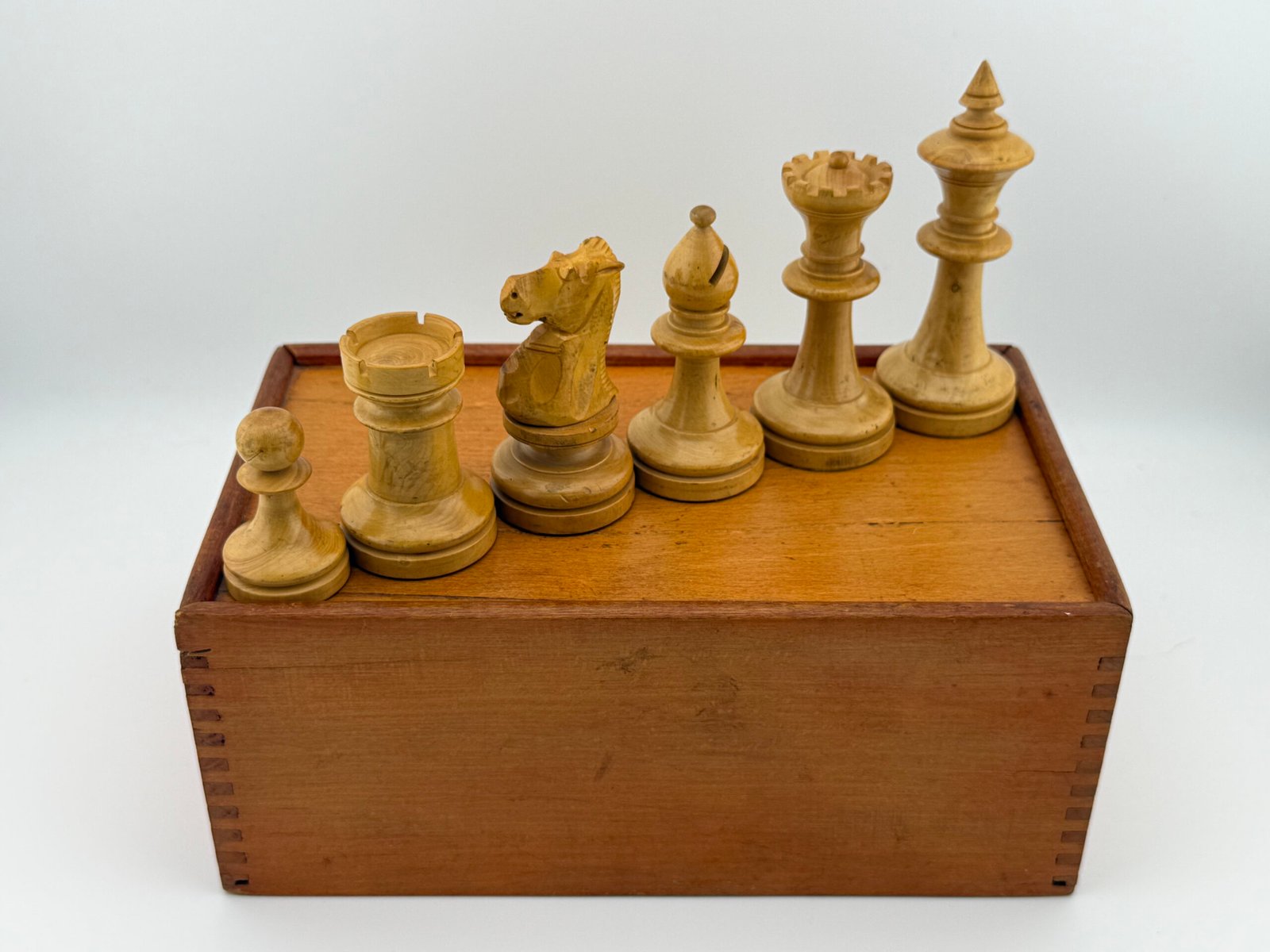
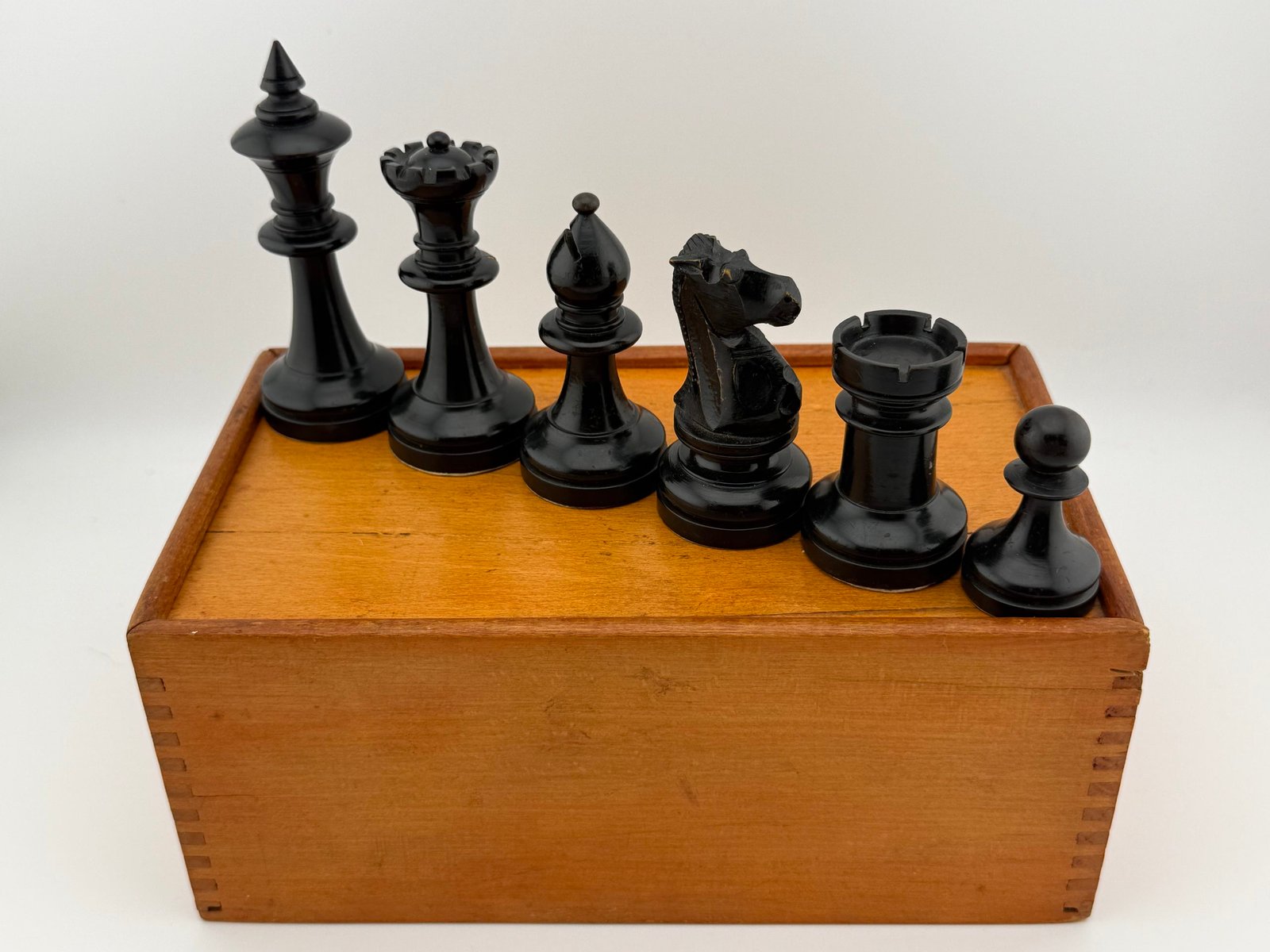
The 1904 Cambridge Springs International Congress Tournament Chess Set holds the “TOP” place in my personal collection, a masterpiece both in form and historical significance. This Staunton-style set, meticulously crafted from ebonized boxwood and boxwood, is a design to one of the most iconic tournaments in chess history, the 1904 Cambridge Springs International Chess Congress. The tournament, which marked the first major international chess event held in the United States during the 20th century, has left an indelible mark on the annals of chess, and this chess set is a fitting reminder to that legacy.
This chess set, designed specifically for the 1904 Cambridge Springs International Chess Congress, is more than just a tool for playing; it’s a direct connection to a watershed moment in chess history. Held at the prestigious Hotel Rider in Cambridge Springs, Pennsylvania, this tournament was the first of its kind in America in the 20th century, attracting some of the most celebrated players of the time. The roster included legendary figures such as:
- Emanuel Lasker, the reigning World Chess Champion, who had not played in a tournament since 1900 and wouldn’t play again until 1909. His participation alone added immense prestige to the event.
- Mikhail Chigorin, the Russian champion and one of the most important figures in the development of modern chess.
- Harry Nelson Pillsbury, the American chess sensation, famous for his victory at Hastings in 1895, considered one of the greatest tournaments of the 19th century.
- Jackson Showalter, a six-time U.S. Chess Champion and a key figure in American chess during that era.
- Frank Marshall, marked his rise to prominence in American chess and he would eventually reign as champion of the United States for twenty-six years.

(From top to bottom:) H. Helms, H. Cassel, J. Redding, W. Van Antwerp, C. Schlechter, F.J. Marshall, Em. Lasker, M. Chigorin, J. Mieses, G. Marco, I. Rice, D. Janowsky, J.W. Showalter, A.B. Hodges, A.W. Fox, H.N. Pillsbury, T.F. Lawrence, W.E. Napier, R. Teichmann, H. Ridder, E. Delmar, J. Barry
The format of the tournament was a single-round-robin, with each participant playing 15 games. The time control of 30 moves in 2 hours followed by 15 moves per hour was particularly grueling, placing a premium on both quick calculation and deep strategy. The tournament’s significance was amplified by the rare appearance of Emanuel Lasker, whose presence after a long hiatus raised the stakes for every competitor.
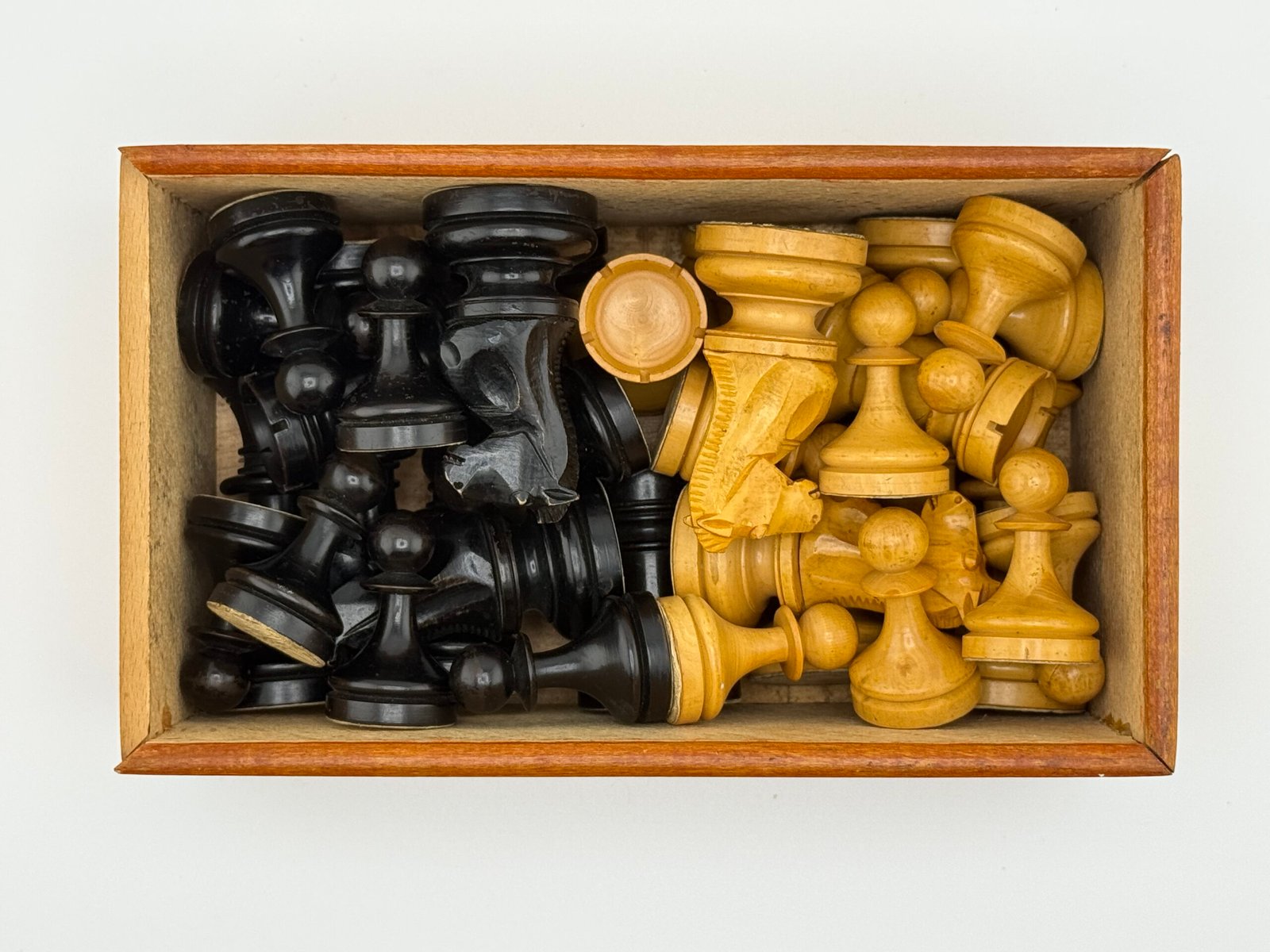
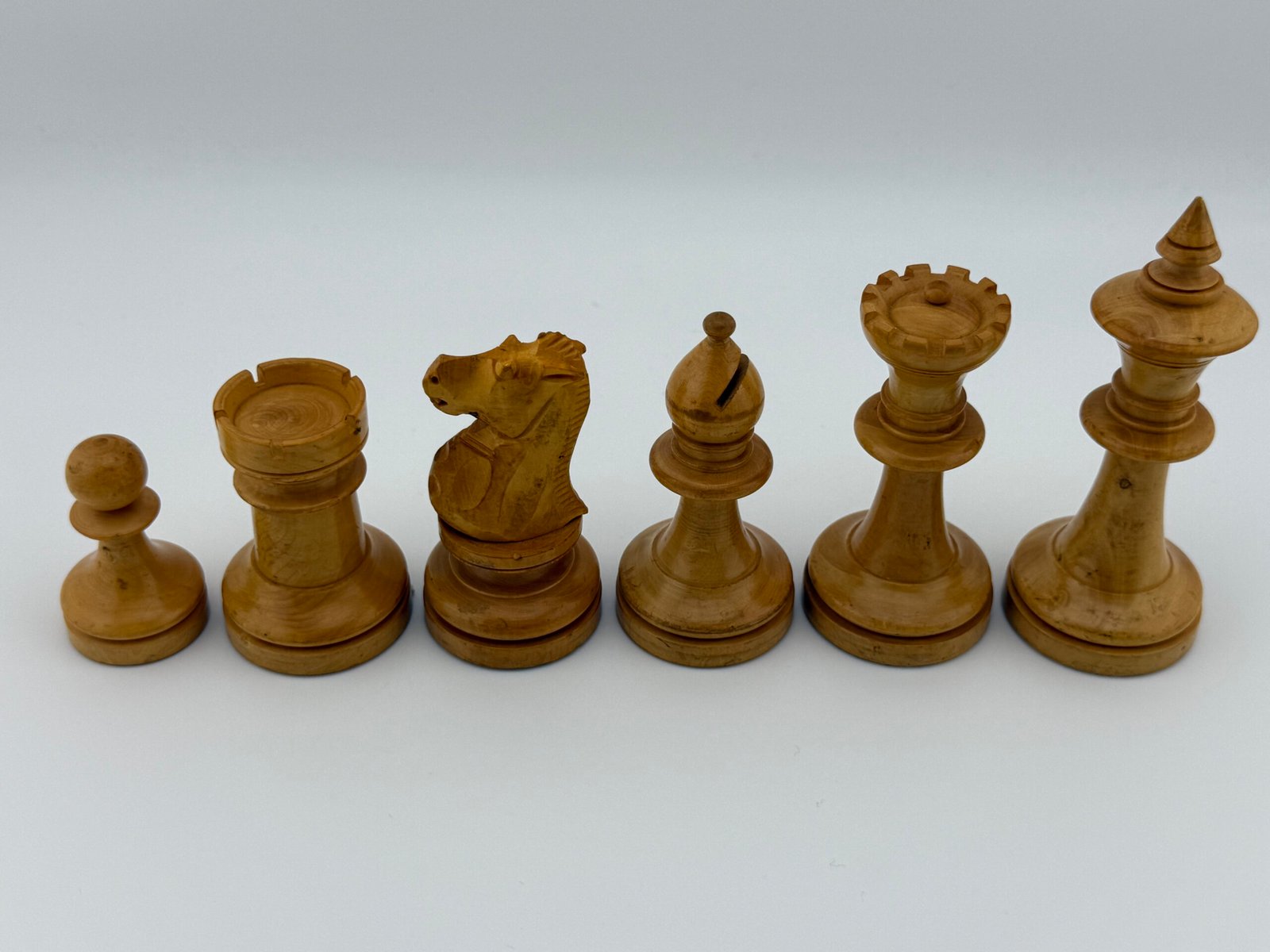
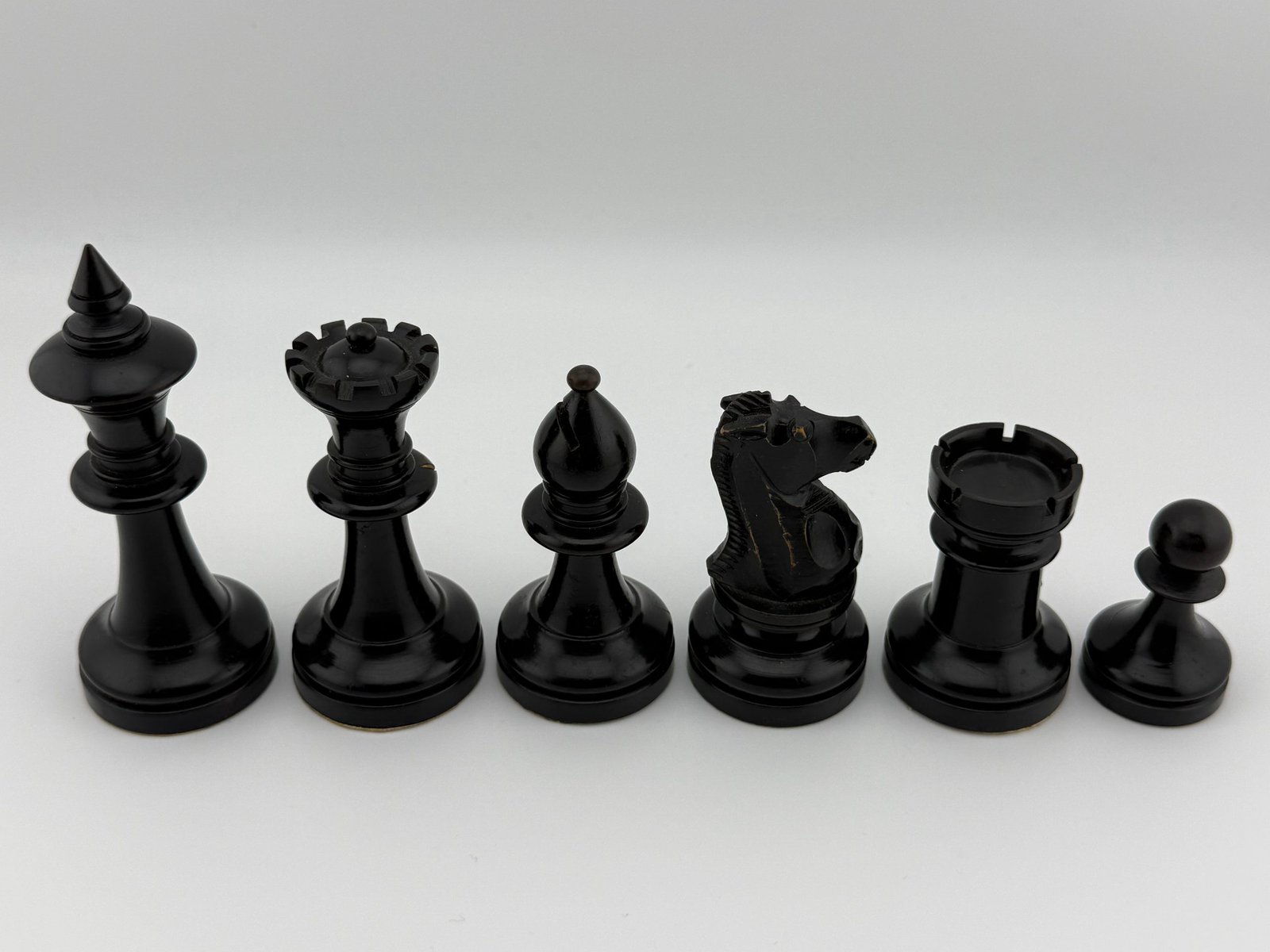
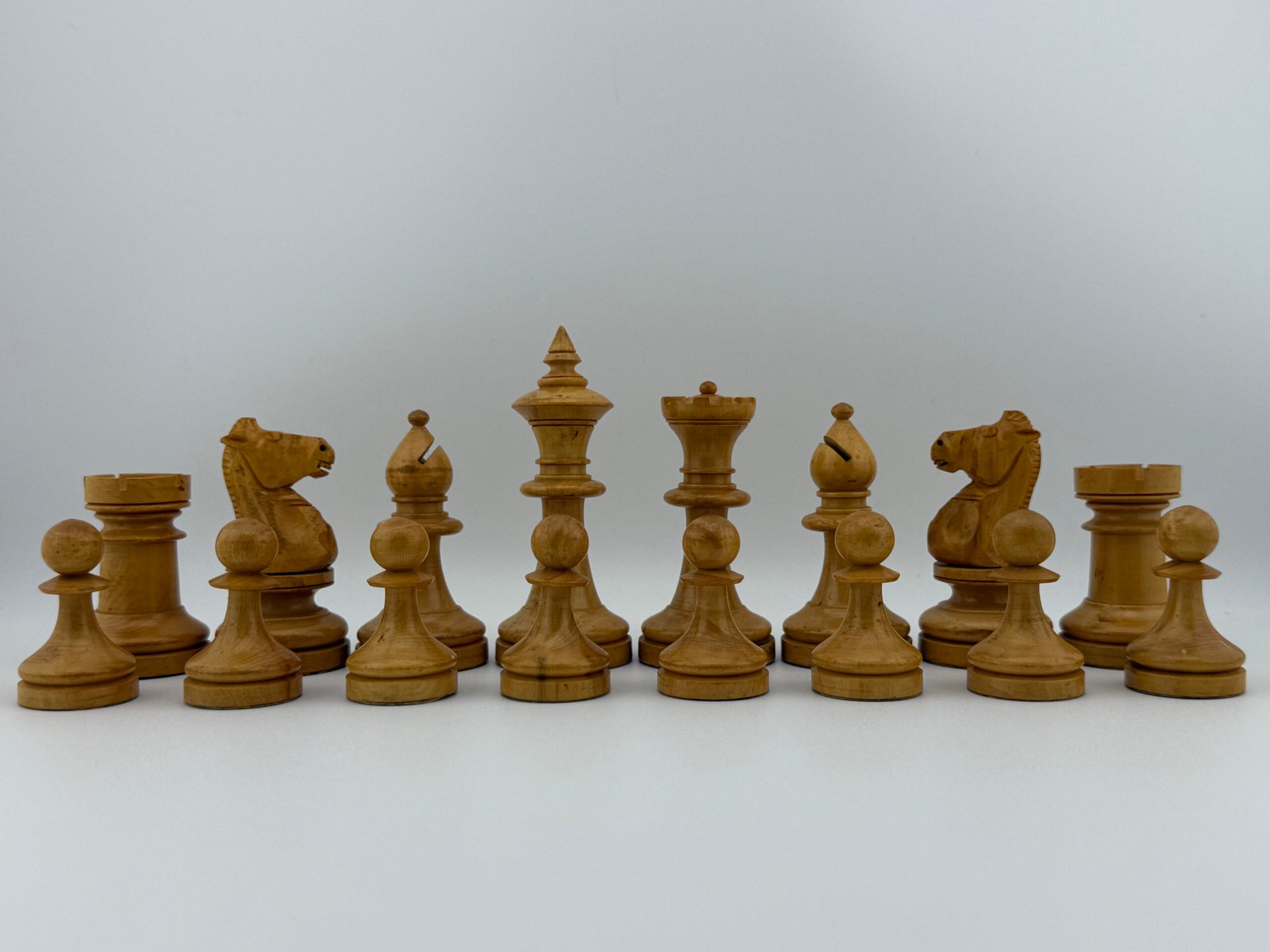
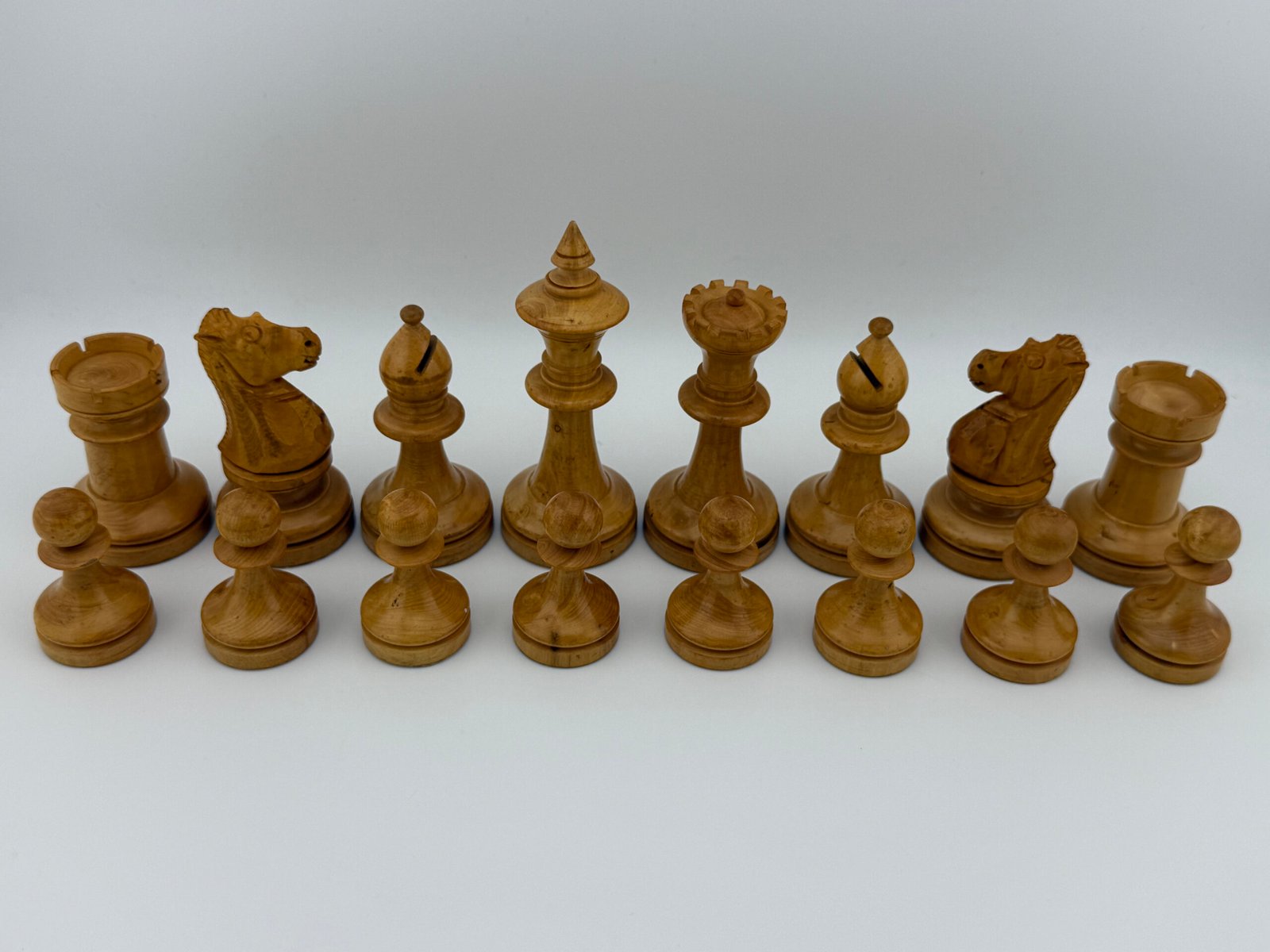
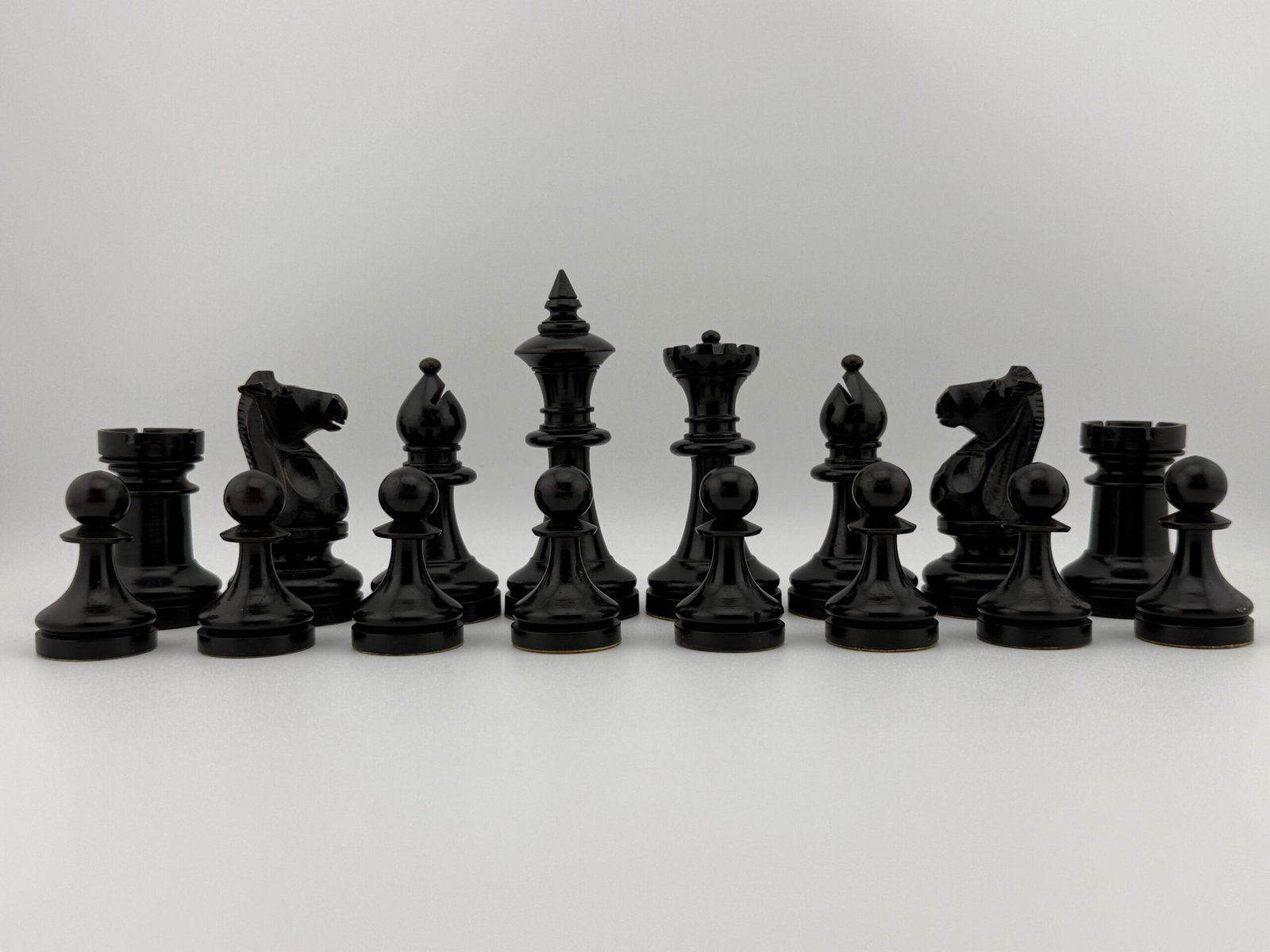
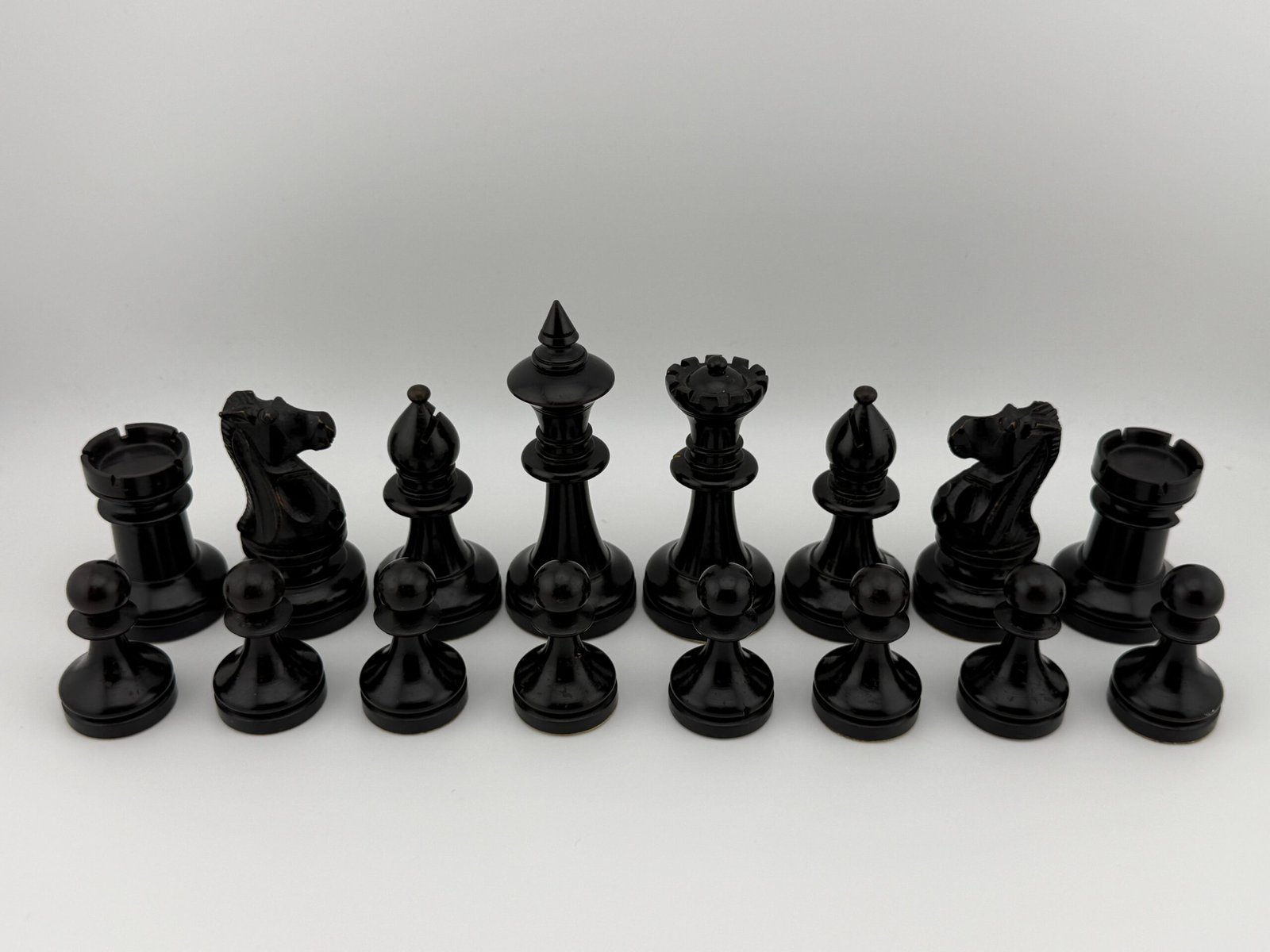
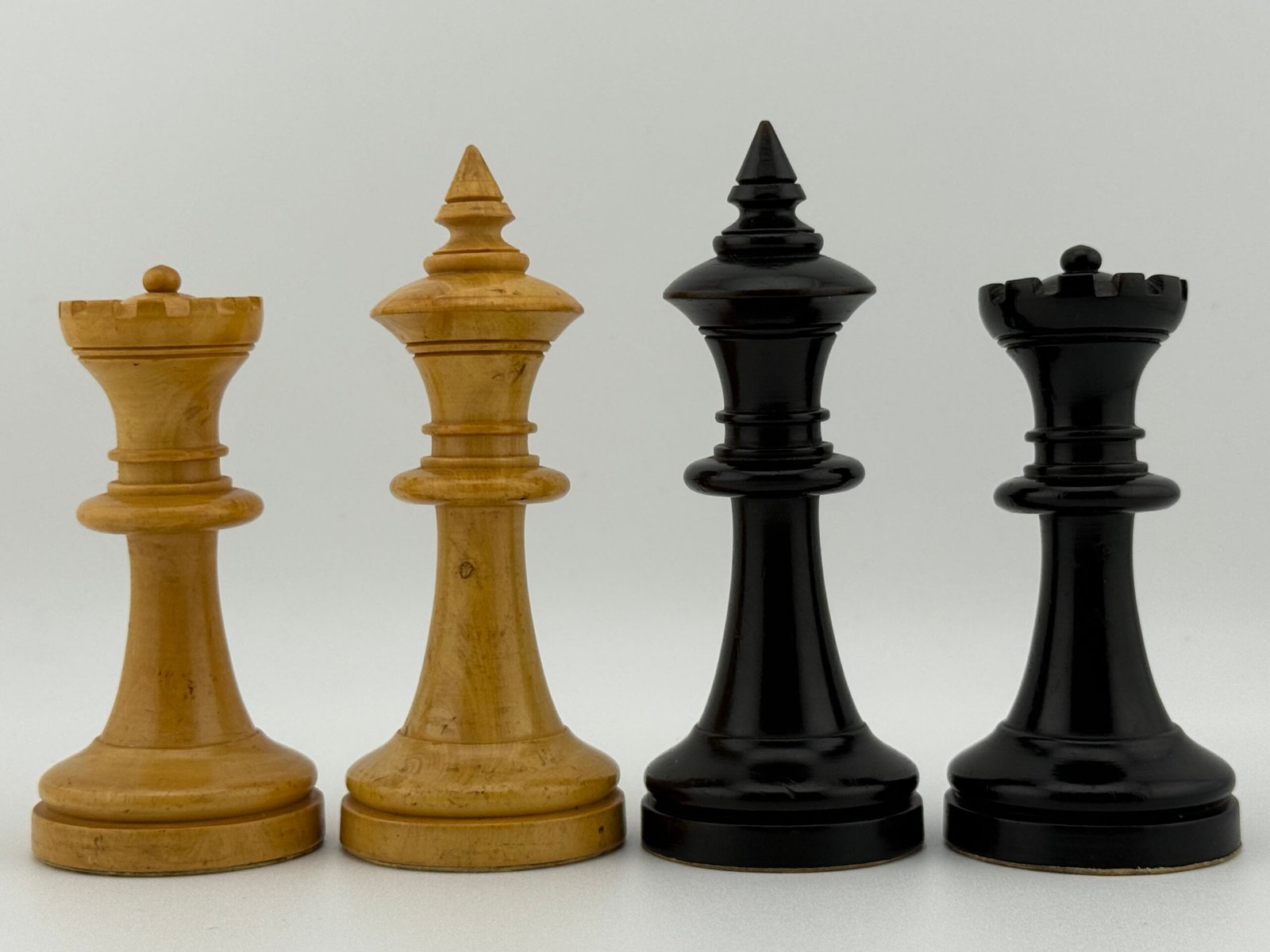
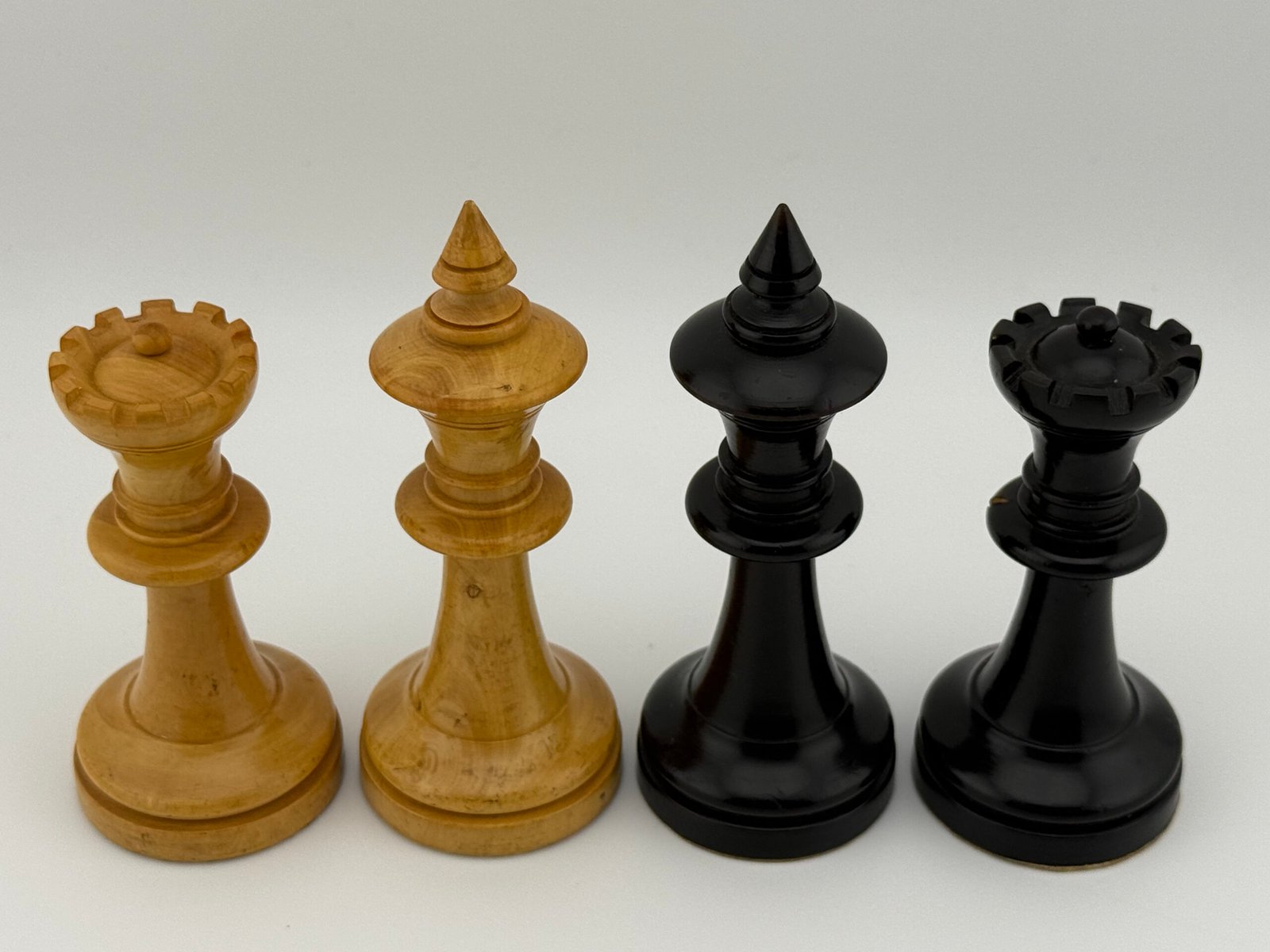
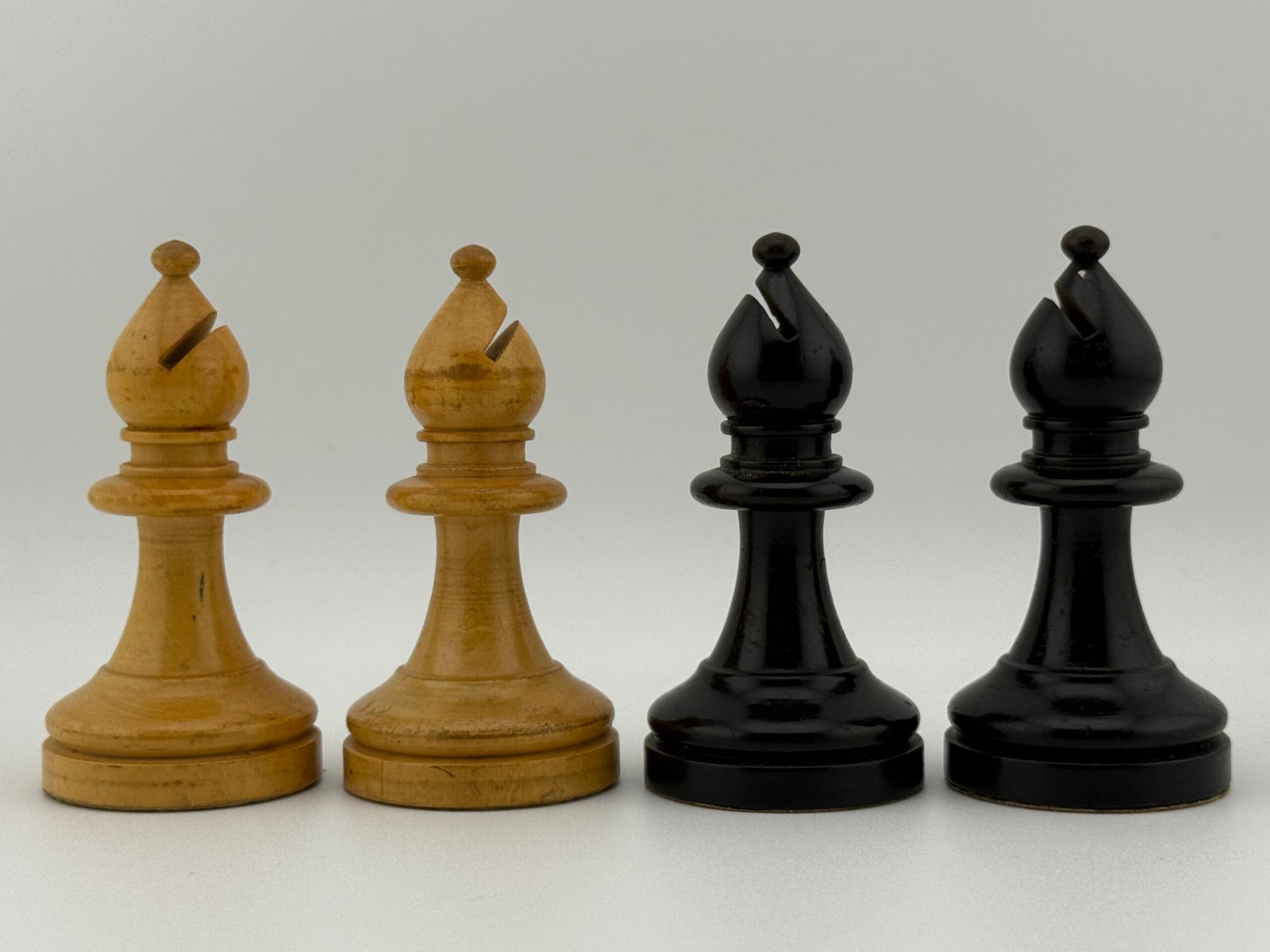
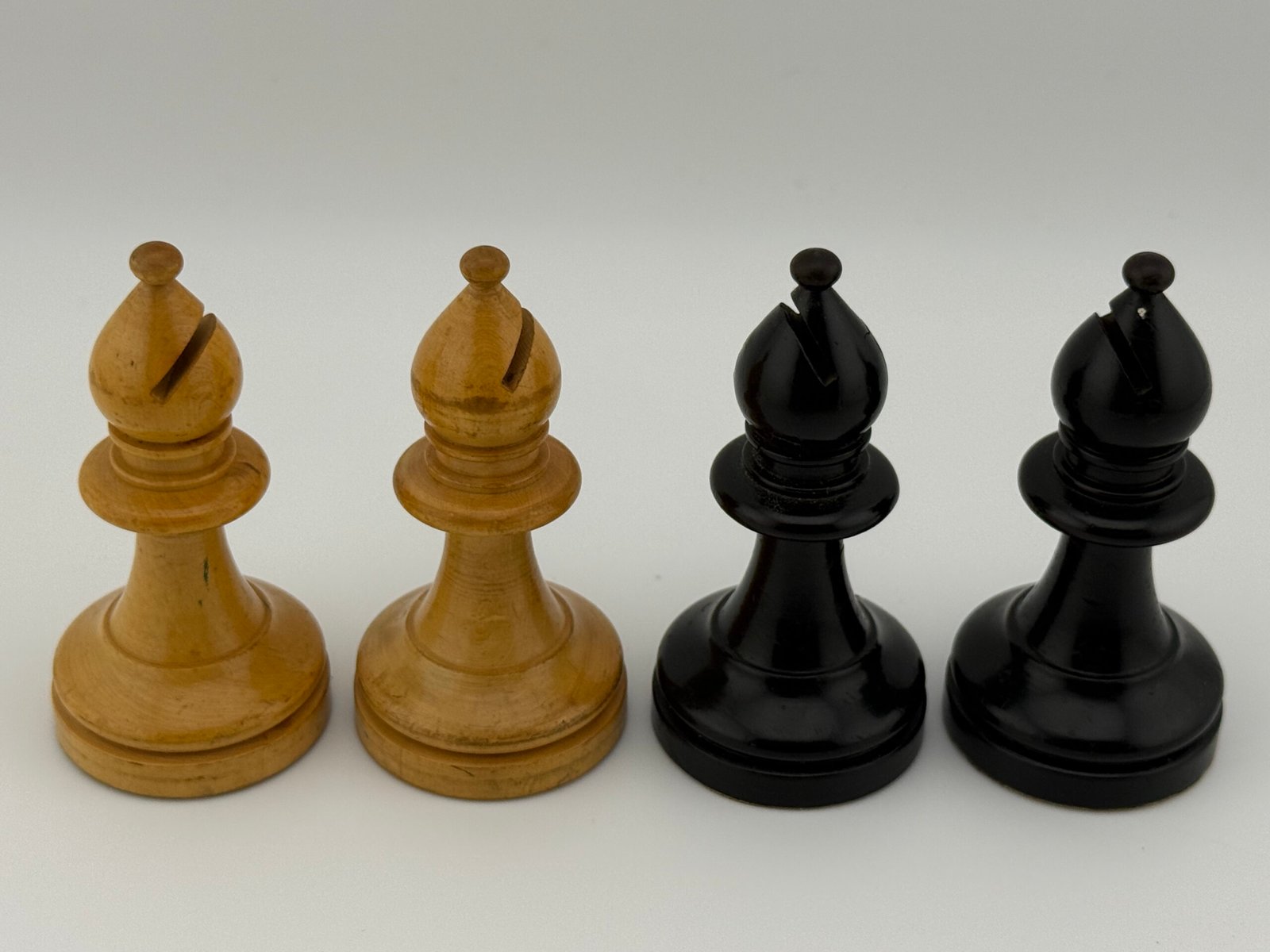
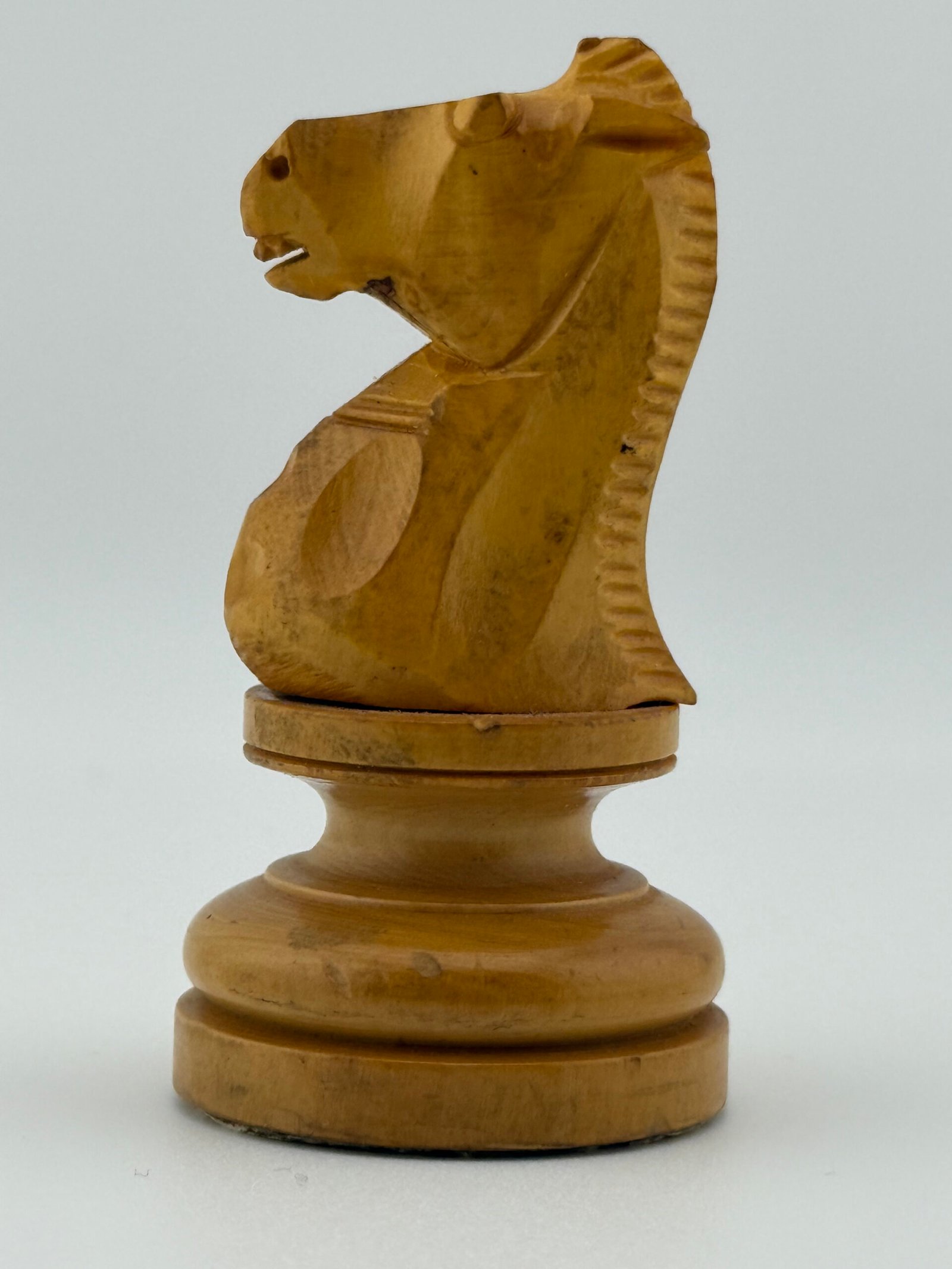
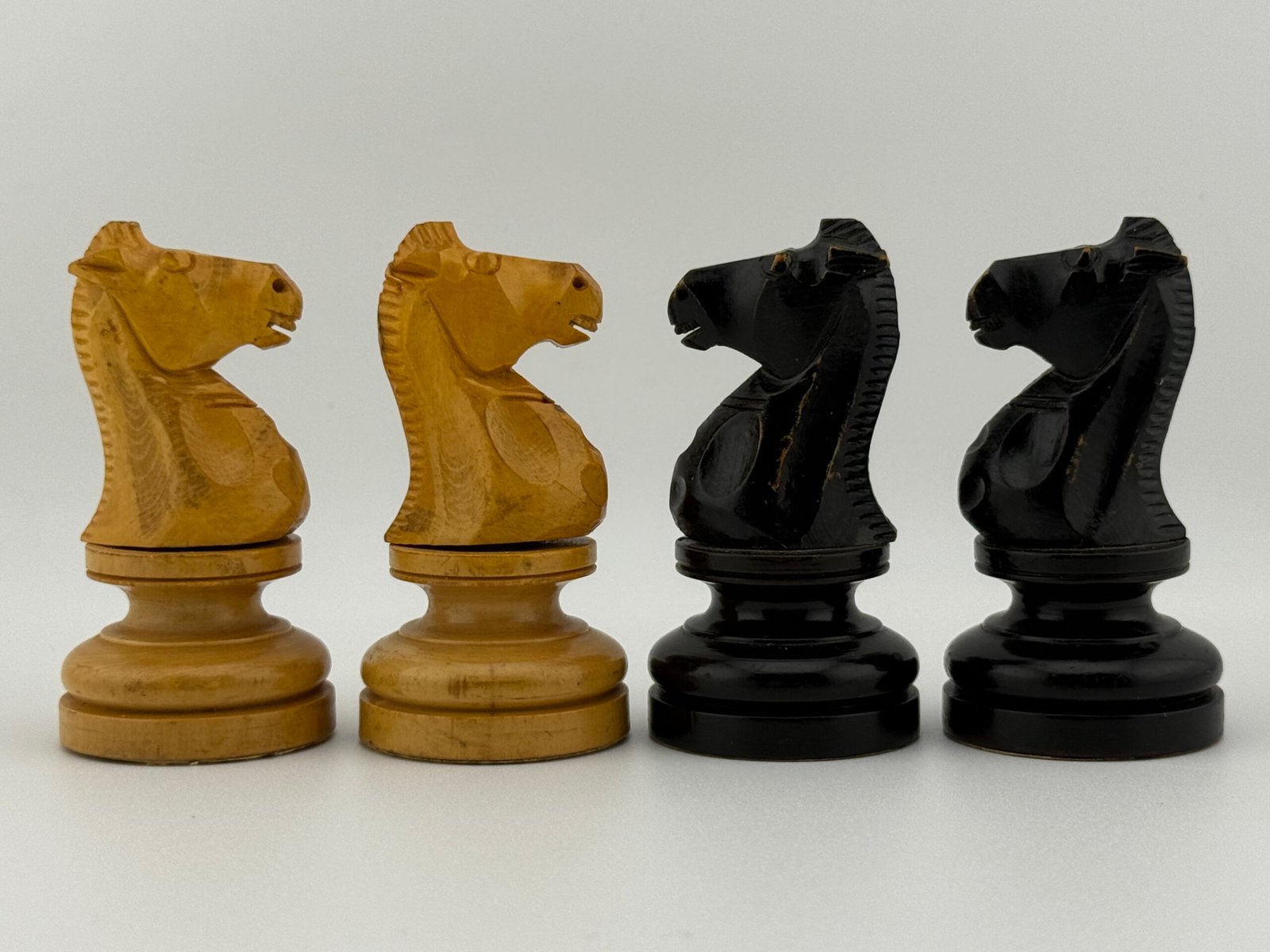
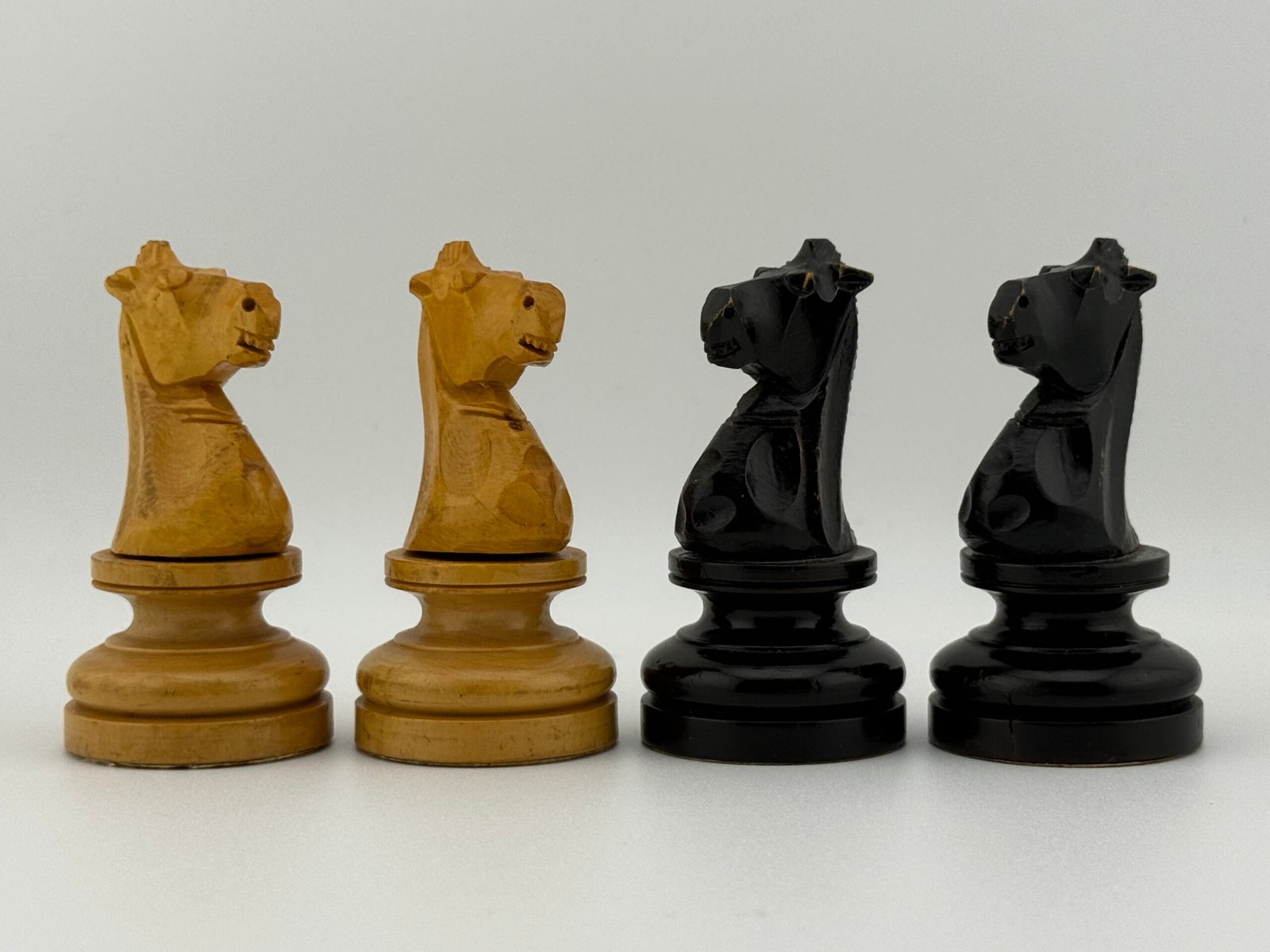
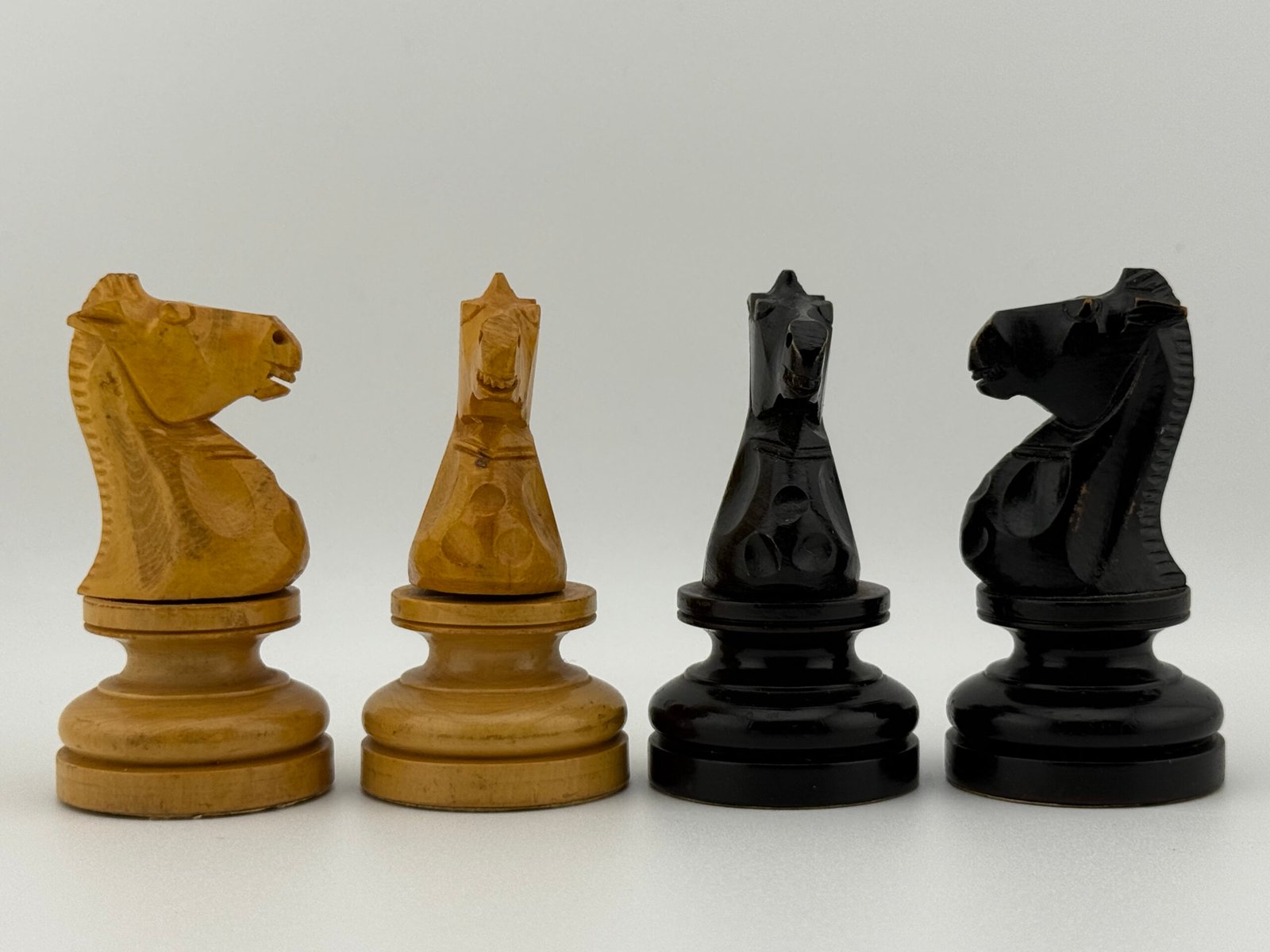
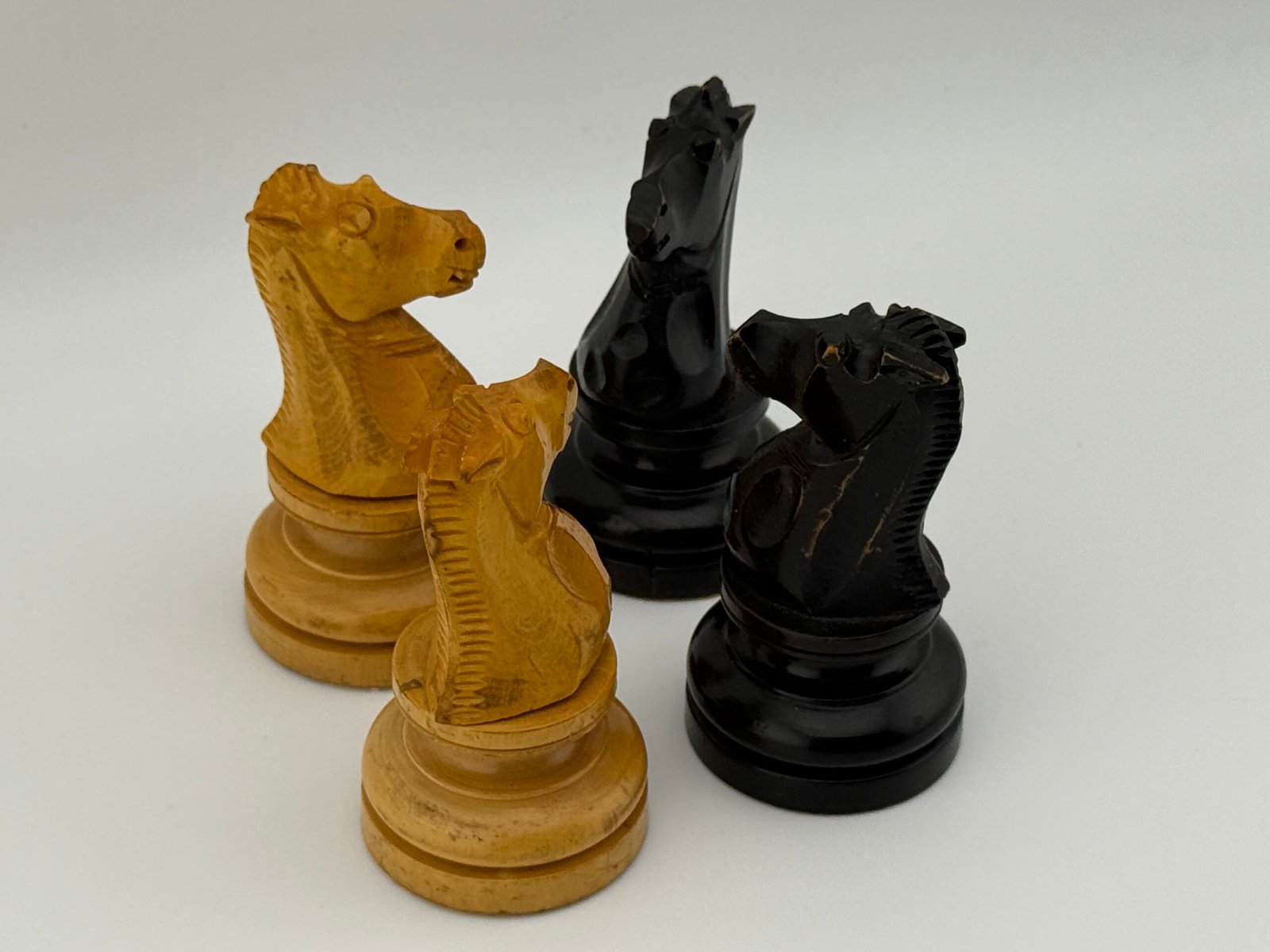
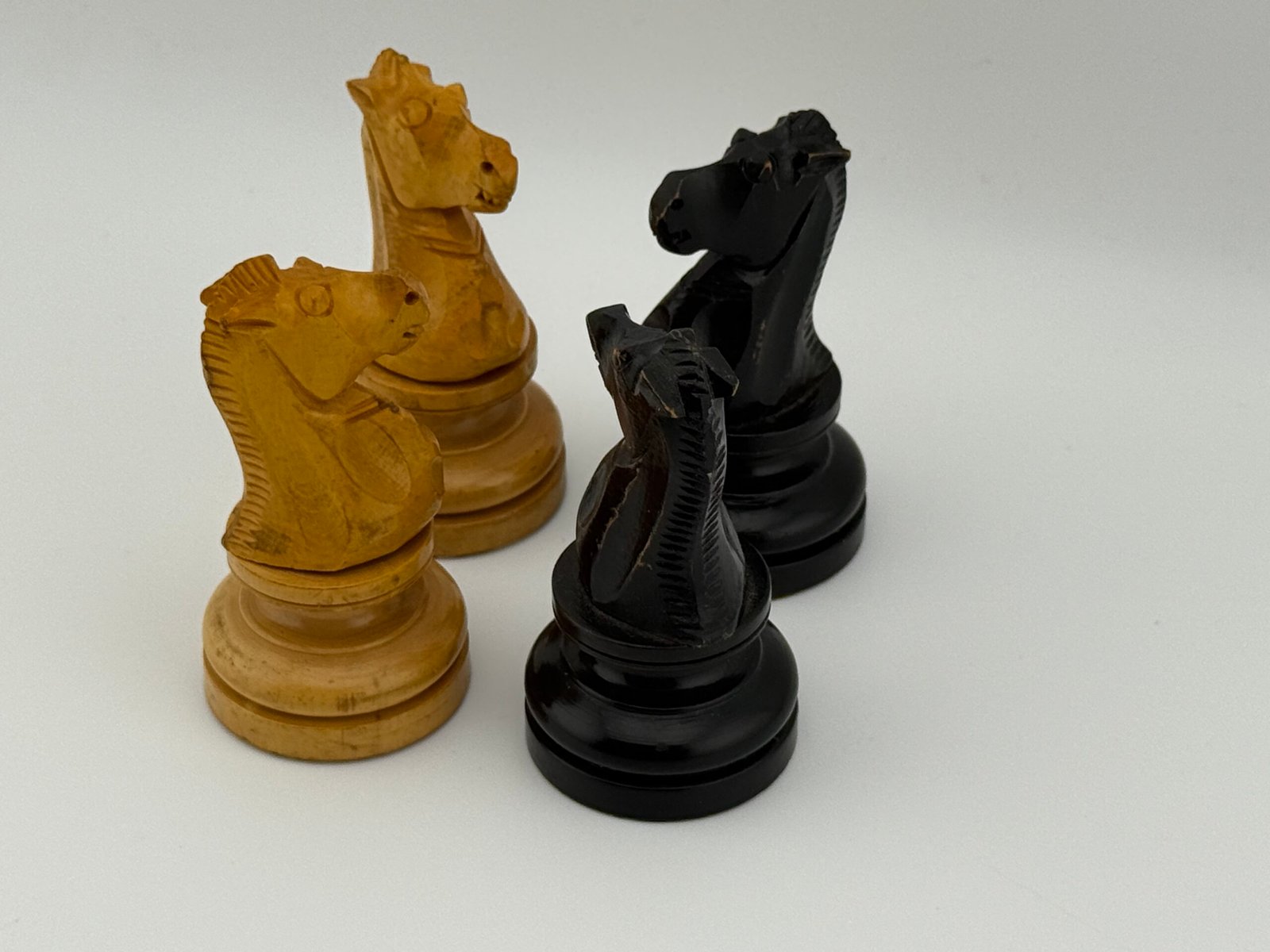
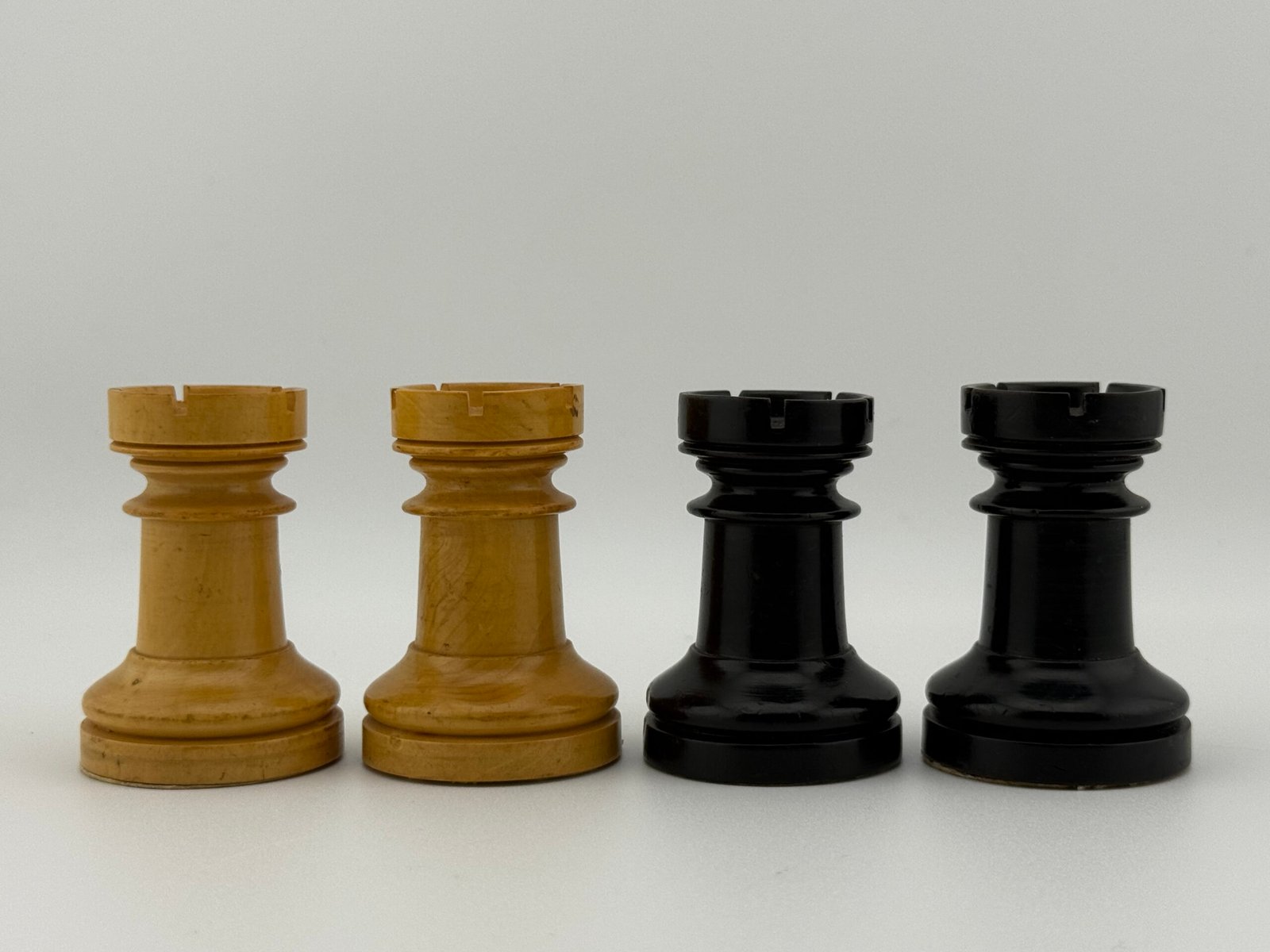
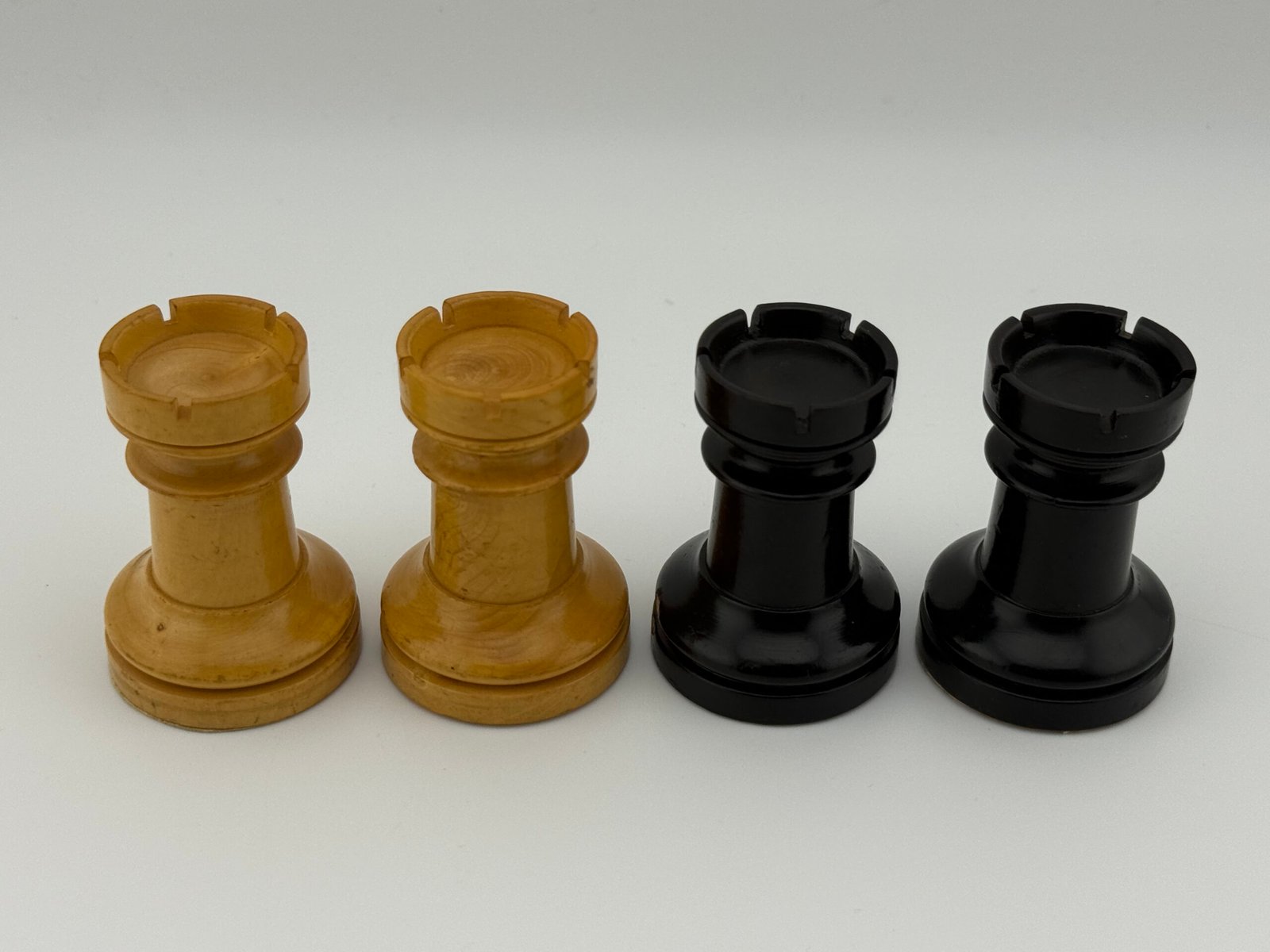
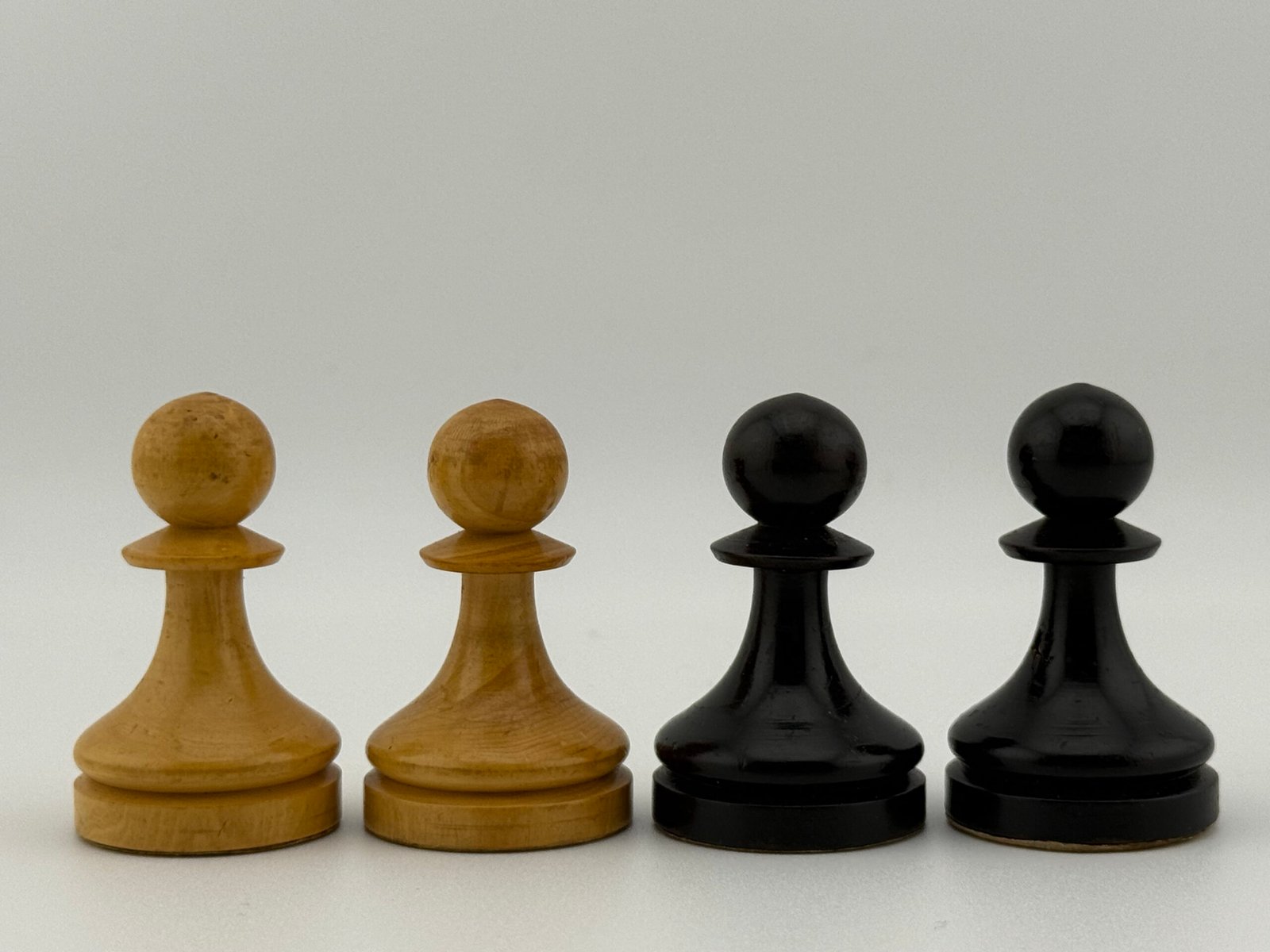
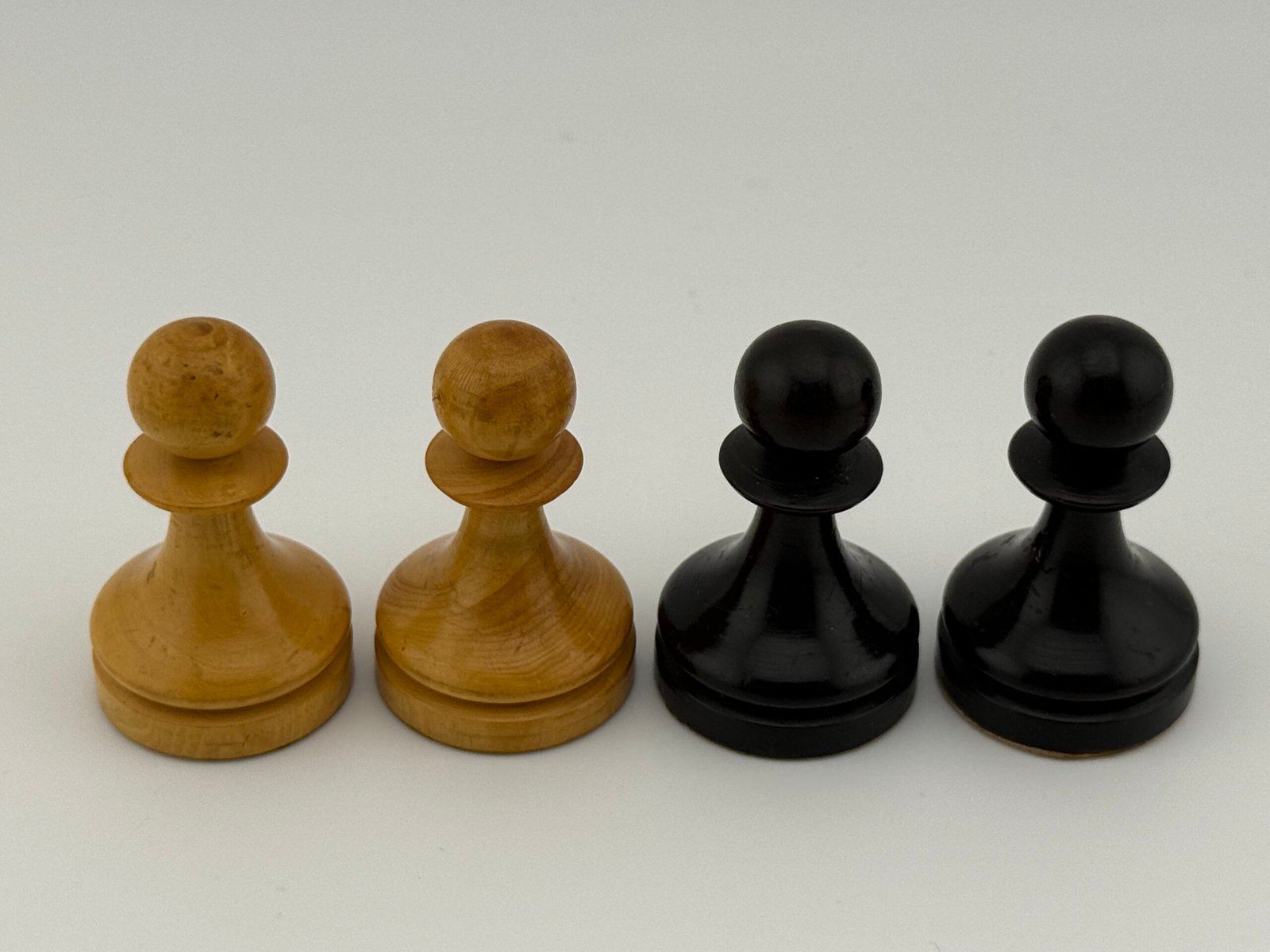
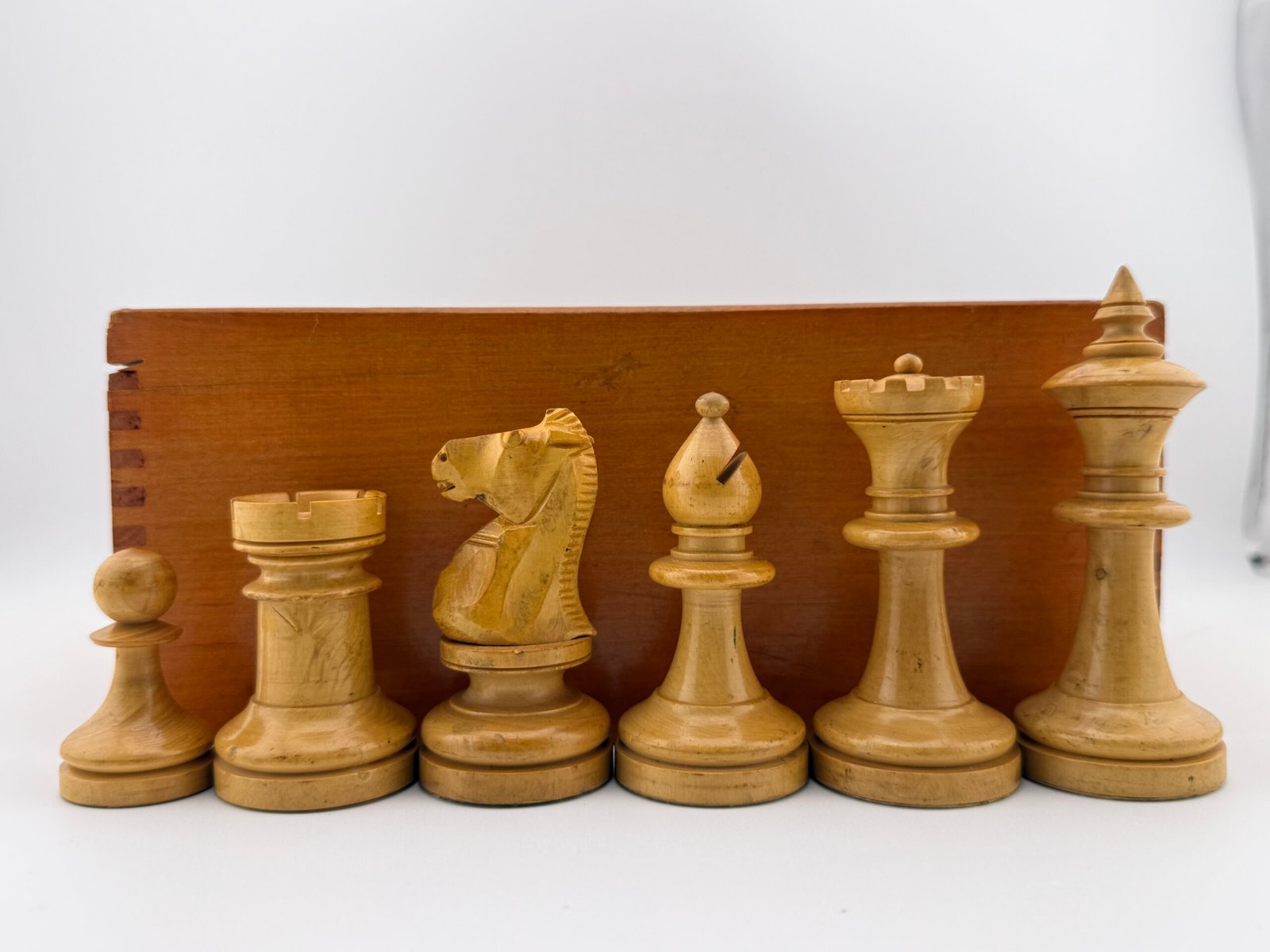

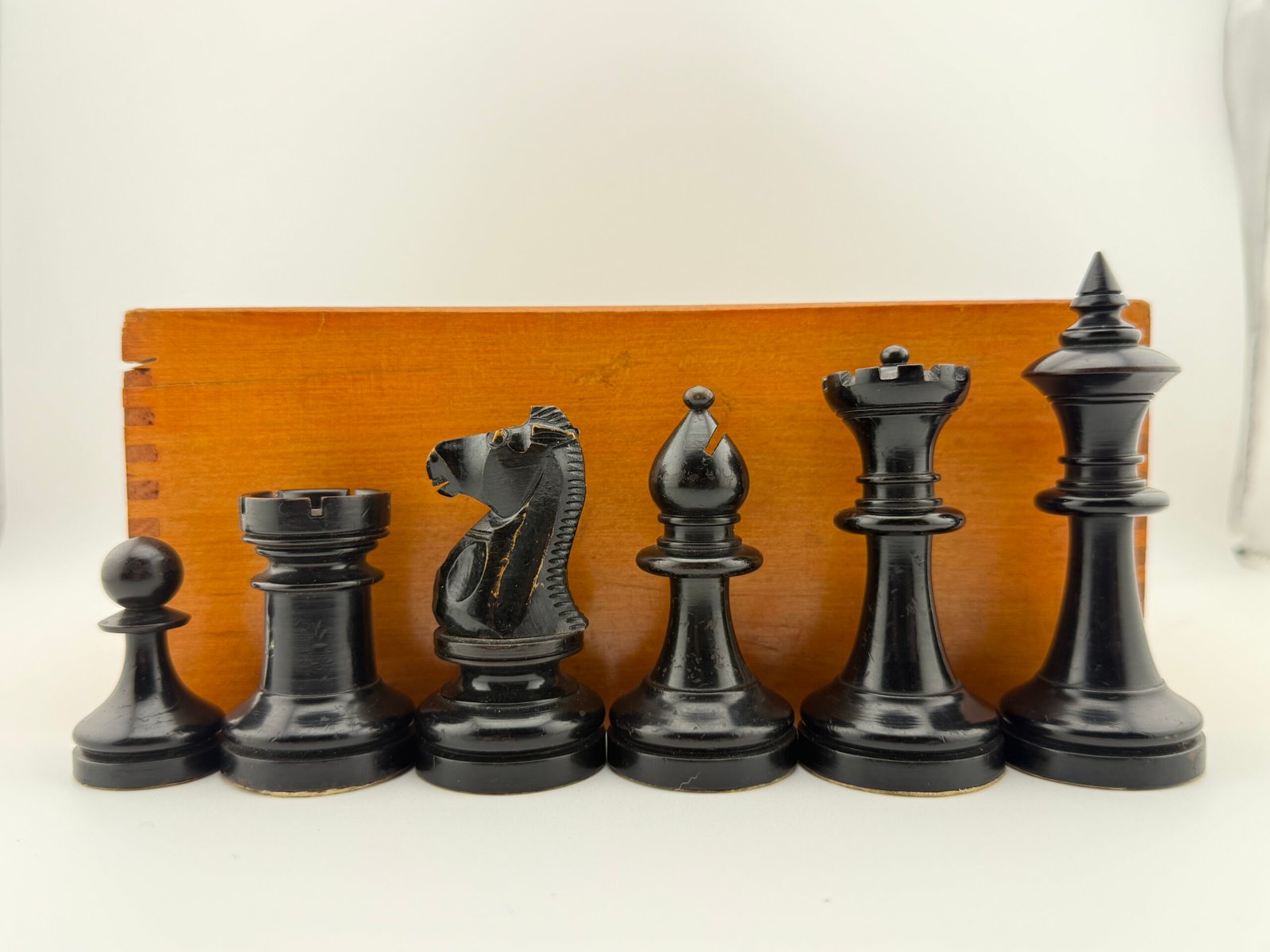
I was fortunate enough to acquire what I consider one of the many “holy grails” of the chess-collecting world: an original 1904 Cambridge Springs International Chess Congress 3.75″ chess set, discovered through Facebook Marketplace in Loudon, New Hampshire.
Based on what is currently known, this appears to be only the third documented 3.75″ Cambridge Springs set, with the other two examples owned by Steve Etzel and Mick Deasey. I do want to be clear that there are simalar sets known but they differ in size and/or featured details such as different style knights. Below are the differences I have identified thus far among the three known 3.75″ examples:
- Rook Merlons
My rooks have five (5) merlons, compared with the four (4) found on both Steve’s and Mick’s examples. - Queen Crenellations
My white queen has twelve (12) crenellations, while the black queen has eleven (11). Both Steve’s and Mick’s sets have queens with eight (8) crenellations. - King Finial Turning Ring
The finial spikes on Steve’s king and mine have a much more pronounced turning ring compared with Mick’s example. - Finial Spike Base
The rolled base of the finial spike on Mick’s king and mine features an additional turning ring, while Steve’s example does not have one. - Knight Carving
Steve’s knight heads and mine are remarkably similar to one another. Mick’s example differs slightly, with a somewhat more pronounced nose and mouth area, a characteristic that can also be seen on some of the other known examples.
These differences raise an interesting question as to where my set falls chronologically. It could potentially postdate them, or perhaps even represent one of the eight sets used during the tournament itself. Unfortunately, only a limited number of photographs from the 1904 Cambridge Springs Chess Congress are known, and the surviving images are not detailed or sharp enough to determine the exact design characteristics of all eight sets, or, in many cases, even one set with complete certainty.
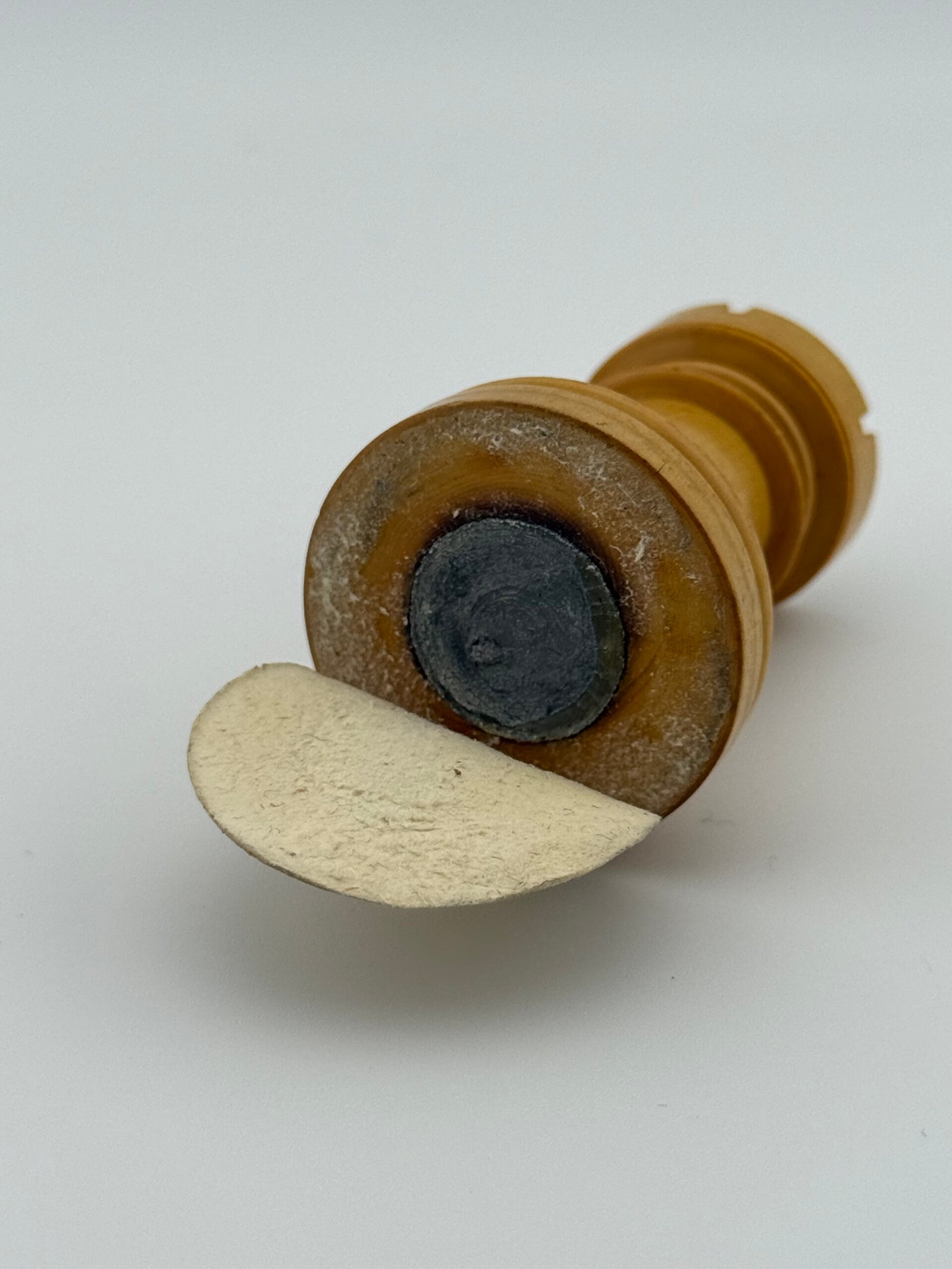
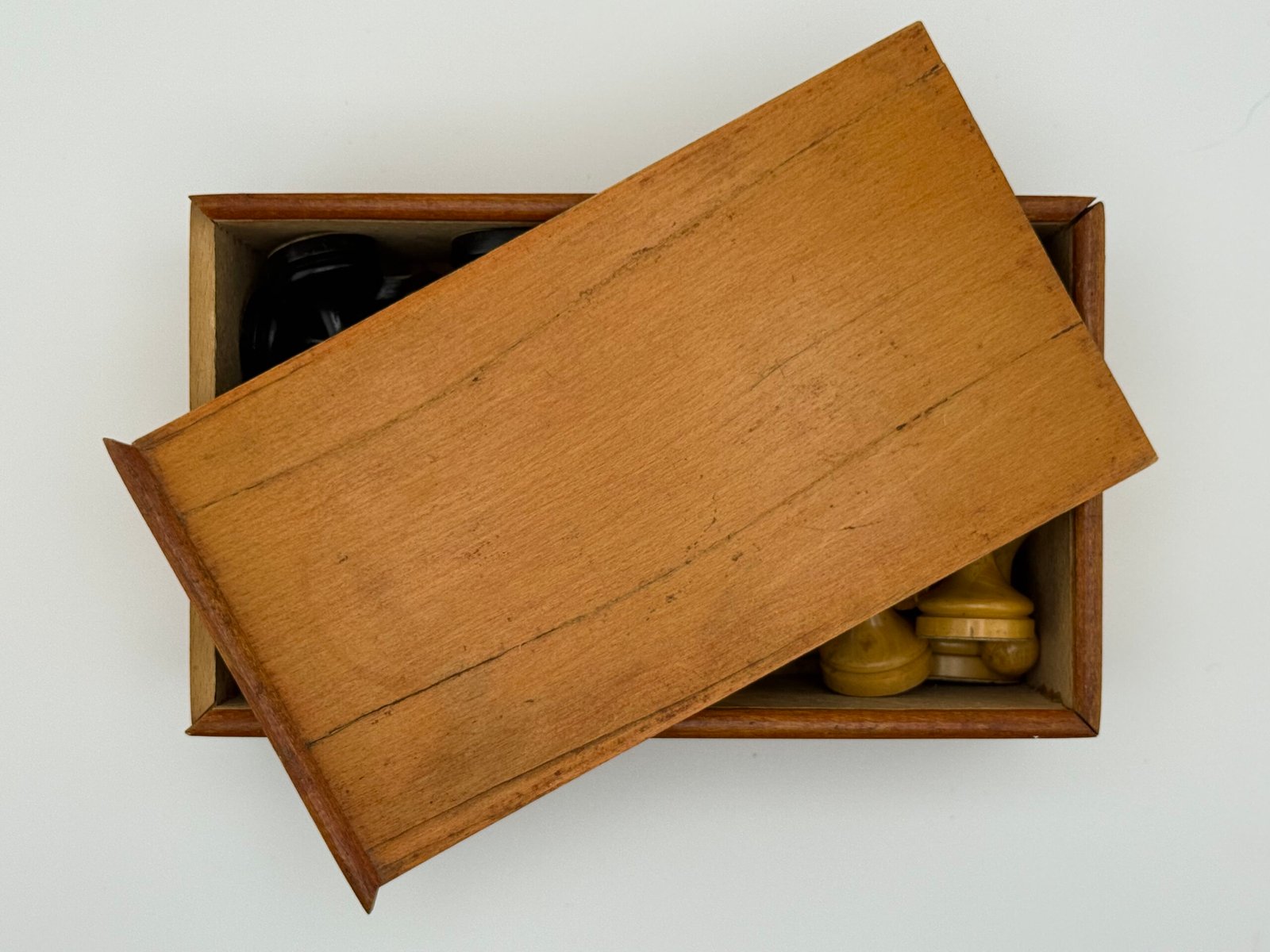
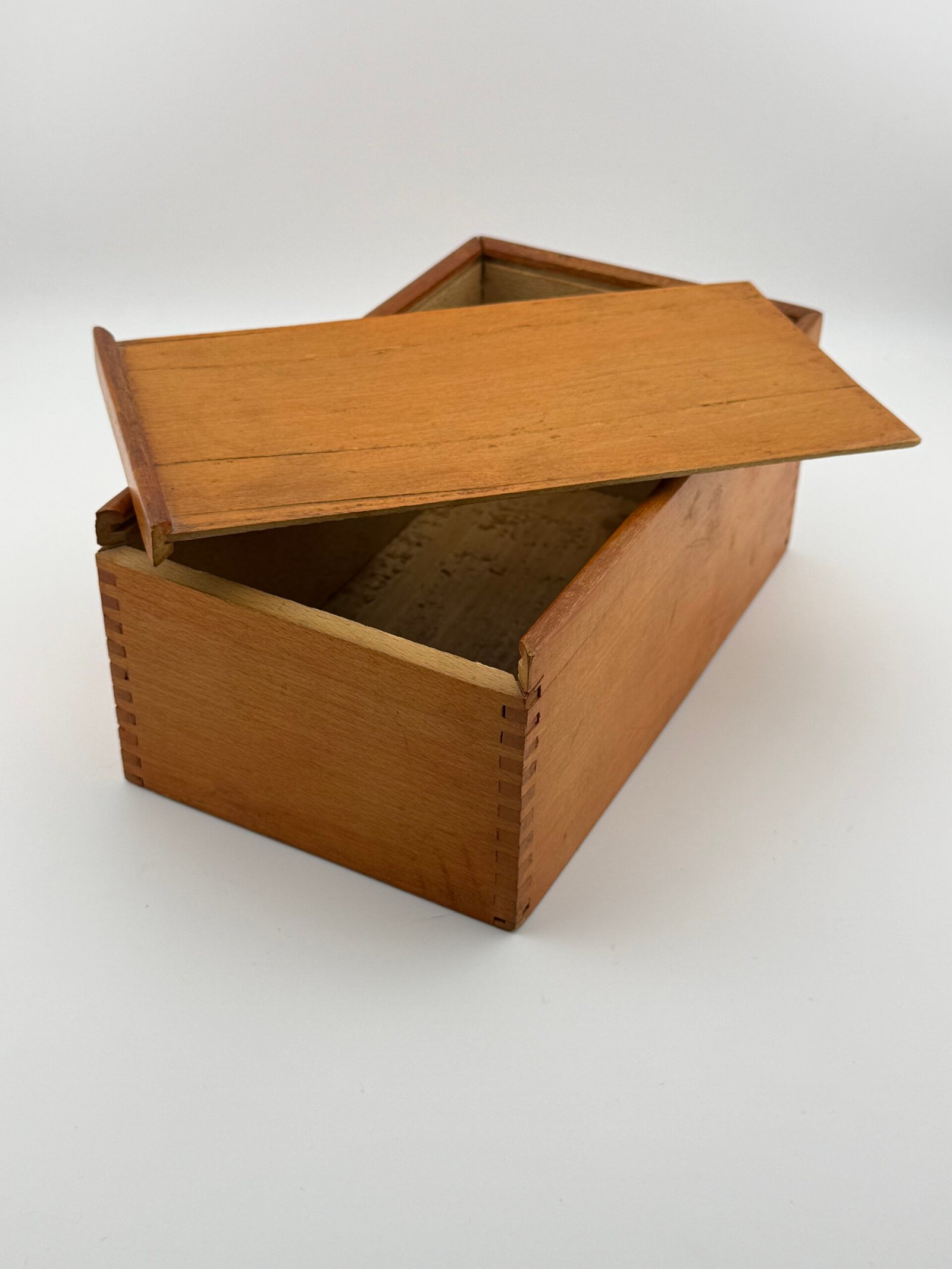
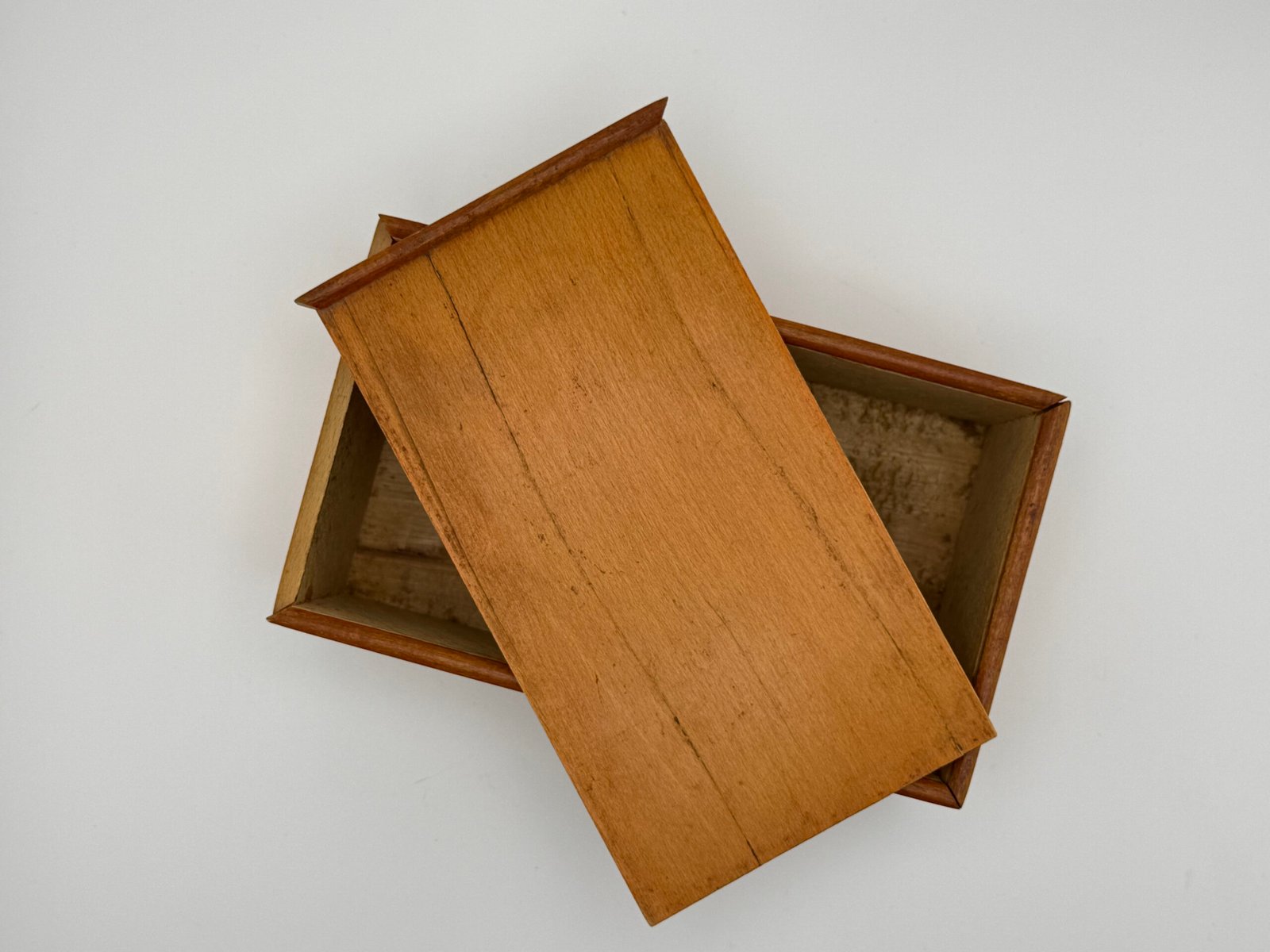
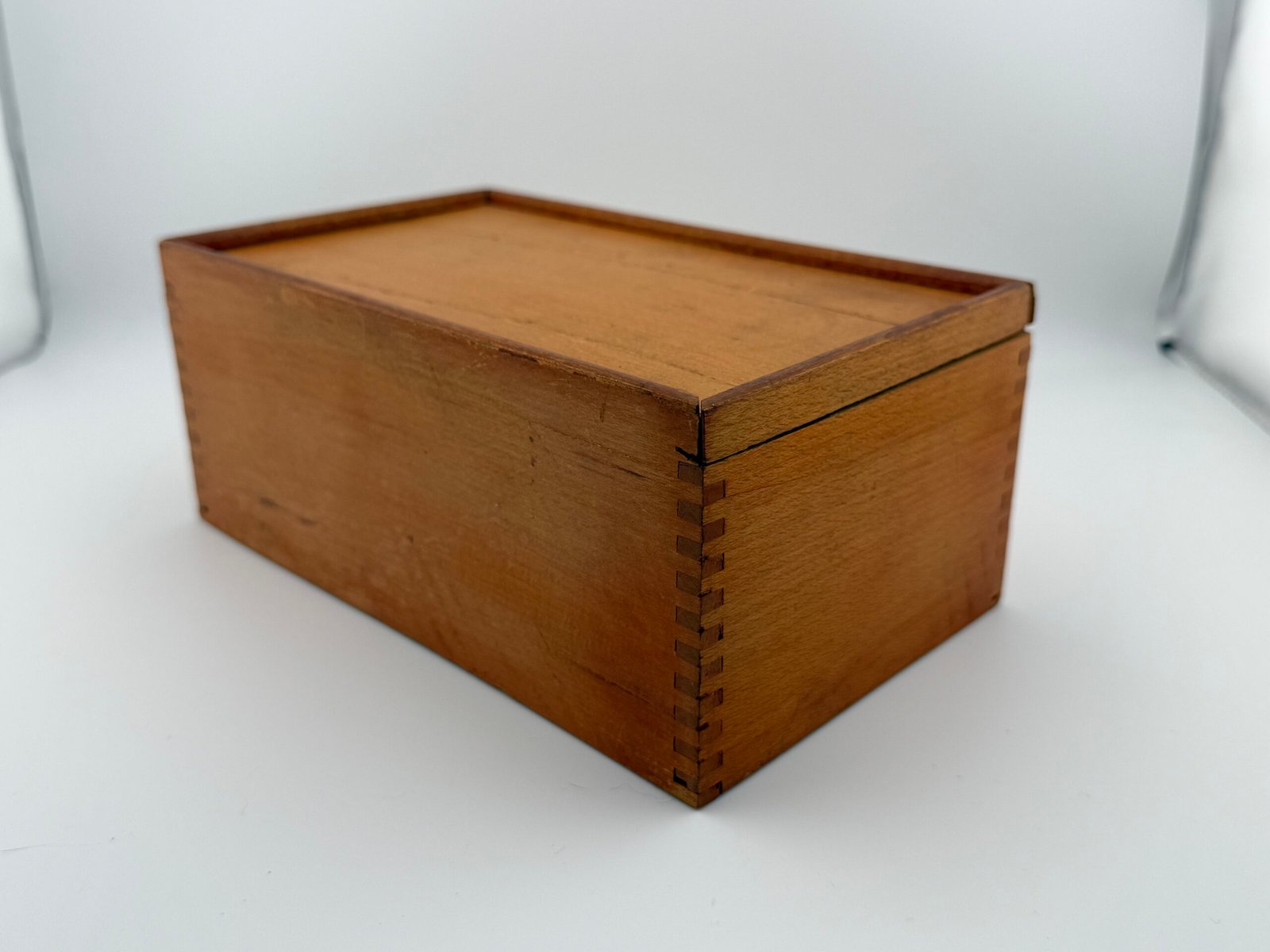
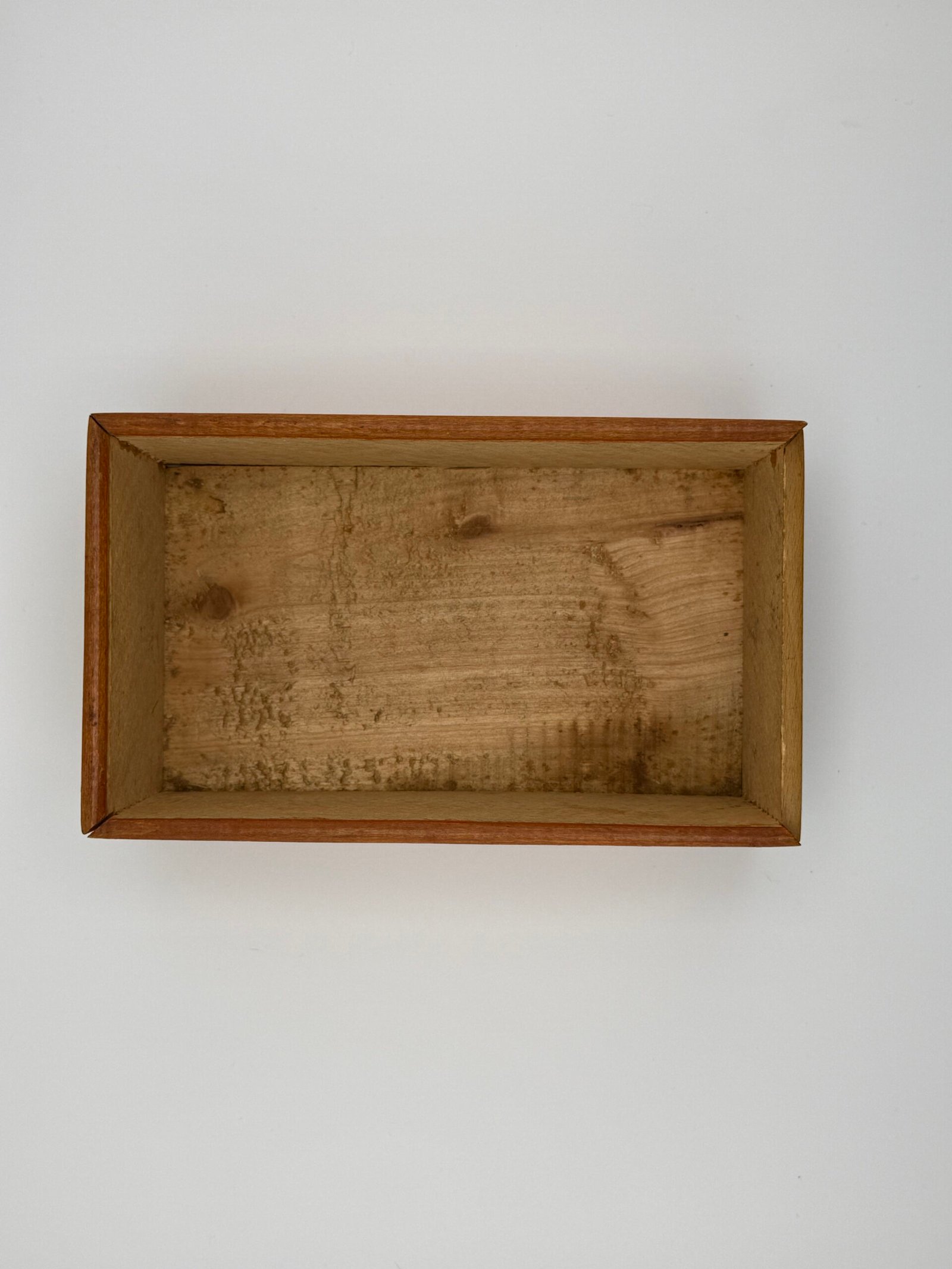
All of the pieces in my set retain their original leather pads, the set is weighted, and it came with what appears to be its original box, which is remarkably similar (almost identical) to the box associated with Steve Etzel’s example.
Alan Buschmann has suggested that ACC may have allowed its carvers or turners a certain degree of individual license and personal choice when finishing specific details, such as varying the number of a queen’s crenellations from one side of the same set to the other. Or, as seen in this particular set design, one example may feature an additional turning ring at the rolled base of the king’s finial spike, while another set of the same design omits that detail entirely.
Alan has also observed similar inconsistencies in other ACC sets… for example, instances where one rook has no merlons while the remaining rooks do. In that case, it almost looks like someone simply forgot to finish the job. 😂
Alan has also seen examples where the number of merlons on the rooks differs between separate sets of the same design, with one set having more or fewer than another. These variations suggest that certain decorative details were not always produced to a completely rigid standard from one set, or even one piece, to the next. He also suggests that some of these differences may simply be a result from the sets being turned and carved at different times, allowing subtle design variations to develop naturally from year to year as production continued.
Considering that there is no definitive documentation showing the exact design of all eight sets used during the tournament, and that the surviving period photographs do not provide enough clarity to resolve every small design detail, I believe this example can reasonably be considered a bona fide 1904 Cambridge Springs design.
That does not necessarily mean this exact set was used during tournament play, but its size, construction, weighting, leather pads, box, and overall design strongly support its identification as part of the Cambridge Springs family.
I would like to thank Alan Buschmann and Mick Deasey for their insight, opinions, and guidance in evaluating this set and its authenticity.
Alan, in particular, has been a major, if not decisive, reason for my growing appreciation and understanding of American Chess Company chess sets over the years.
My opinion of this design…
For collectors, the 1904 Cambridge Springs Chess Set is not merely a beautiful artifact, it is a testament to the legacy of one of the most influential tournaments in American chess history. The tournament is remembered not only for its stellar cast of players but also for its role in elevating American chess onto the international stage. Owning this set is like holding a piece of that history in your hands, a tangible link to the era when champions like Lasker, Chigorin, and Pillsbury were reshaping the game.
It is truly a collector’s gem when it comes to American Chess History.