

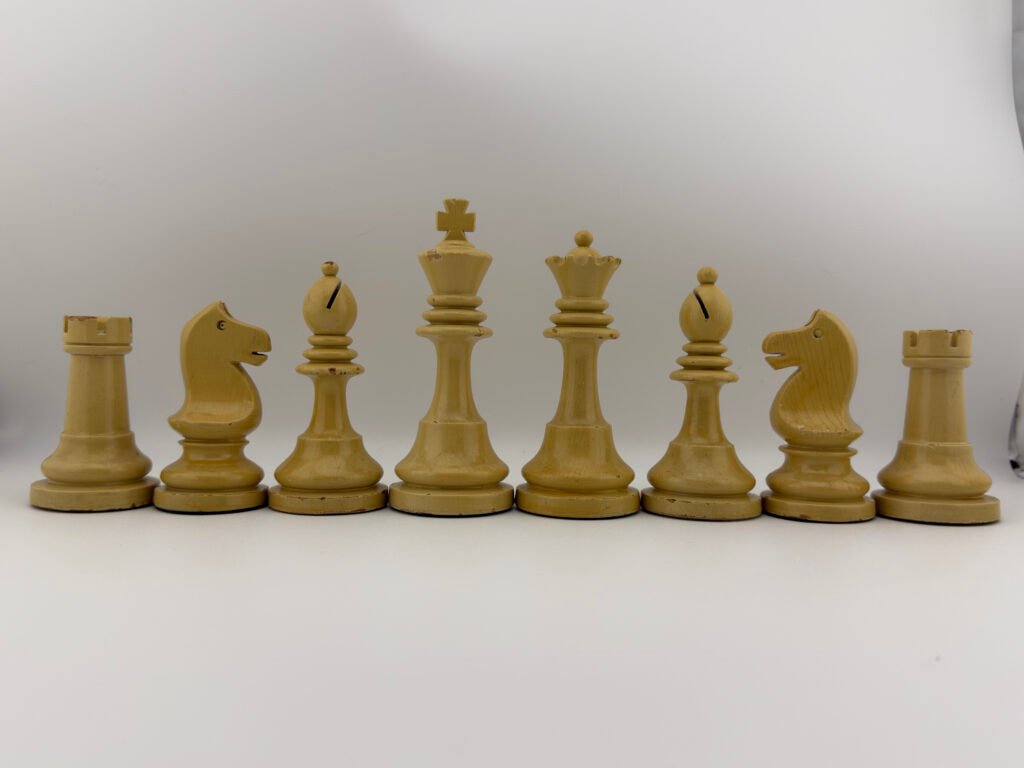
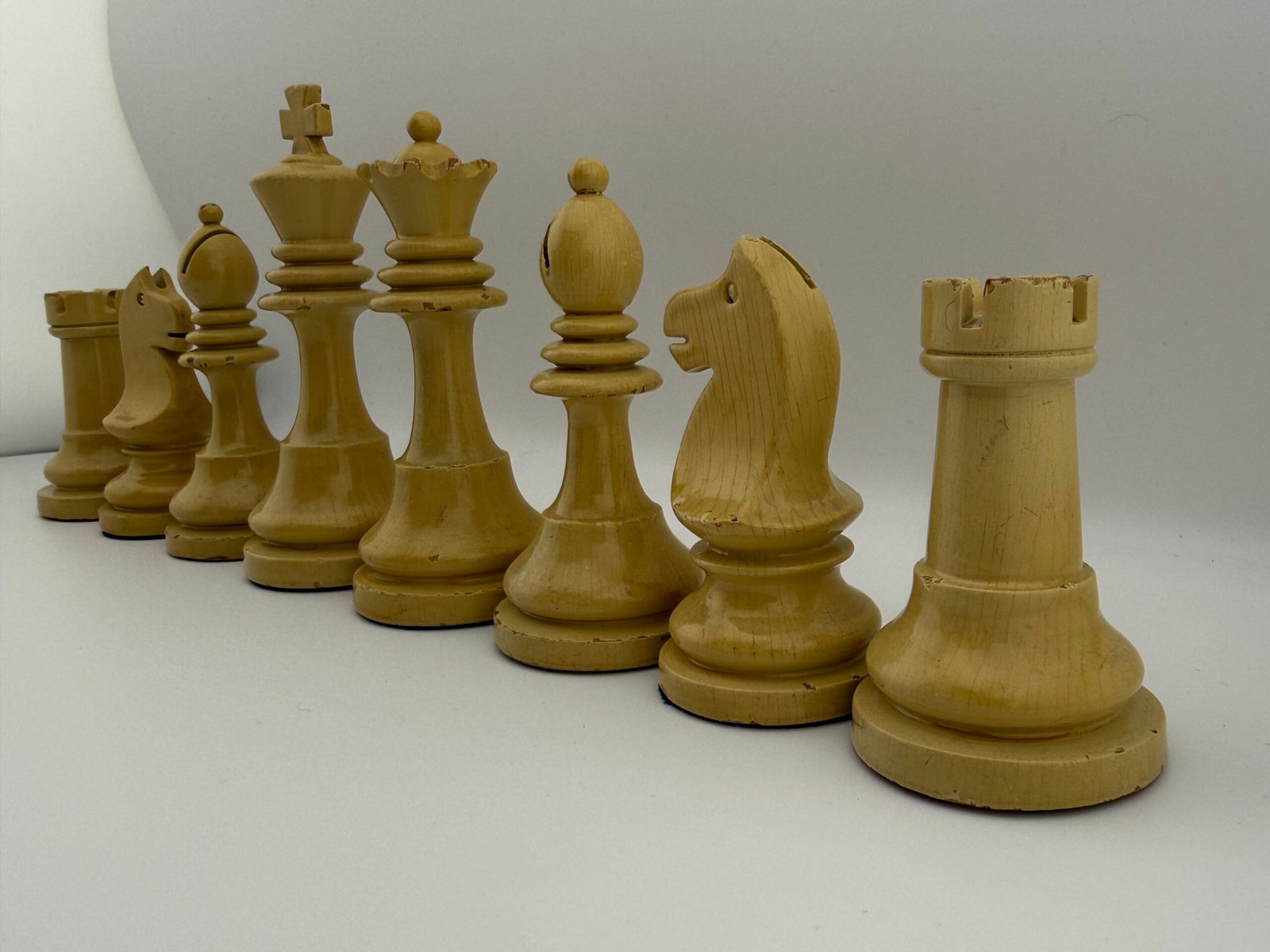
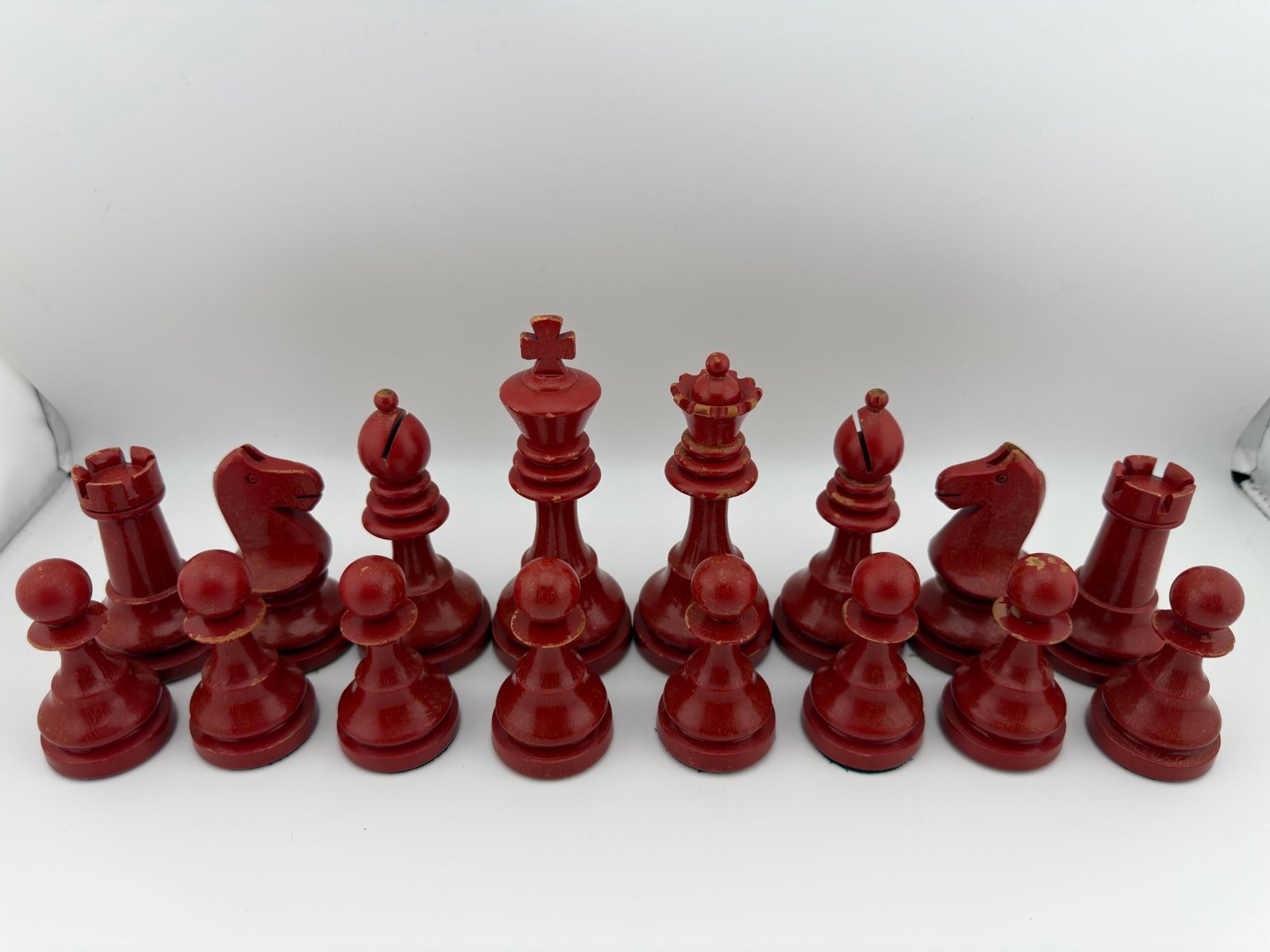
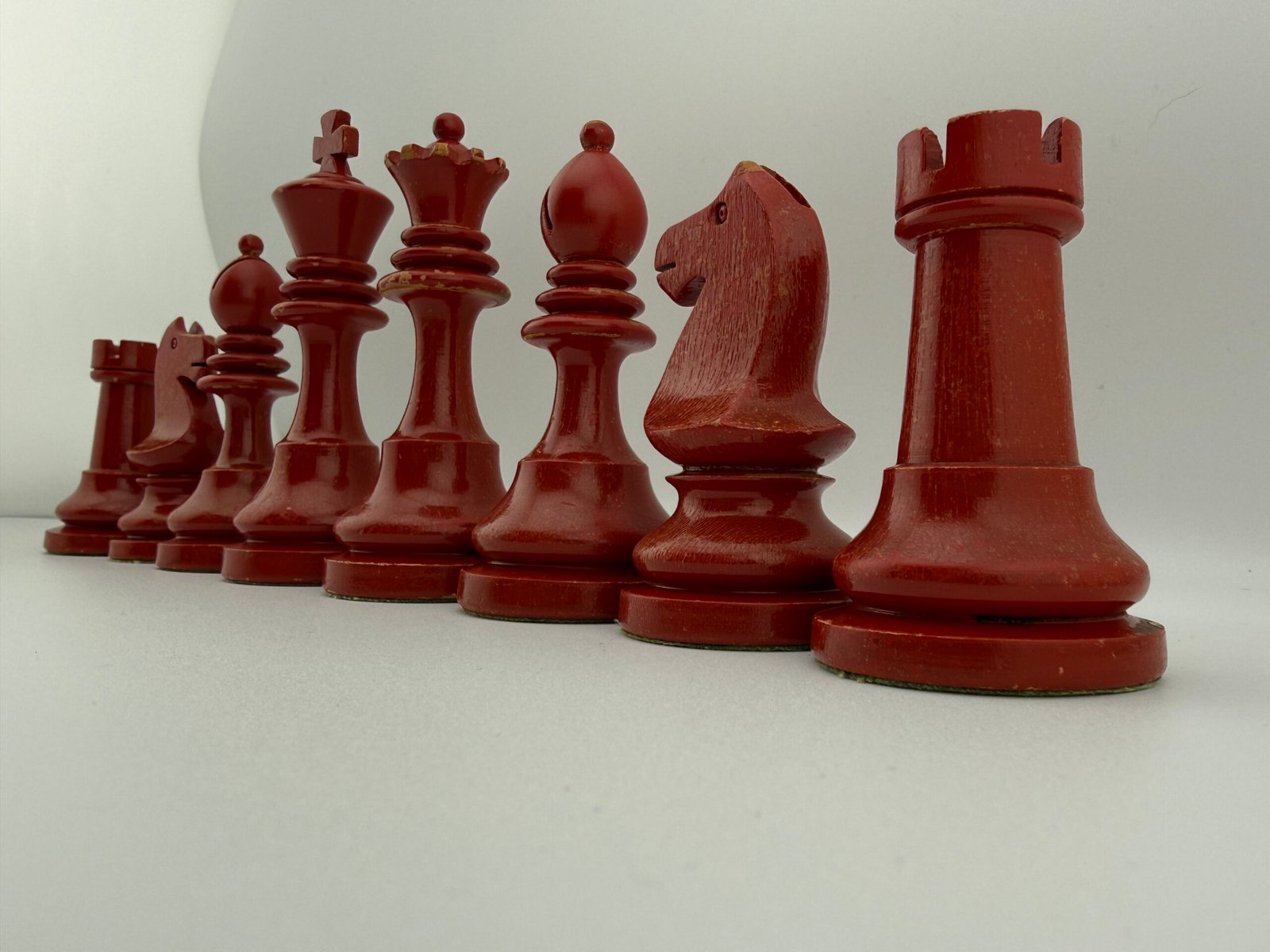
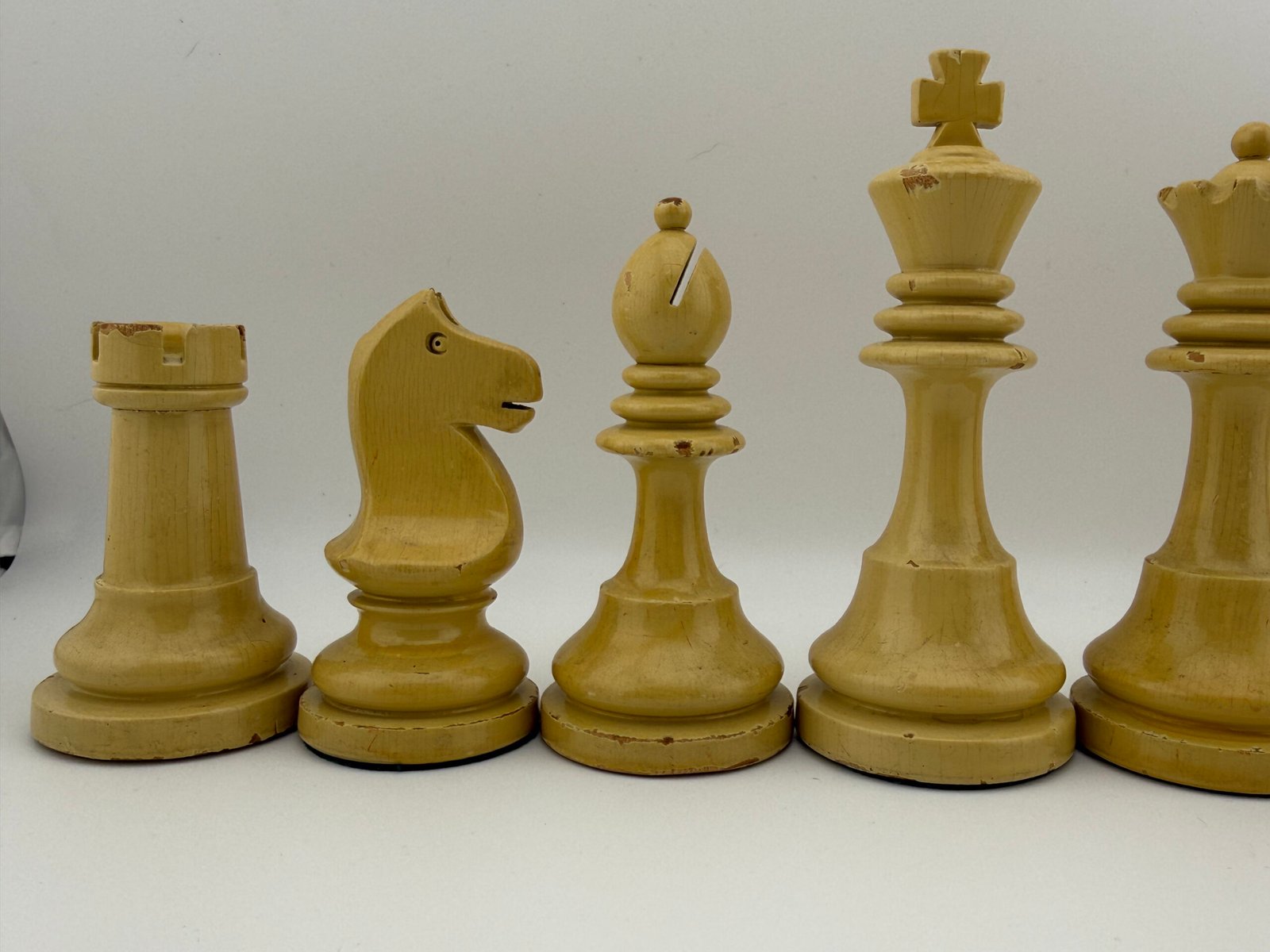
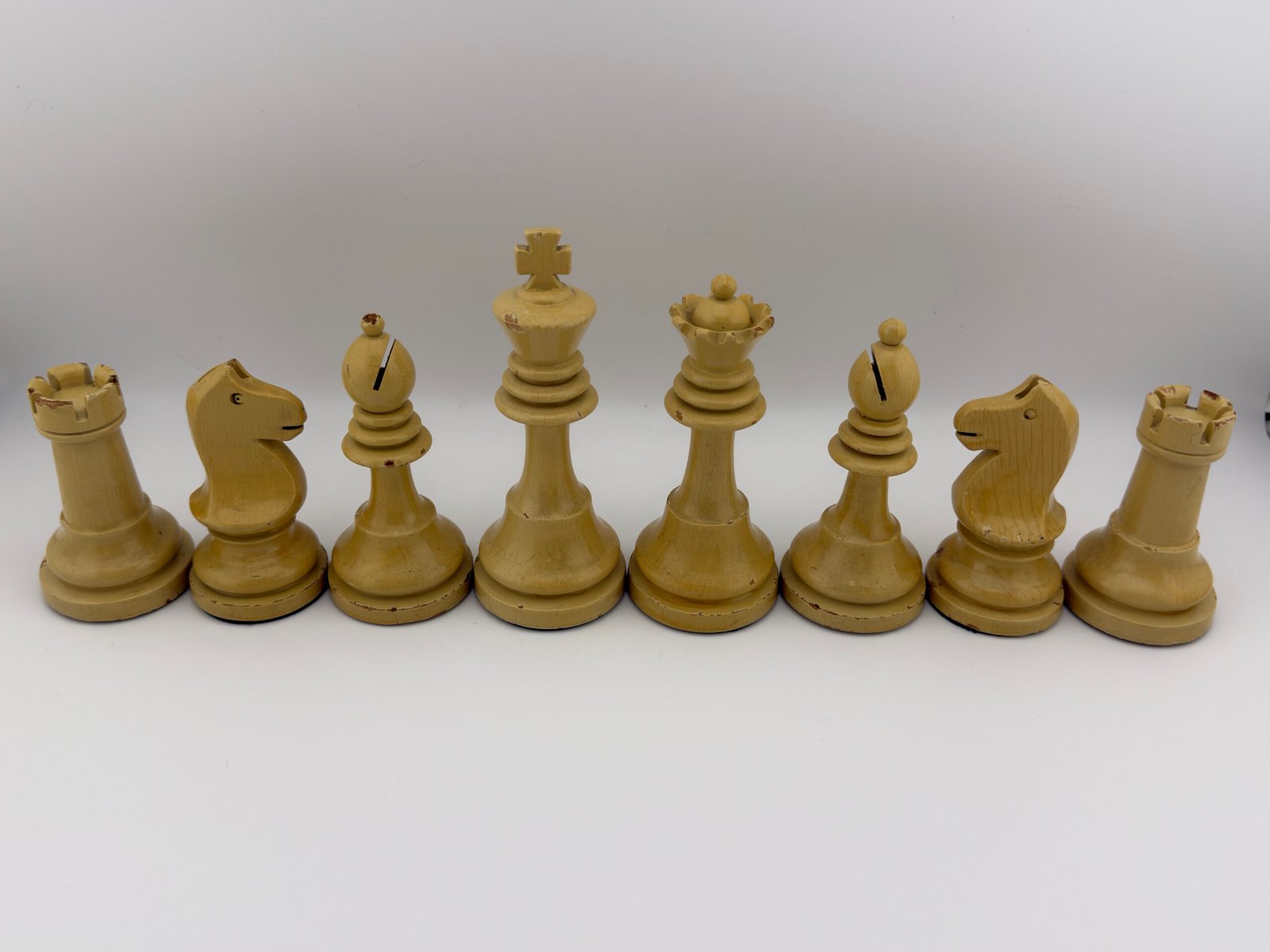
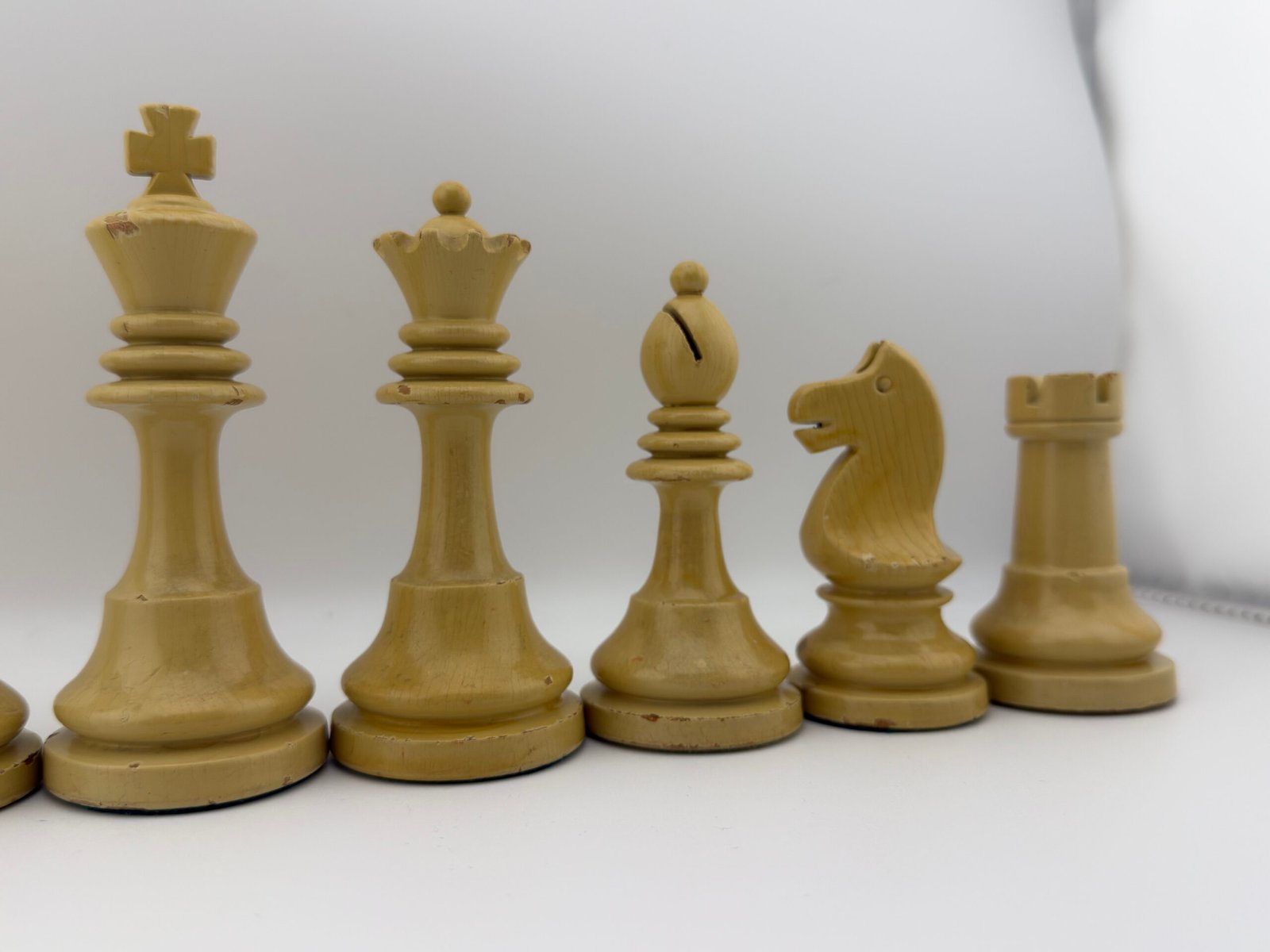
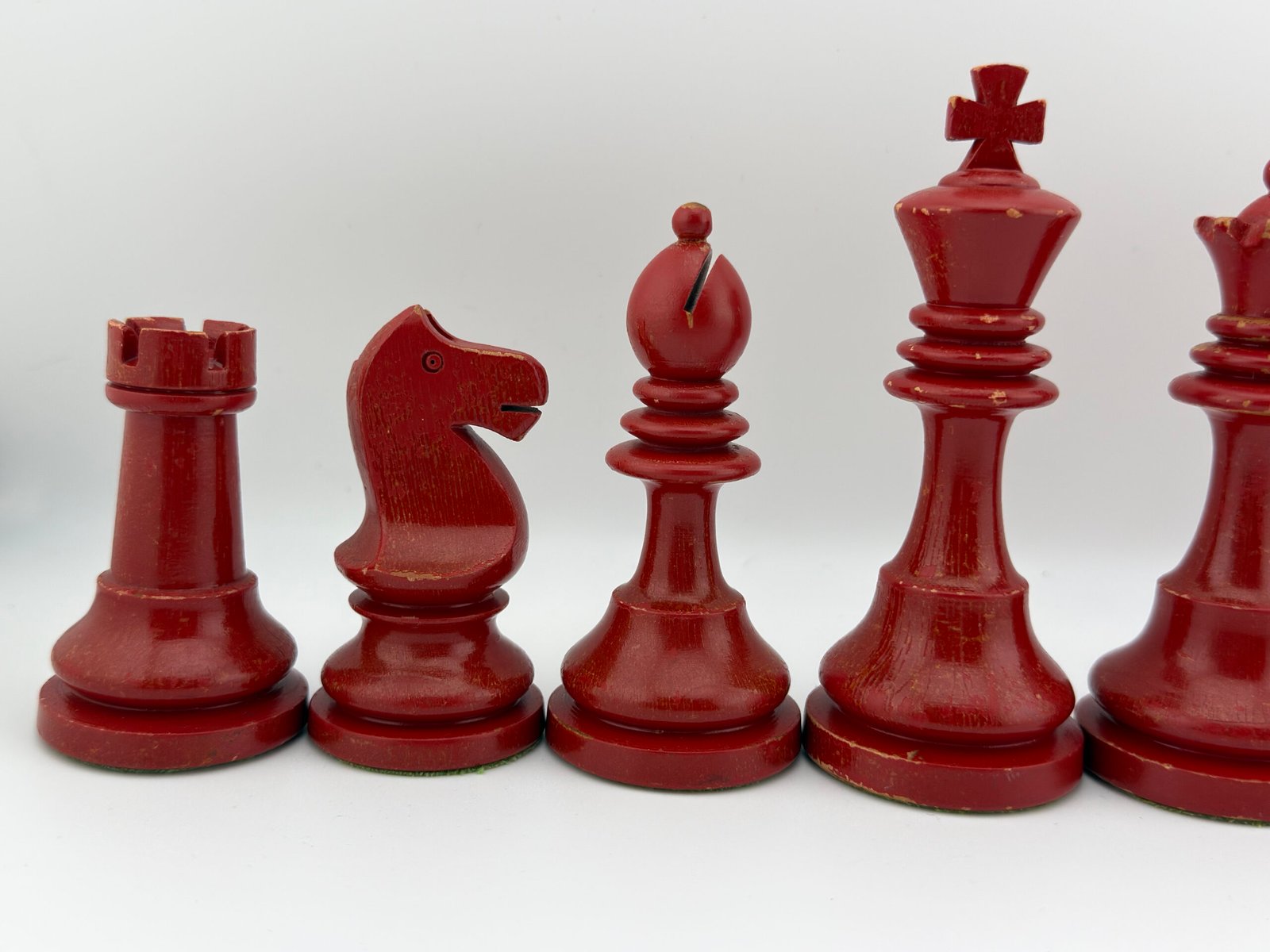
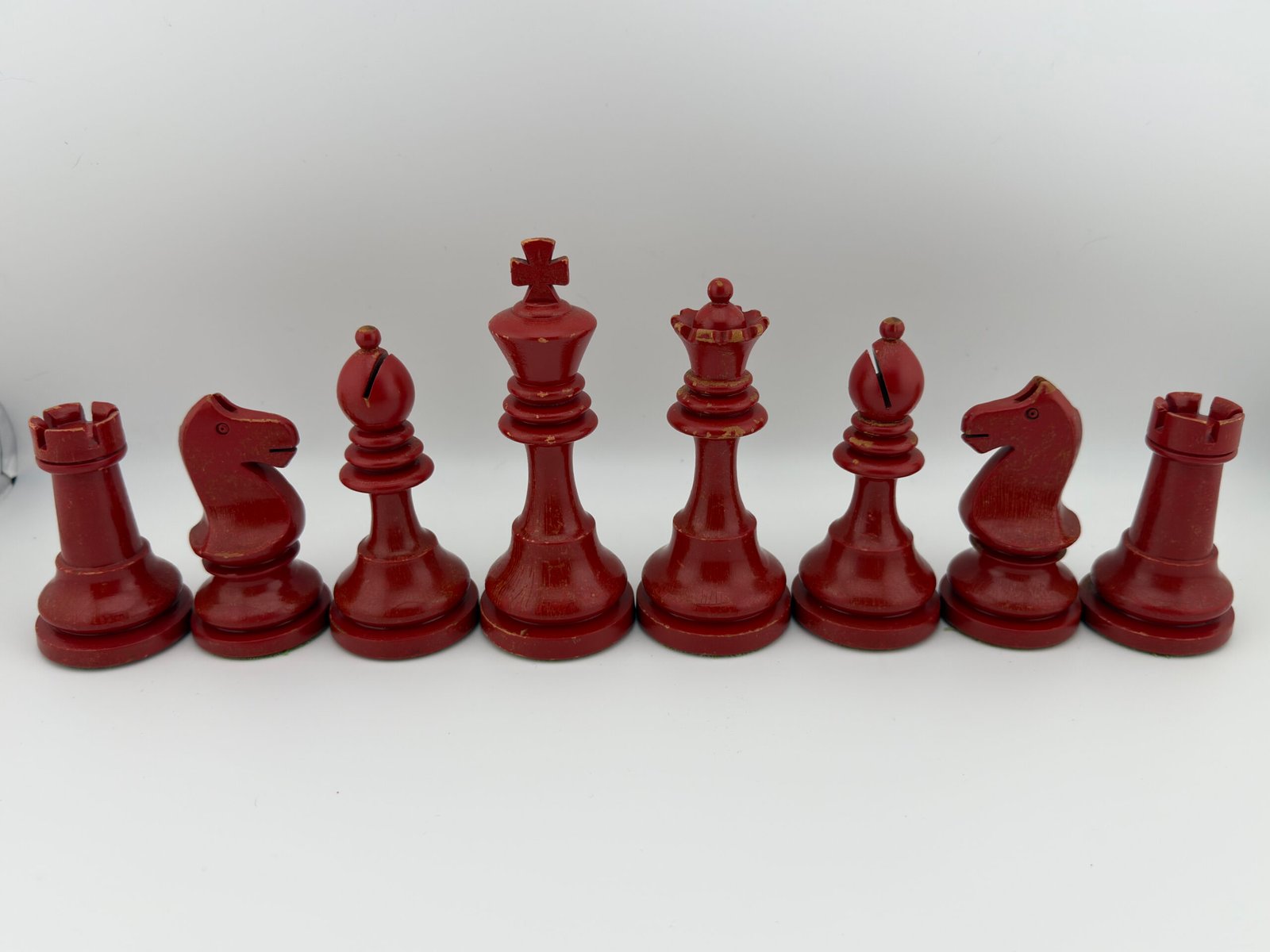
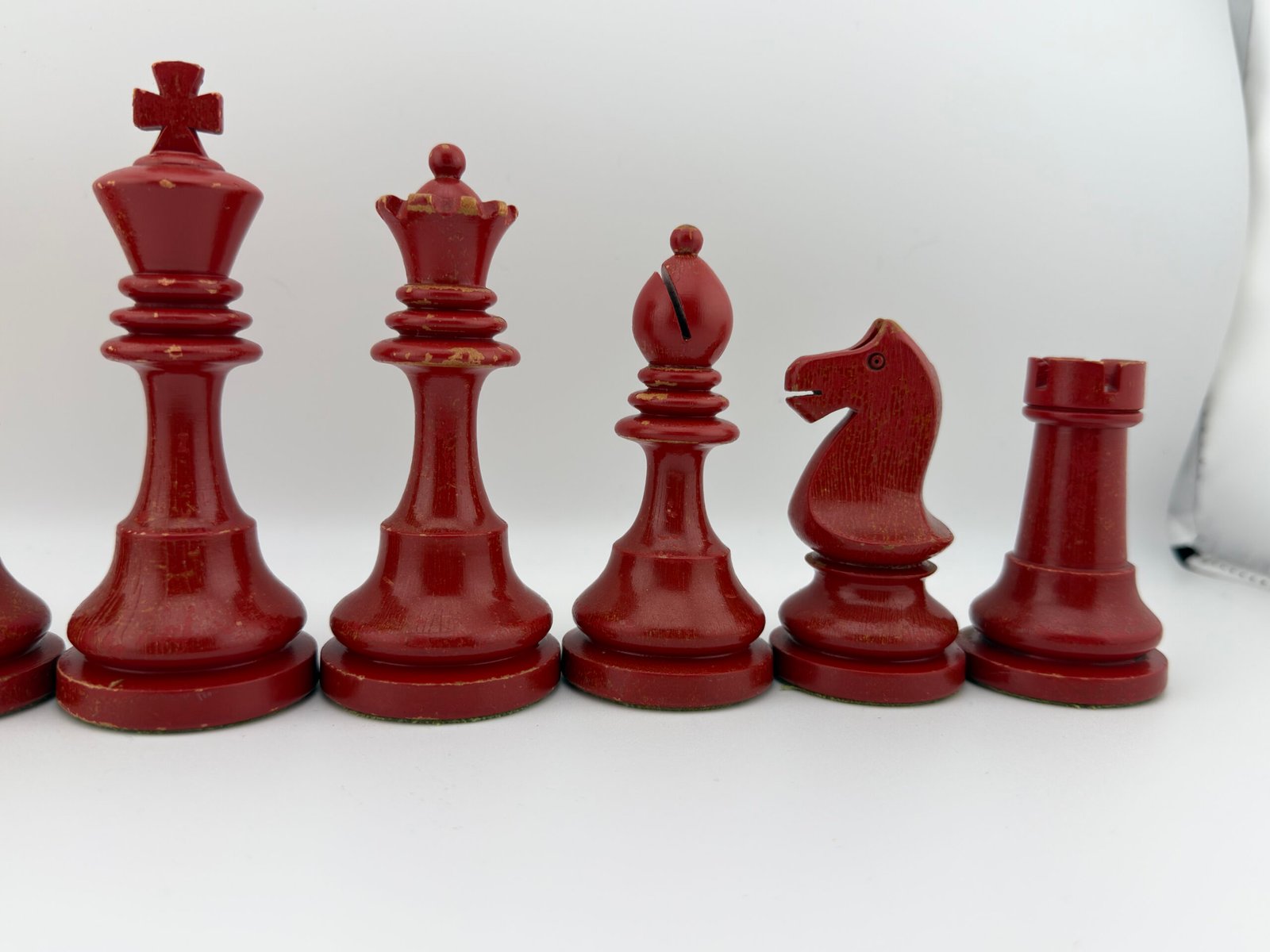
The 1920-30’s C.H.Bird’s Chessmen (Ultra rare Red & White 4 5/8″ King) chess set by “C.H.Bird / Olympic Woodworking Company Inc.”.


Who was C.H.Bird? & What he did…
Clinton Harrison Bird was almost certainly a Connecticut-born businessman, manufacturer, and designer whose life bridged late-19th-century New Haven industry and one of the most interesting early American chess making ventures of the 1920s and 1930s. Public genealogical indexes identify him as born in Connecticut on 10 November 1857, and a Sons of the American Revolution entry names him as Clinton Harrison Bird of New Haven, son of Theodore Bird and Eliza (Harrison) Bird. That same SAR record places him firmly in respectable New Haven civic society by the first decade of the twentieth century.
By 1904–1905, Bird appears not as a craftsman on the margins but as a substantial small industrial entrepreneur in New Haven, Connecticut. The city directories list him as president and treasurer of The C. H. Bird Co. at 106 Park, while also serving as treasurer of the New Haven Real Estate and Power Co. at the same address. His residence is given as 244 Orchard. The 1905 directory further states that The C. H. Bird Co. had been incorporated in February 1903, with $10,000 capital, Bird as president and treasurer, and S. Fred Strong as secretary. At that point the firm is identified as a peanut-butter manufacturer, which suggests Bird was first and foremost a versatile industrial businessman rather than a man tied to only one trade.
Park Street was the center of Bird’s business world. The Yale New Haven Building Archive states that by 1901 the owner of 210 Park Street was C. H. Bird, and that the property functioned as a multi-tenant industrial site housing a machine shop, candy factory, tailor, ice house, screw-plating business, shipping and mixing rooms, and food companies. By 1911 the building was owned by the New Haven Real Estate and Power Company, the same company for which Bird is listed in the directories as treasurer. That combination strongly suggests Bird was operating not only as a manufacturer but also as a manager or owner of industrial real estate in the Park Street district. In practical terms, Park Street looks like the commercial base from which his later woodworking and chess enterprise could very naturally have emerged.
At some point around 1920, Bird appears to have turned from general industrial enterprise toward the specialized production of chessmen. Frank Camaratta’s research on Bird’s Chessmen, which reproduces and discusses the January 1922 Woodworker article “Manufacturing Chessmen,” identifies the maker simply as C. H. Bird, says the business began as a small concern in New Haven, and later moved to Bethlehem, Connecticut. The same research argues convincingly that Bird’s chess business had nothing to do with the English master Henry Edward Bird, who had died in 1908; the timeline fits Clinton H. Bird far better. Camaratta’s article also notes that altered labels survive showing a move from New Haven to Bethlehem, which is one of the strongest pieces of evidence linking the New Haven businessman to the later Bethlehem chess maker.
What Bird brought to chess making was not old-world romanticism but industrial problem-solving. In the 1922 Woodworker material quoted by Camaratta, Bird’s shop is presented as one of only two chess-set manufacturers in the United States, the other being the much larger Drueke operation in Grand Rapids. Bird was blunt about the production challenge: the knight was the expensive piece, sometimes costing as much as the rest of the set combined. His first solution was to use cast aluminum knight heads, modeled after the established English
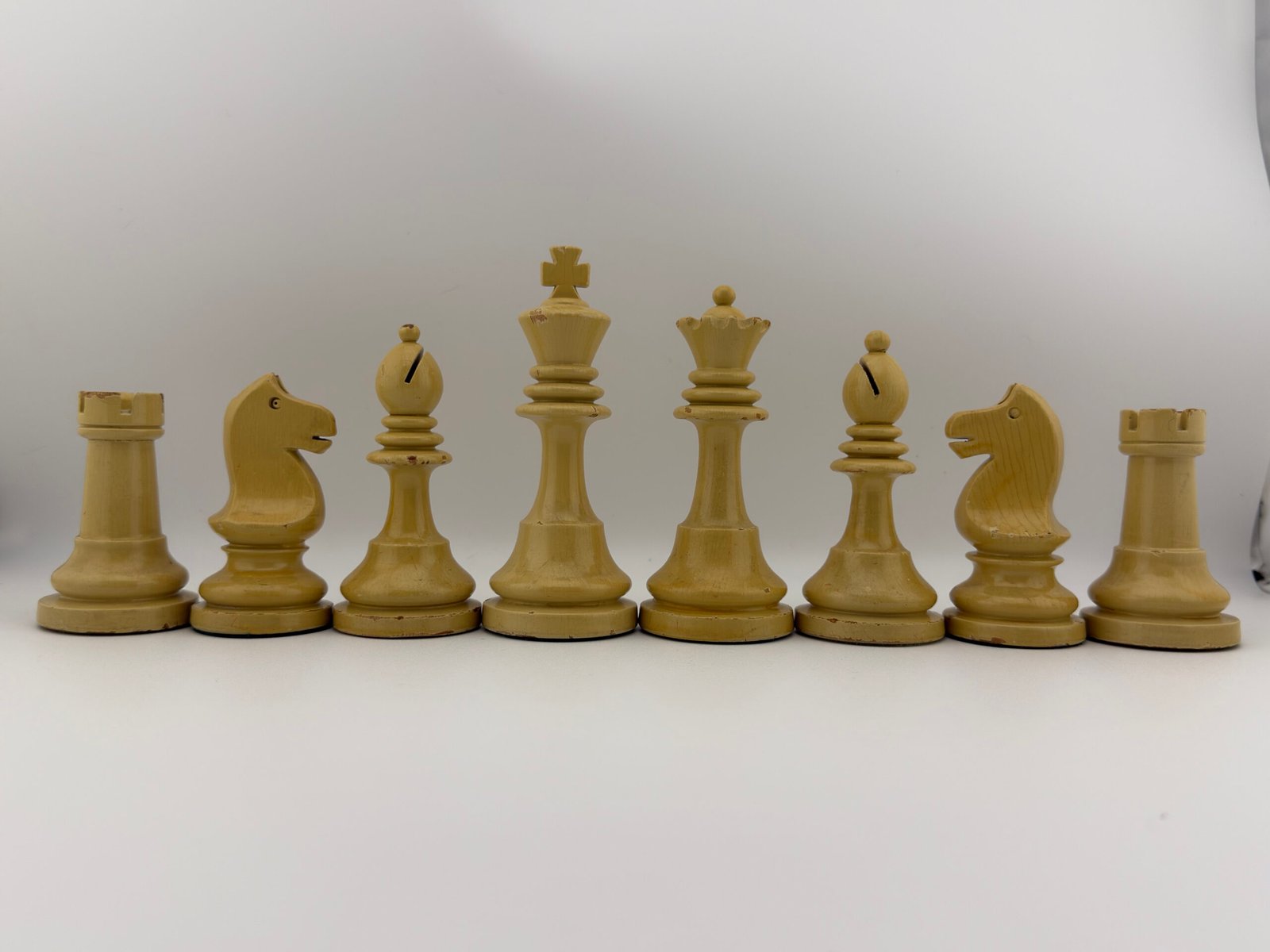
Staunton type, and mount them on turned wooden bases. His later solution was even more characteristically American: a simplified, slab-sided, one-piece wooden knight that reduced labor while retaining the basic Staunton silhouette. This practical, cost-conscious redesign is one of the defining features of Bird’s chessmen and the easiest way to recognize many of them today.
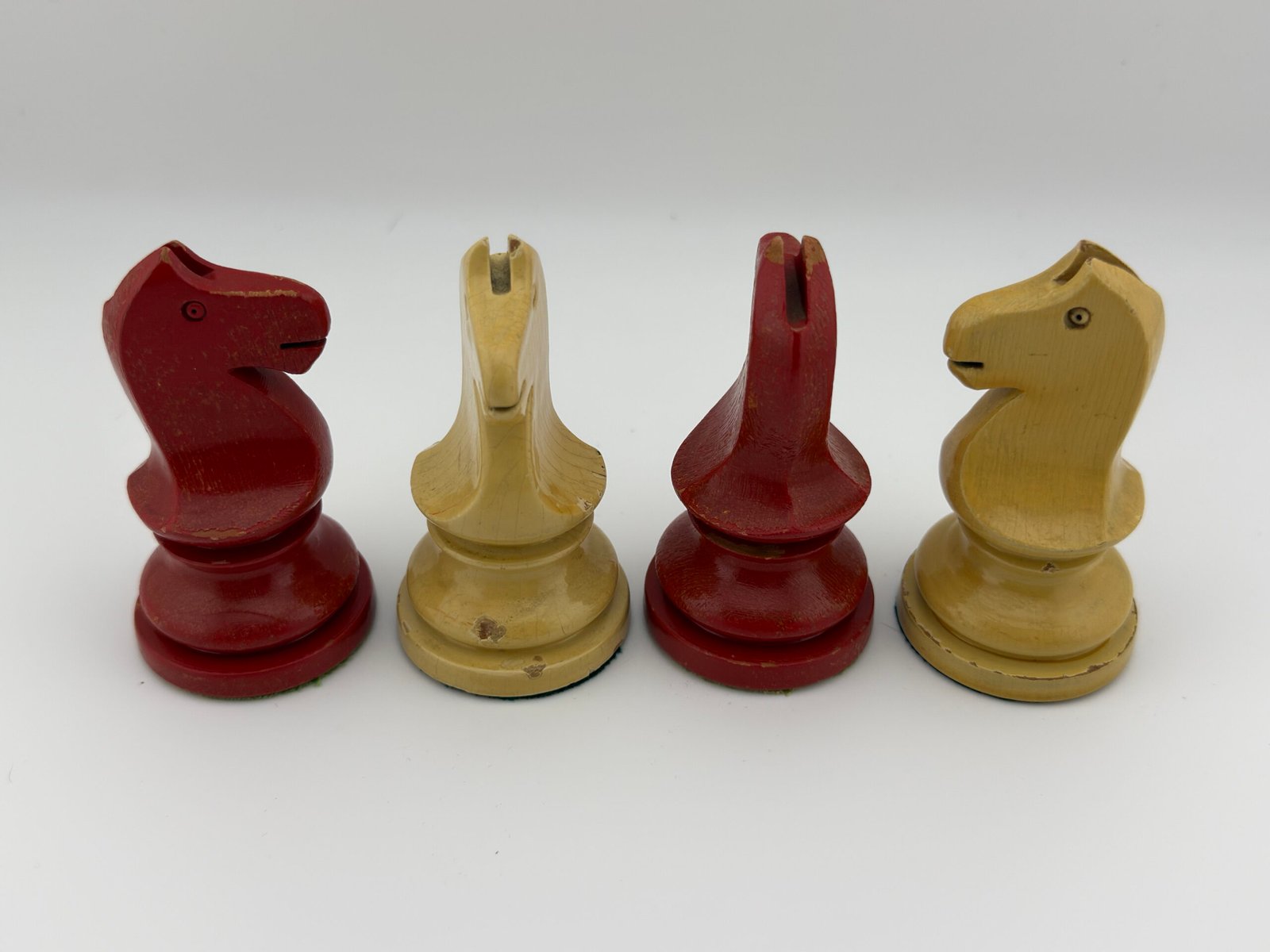
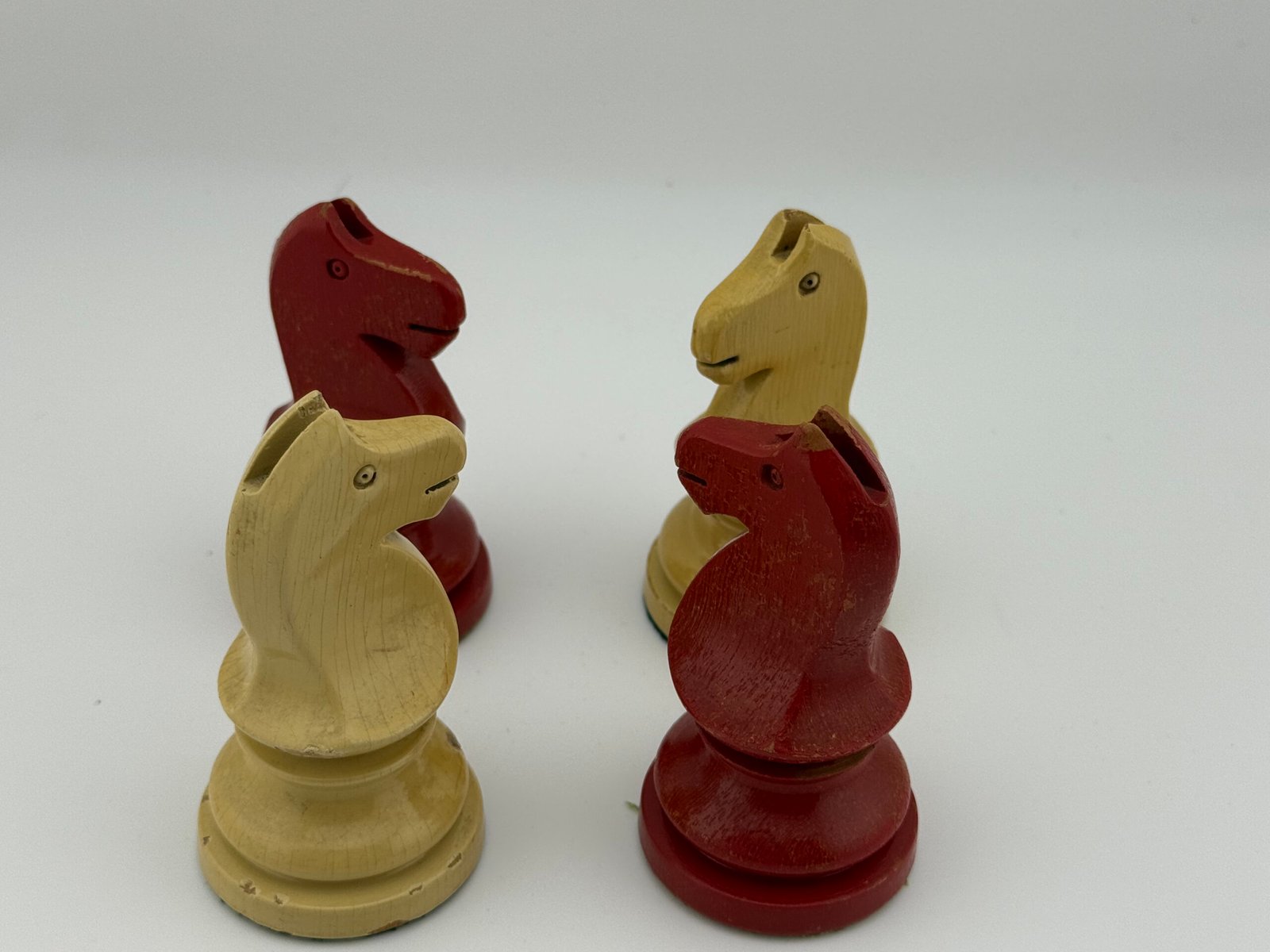
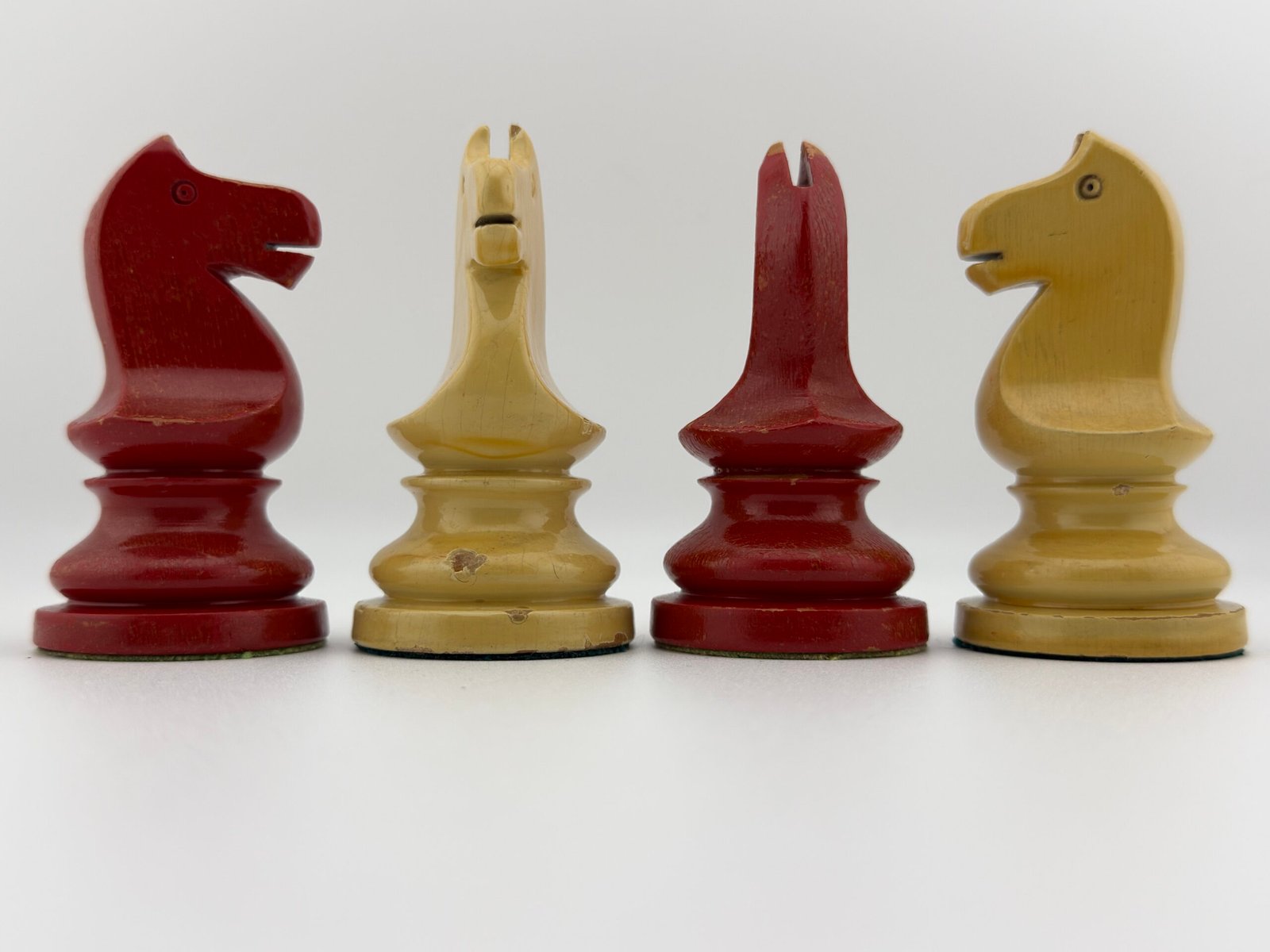
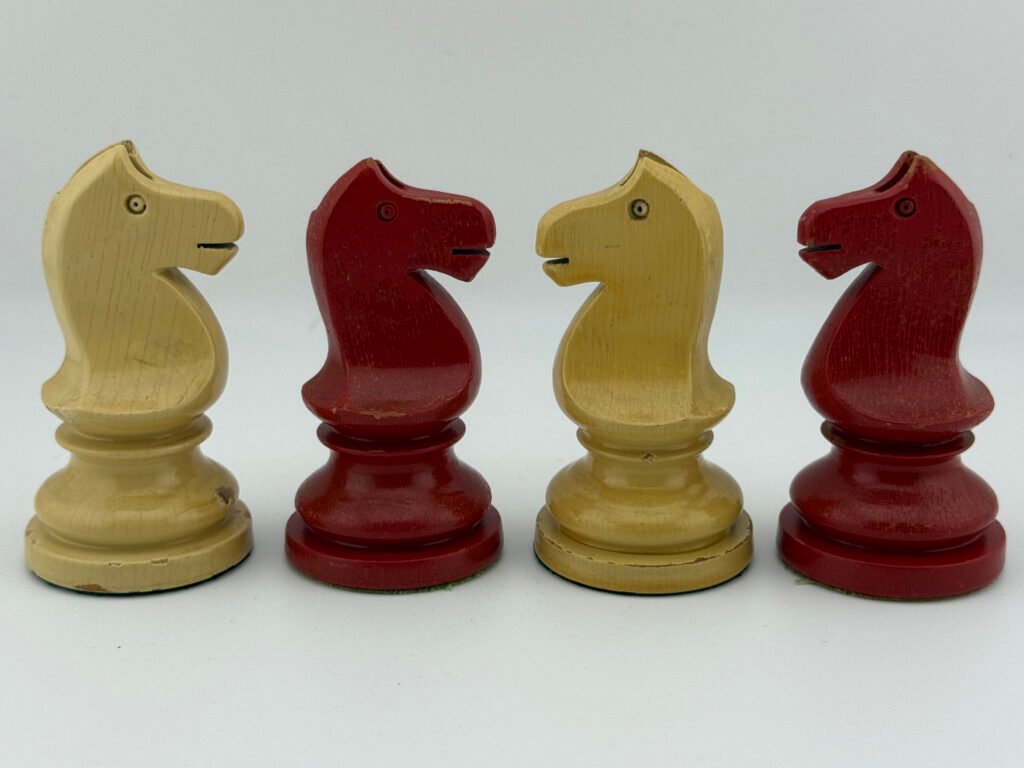
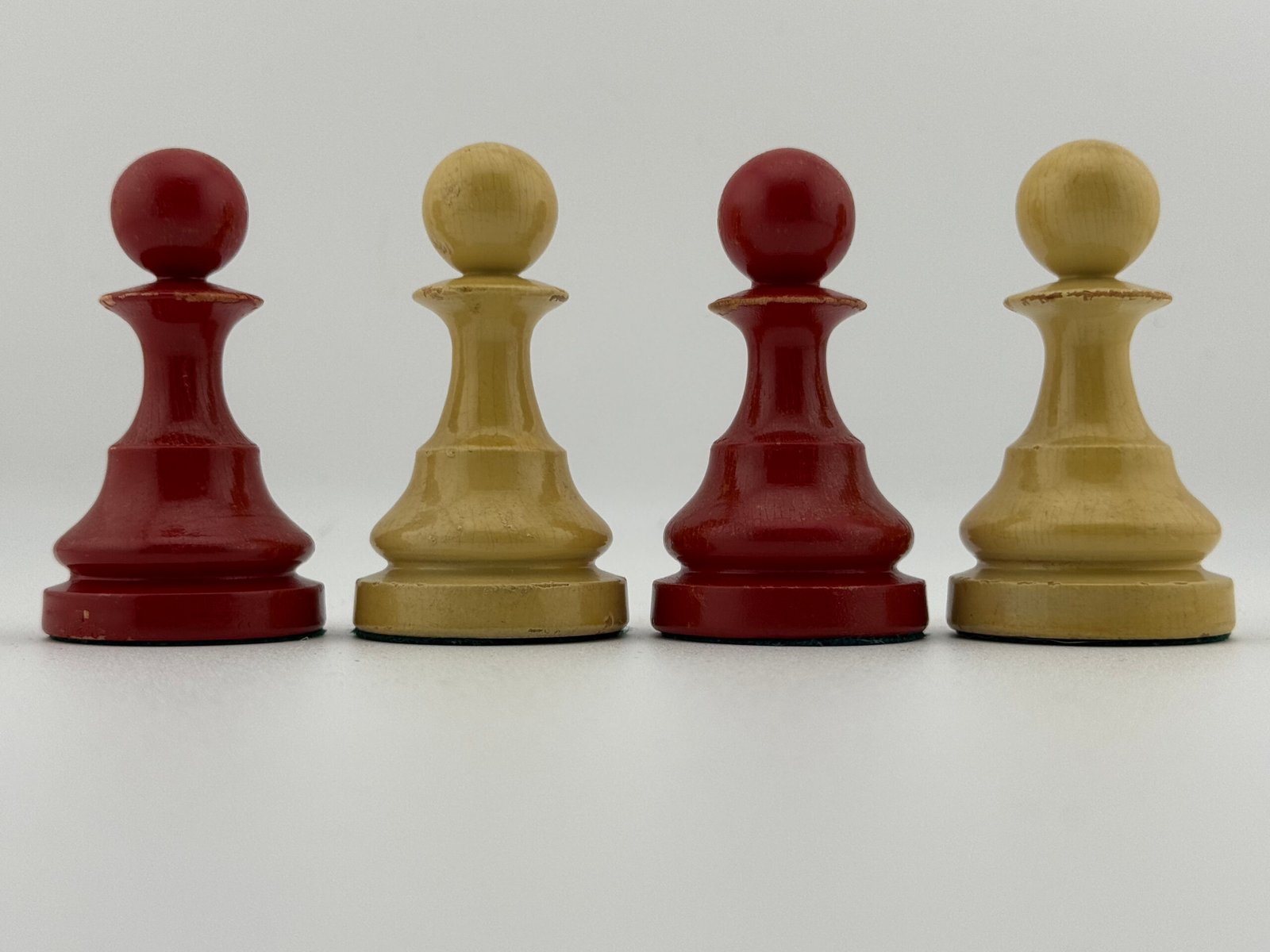
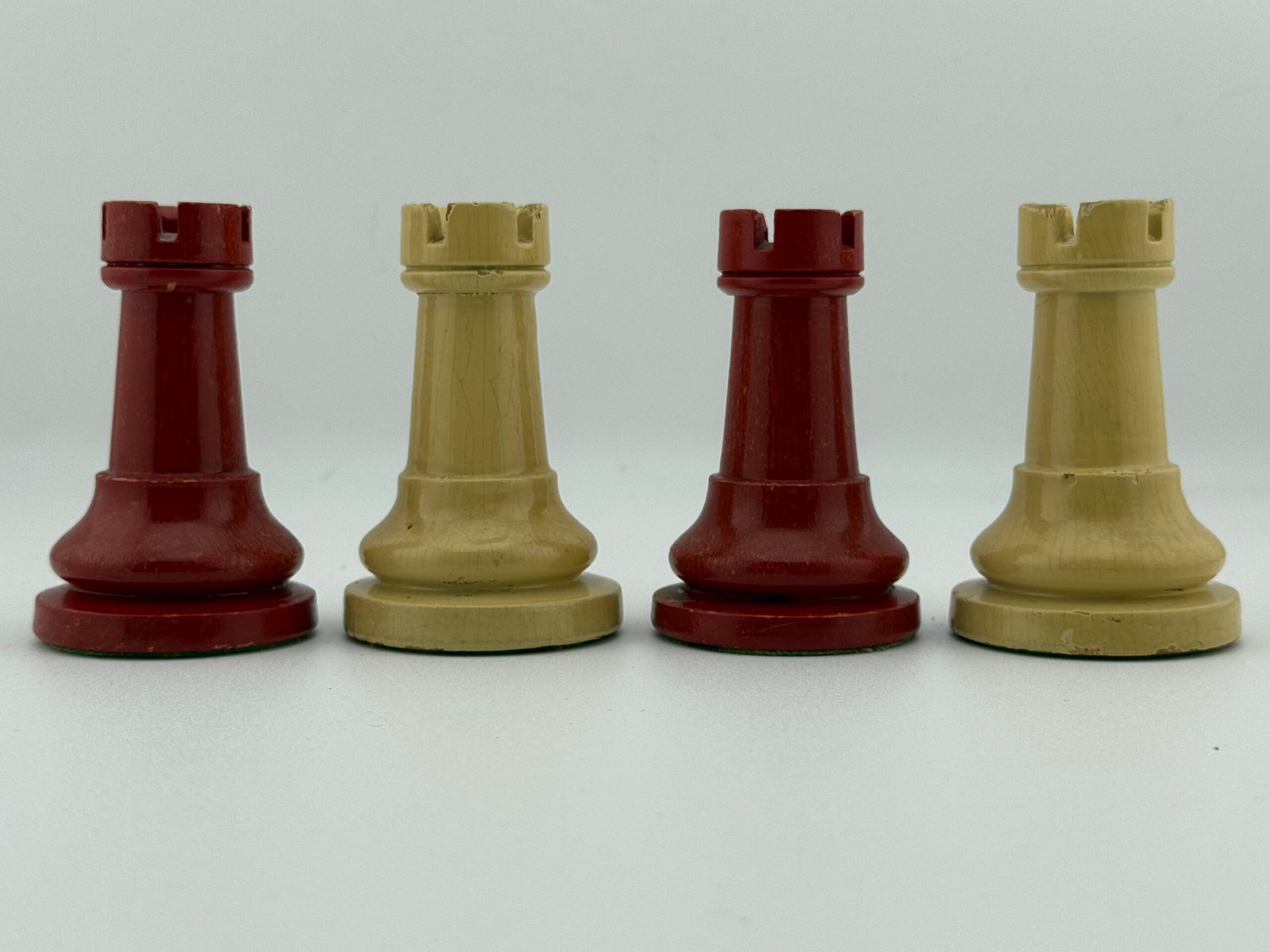
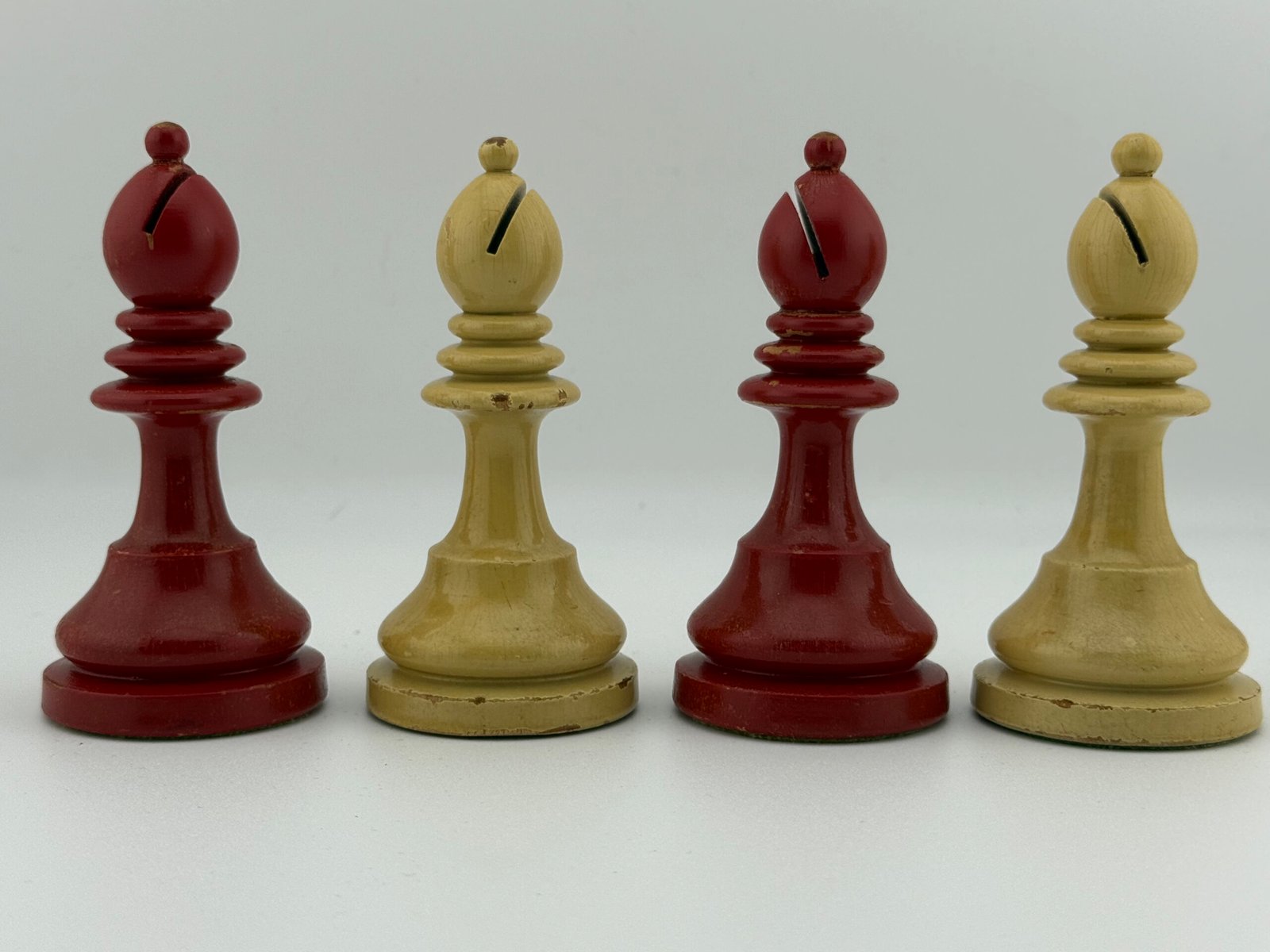
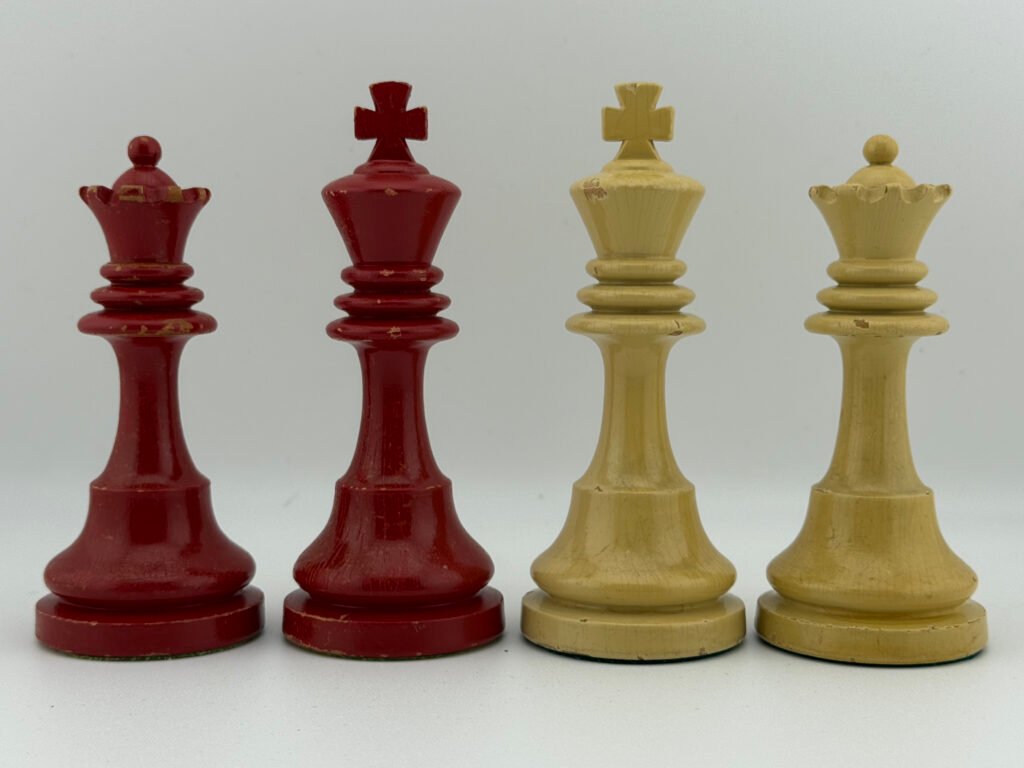
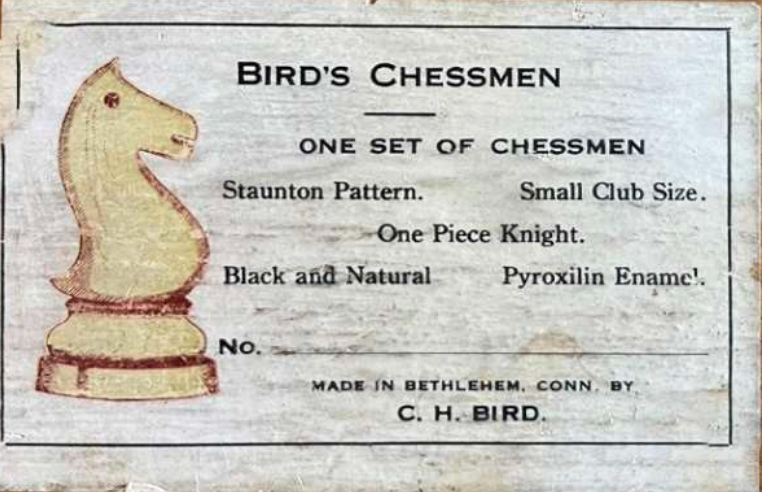
Bird’s methods and materials also reveal a man thinking like a manufacturer, not just a hobbyist. The 1922 text says he used Pyralin / pyroxylin enamel on most of his pieces because he considered it more durable and more suited to American production than traditional French polish. He discussed working in ebony, boxwood, cocobolo, violetwood, and sandalwood, but singled out native dogwood from the Tennessee mountains as especially beautiful and, in his view, superior to boxwood and ebony for chessmen. He admitted that his output was necessarily small and that his only serious domestic competitor could produce 50 to 100 sets to his one. That is an unusually vivid self-portrait: Bird emerges as a perfectionist with limited throughput, trying to build an American answer to imported European chess sets without the scale of a Drueke.
His early commercial line appears to have centered on club-size sets with 4- inch kings, sold under the Bird’s “Staunton Pattern” Chessmen name. Camaratta’s research says these sets were weighted, came in several lacquered finishes, carried the number 3777, and were usually sold in black leatherette-covered boxes; Bird also sold sets directly in sturdy oak boxes. The same article says Bird’s sets were distributed through G. H. Harris Co. of Brooklyn, which called itself the “sole selling agents,” and were also available through Abercrombie & Fitch. There is even evidence of London distribution through Dan & Son on Fleet Street. This is important because it shows Bird was not merely making a few local sets; he had built a real branded product with regional and even international distribution.
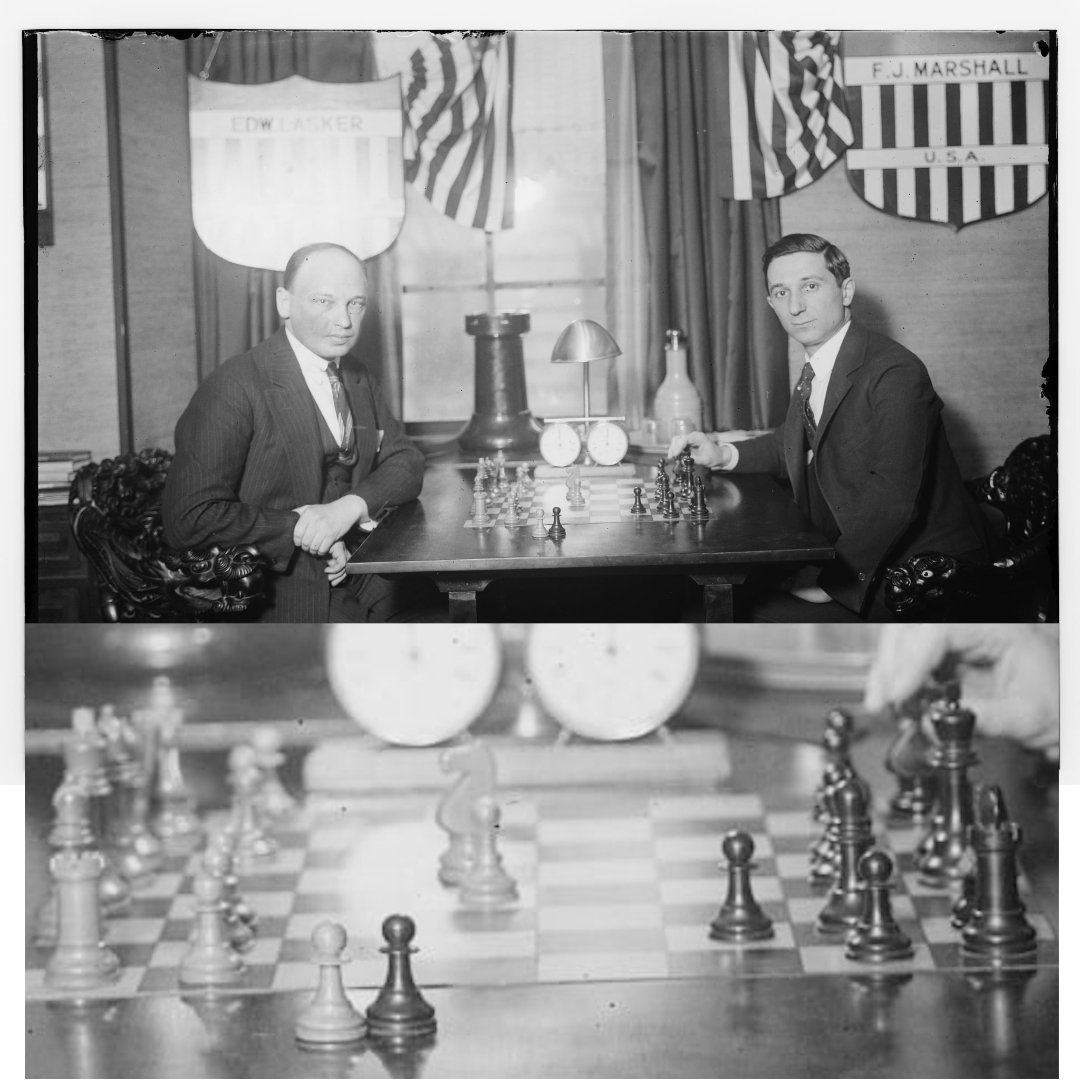
The most dramatic chapter in this reconstruction is Bird’s connection to the 1924 International Chess Masters Tournament in New York. The official tournament book shows that the event was organized with the support of Harry Latz of the Alamac Hotel, that Latz put up $2,500 and offered hotel hospitality, that the opening banquet was held there on 15 March 1924, and that the first- round drawing took place in the hotel’s Japanese Room on 16 March 1924. On the physical evidence of the surviving knight base shared, a tournament-related piece is inscribed “Compliments of Olympic Woodworking Company Inc. 211 Park St. New Haven Conn.”, together with “International Chess Masters Tournament,” “Alamac Hotel,” “New York,” and “1924.” In this reconstruction, that matters enormously: it suggests that the Park Street woodworking concern linked to New Haven was involved in producing commemorative or presentation chessmen for one of the greatest tournaments of the era. Since the knight form on that piece is stylistically very close, if not exact to Bird’s simplified type, the most likely explanation is that Olympic Woodworking Inc. was either Bird’s manufacturing arm, a closely related affiliate, or a successor/trade vehicle operating in the same Park Street orbit.
The tournament itself is directly documented; the Olympic-to-Bird connection is the reconstructed step, but it is a strong one.
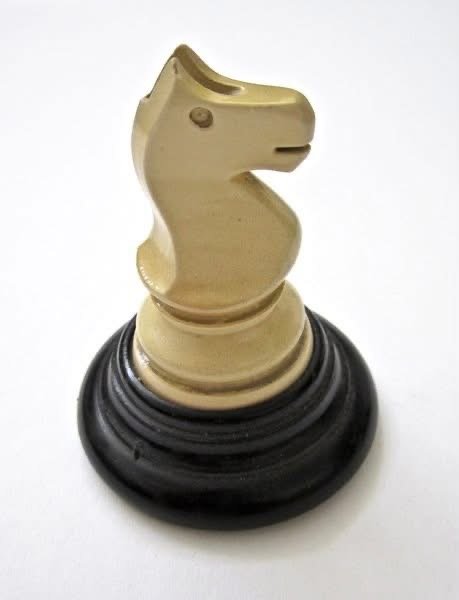
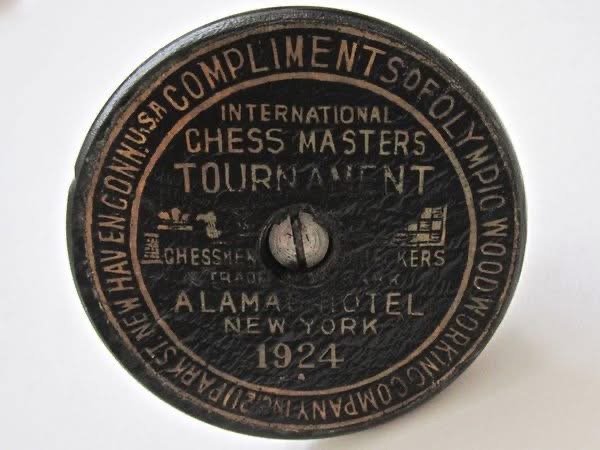
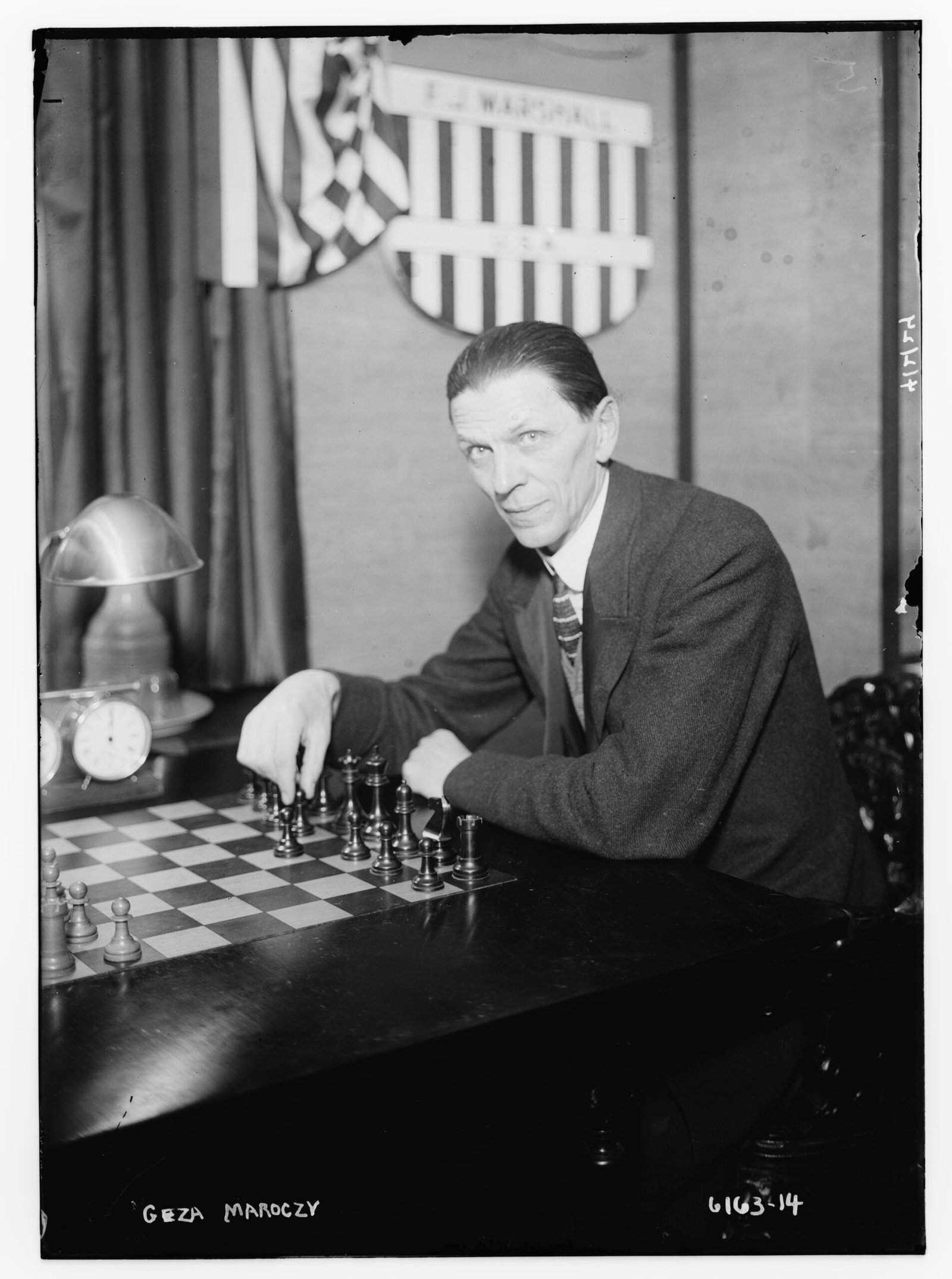
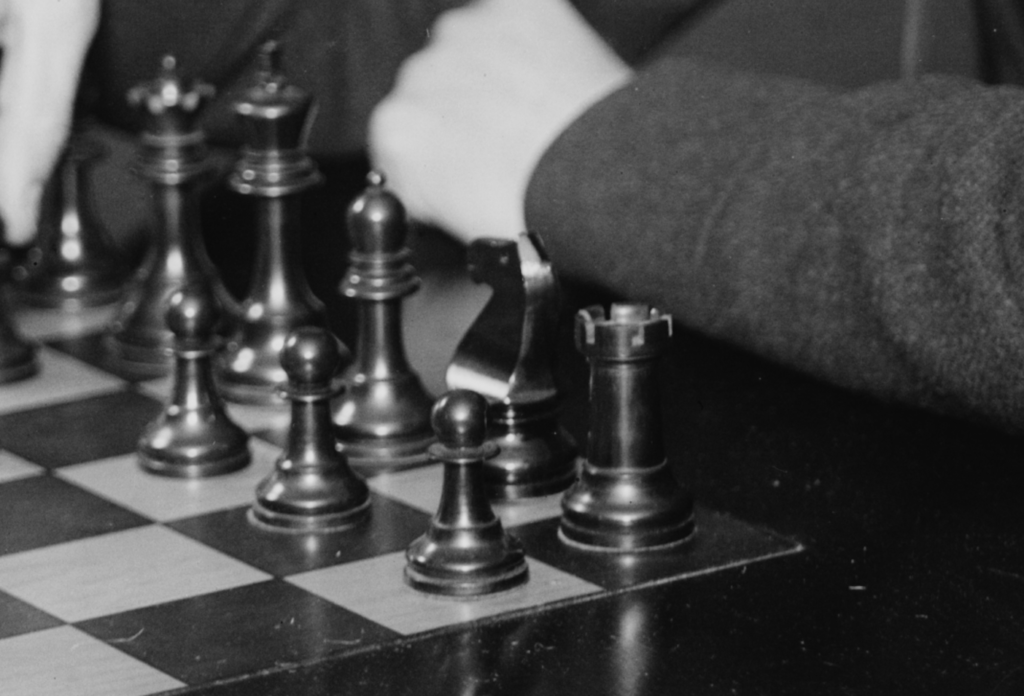
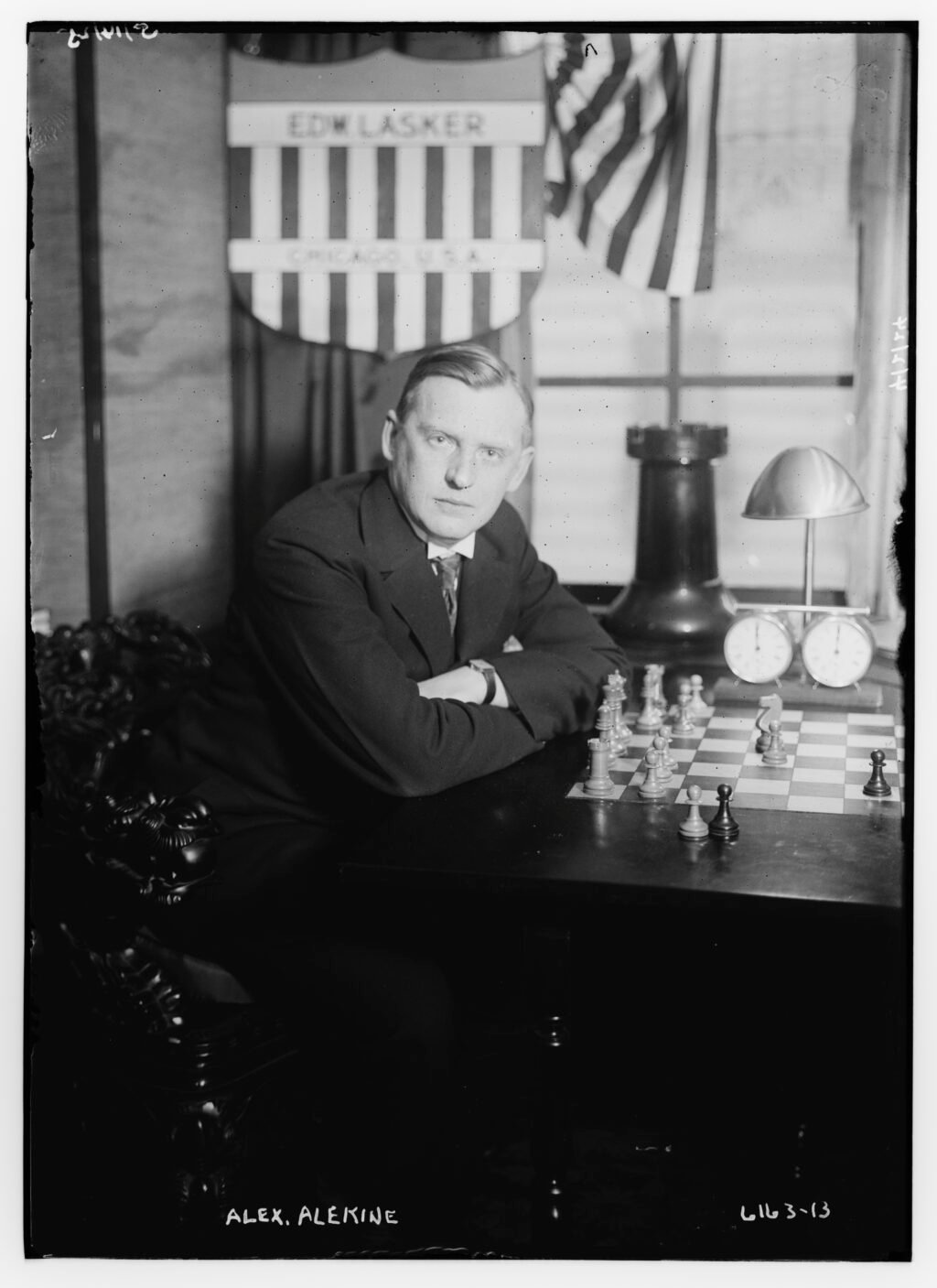
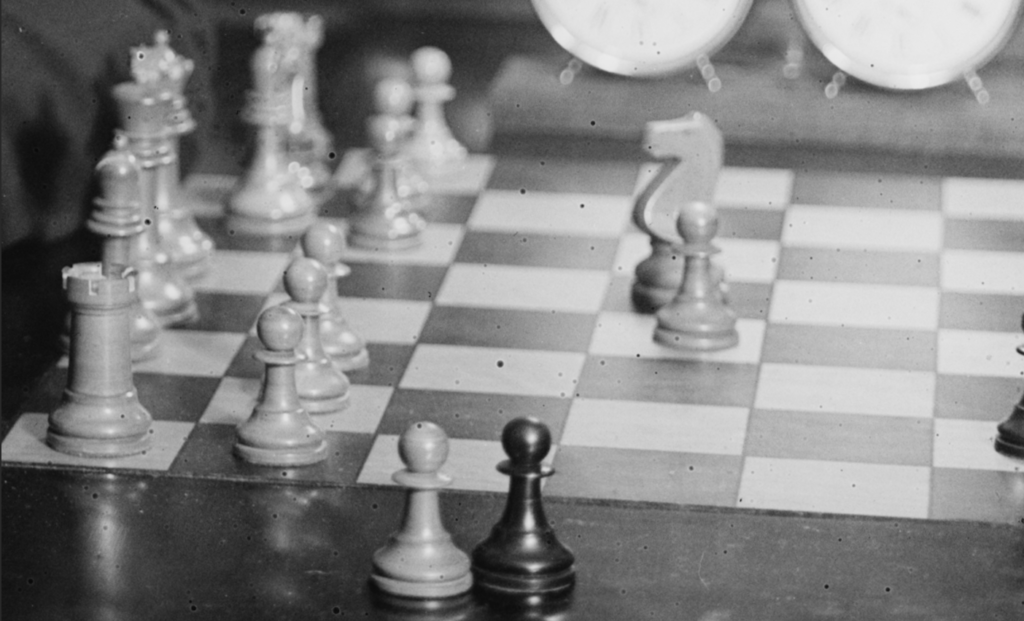
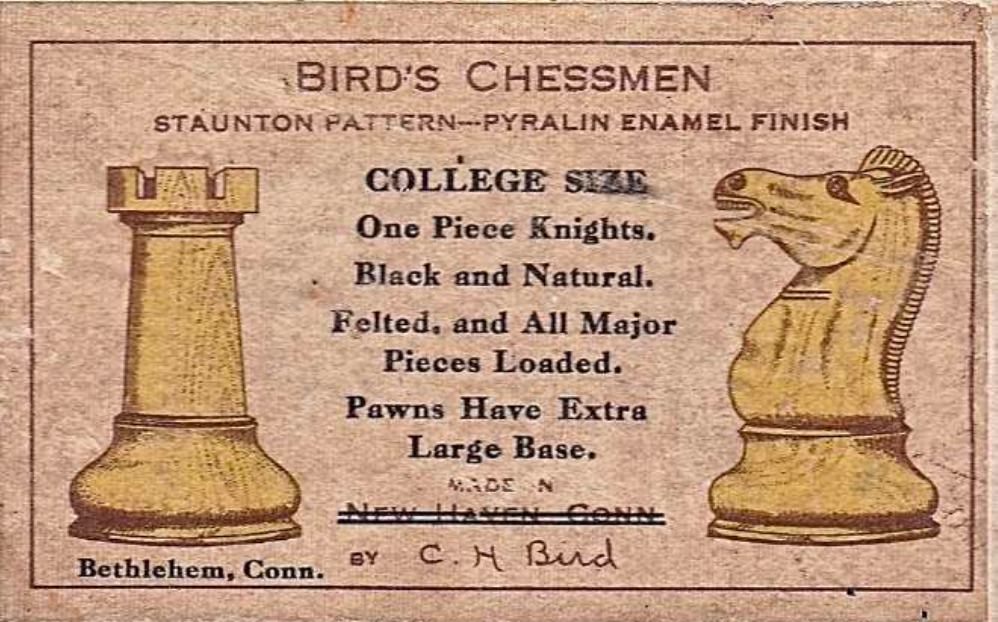
After the New Haven phase, Bird’s chess enterprise moved to Bethlehem, Litchfield County, Connecticut, where it seems to have settled into a later and somewhat more standardized product line. Camaratta notes that labels were altered to reflect the move from New Haven to Bethlehem. By 1932, Bird’s advertised range included at least two sizes: a Small Club Size with a 3.6-inch king and a College Size with a 3.0-inch king. A surviving College Size box described by Chess Antiques is stamped “Made in U.S.A., Bird’s Chessmen, College Size, Black and Natural, Pyralin Enamel Finish, Loaded and Felted,” which gives us a near-factory description of Bird’s mature product. This later phase shows Bird refining his line into recognizable catalog offerings while preserving the distinct Bird knight and Bird finish.
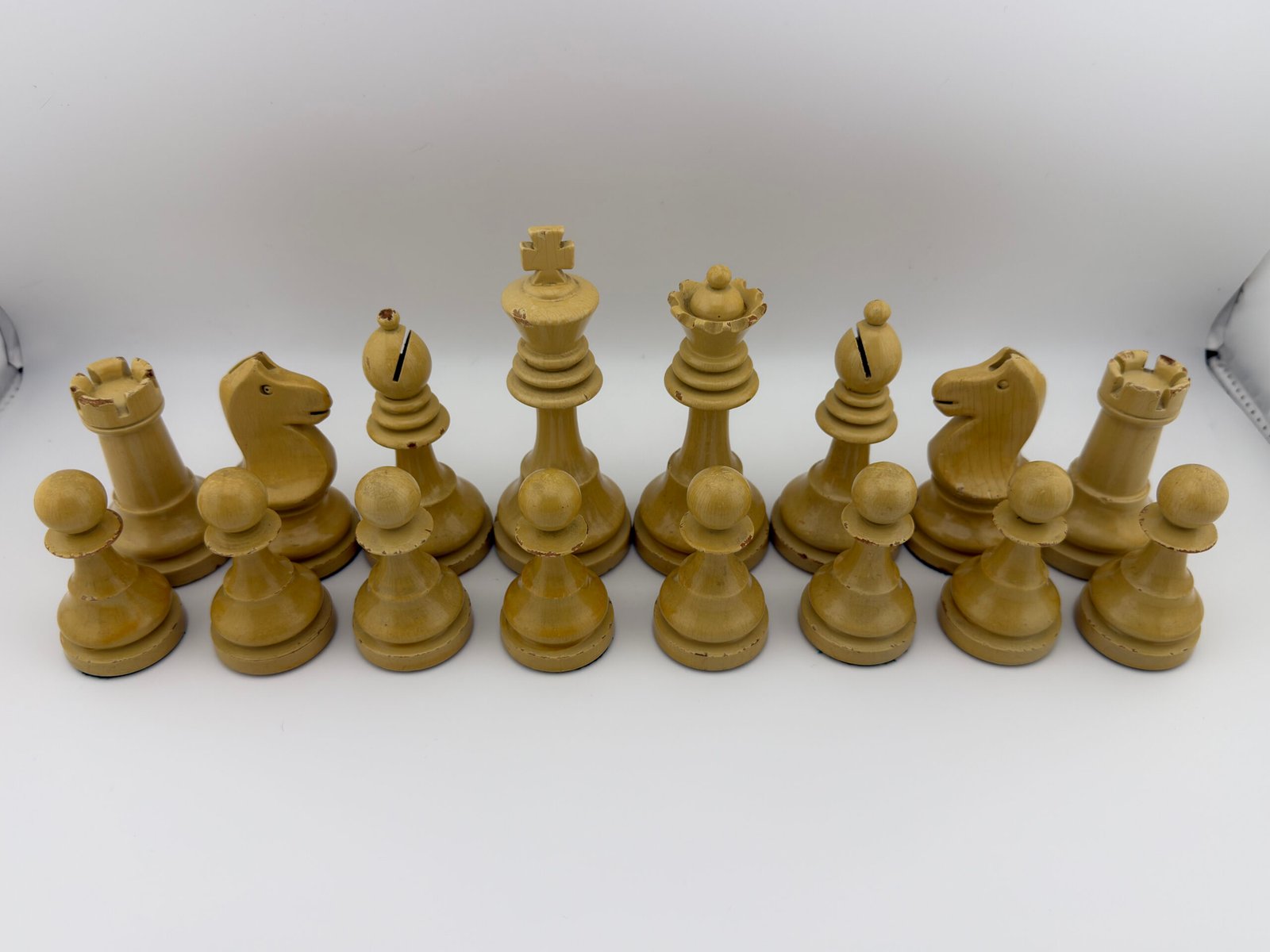
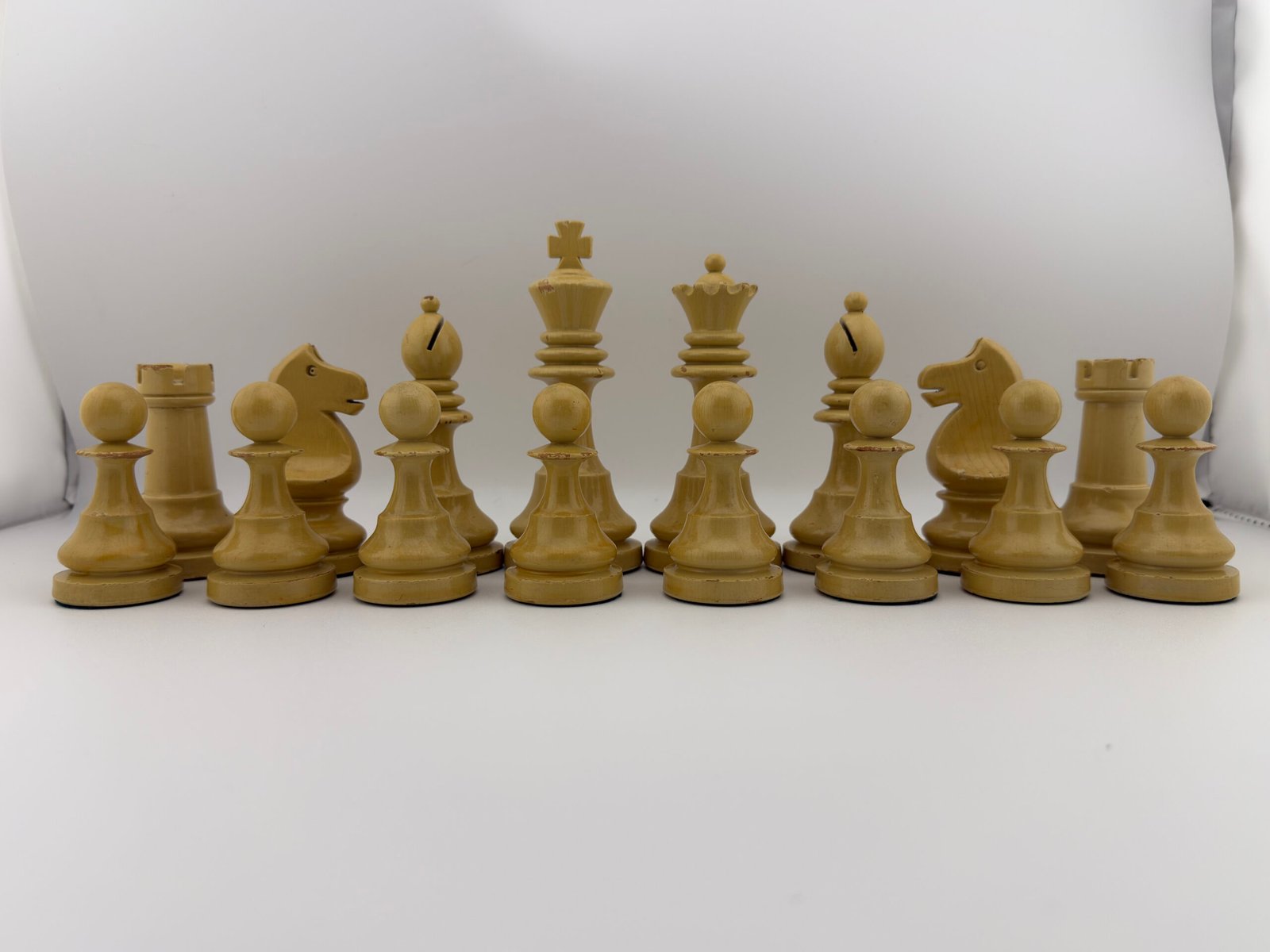
Collector evidence also hints that Bird’s output was broader than the surviving ads alone show. Searchable snippets from collector posts refer to a Bird “HOME SIZE” red-and-white set with aluminum knight heads and to a Bethlehem-associated Bird set with a 4 5/8-inch king. Those details do not yet rest on a fully open catalog page, so they belong in the biography as probable surviving evidence rather than settled catalog fact. Still, they fit Bird’s known habits: early aluminum-headed knights, lacquered finishes beyond black and natural, and a willingness to make larger, more expensive sets. If accepted, they suggest that Bird’s production ranged from inexpensive club sets to more ambitious household display sets.
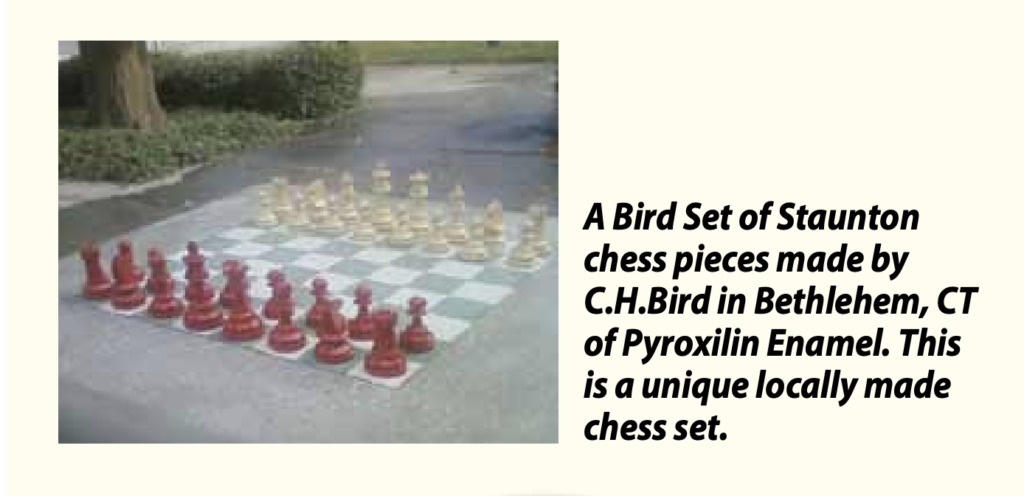
Bird’s final chapter appears to have unfolded in Bethlehem, where public genealogical and obituary-style indexes place him in the early 1940s. Because our working assumption is that the 1857–1942 Bethlehem man (Clinton Harrison Bird) is the chess maker, the best reconstructed ending is that Clinton Harrison Bird died in Bethlehem in 1942, after a career that had carried him from New Haven food and real-estate ventures into specialized woodworking and chess manufacture. Even if the final-year indexing remains a little messy, the Bethlehem end point fits both the genealogical trail and the known Bethlehem phase of Bird’s Chessmen.
Taken as a whole, Bird looks like a very American kind of early-20th-century maker: not an aristocratic artisan, but a practical entrepreneur who moved from food manufacturing and industrial property into branded specialty production. He seems to have understood that imported chessmen dominated the market, that the knight was the cost bottleneck, and that success would require Americanized methods, American finishing materials, and a simplified but recognizable Staunton form. If this reconstruction is right, his life links New Haven industrial property, 211 Park Street woodworking Inc., the Alamac tournament of 1924, and Bethlehem, Connecticut into a single story. That would make Clinton Harrison Bird not just a name on a box label, but one of the key early figures in the history of American-made Staunton chessmen.
My opinion of this design…
This size of C.H. Bird Chessmen (4.7″) is the only example that anyone has ever seen or hear of! I value this set’s accessibility within the world of collectibles. While some vintage / antique chess sets come with low price tags, the C.H. Bird Chessmen set is generally more expensive, making it a desirable and hard to obtain option for both seasoned collectors and enthusiasts seeking a quality, playable vintage / antique item. This combination of style, historical appeal, and extreme rarity makes the C.H Bird Chessmen Club Chess Set a prized item for serious players and collector lovers alike. I am honored to own and play with this set!